
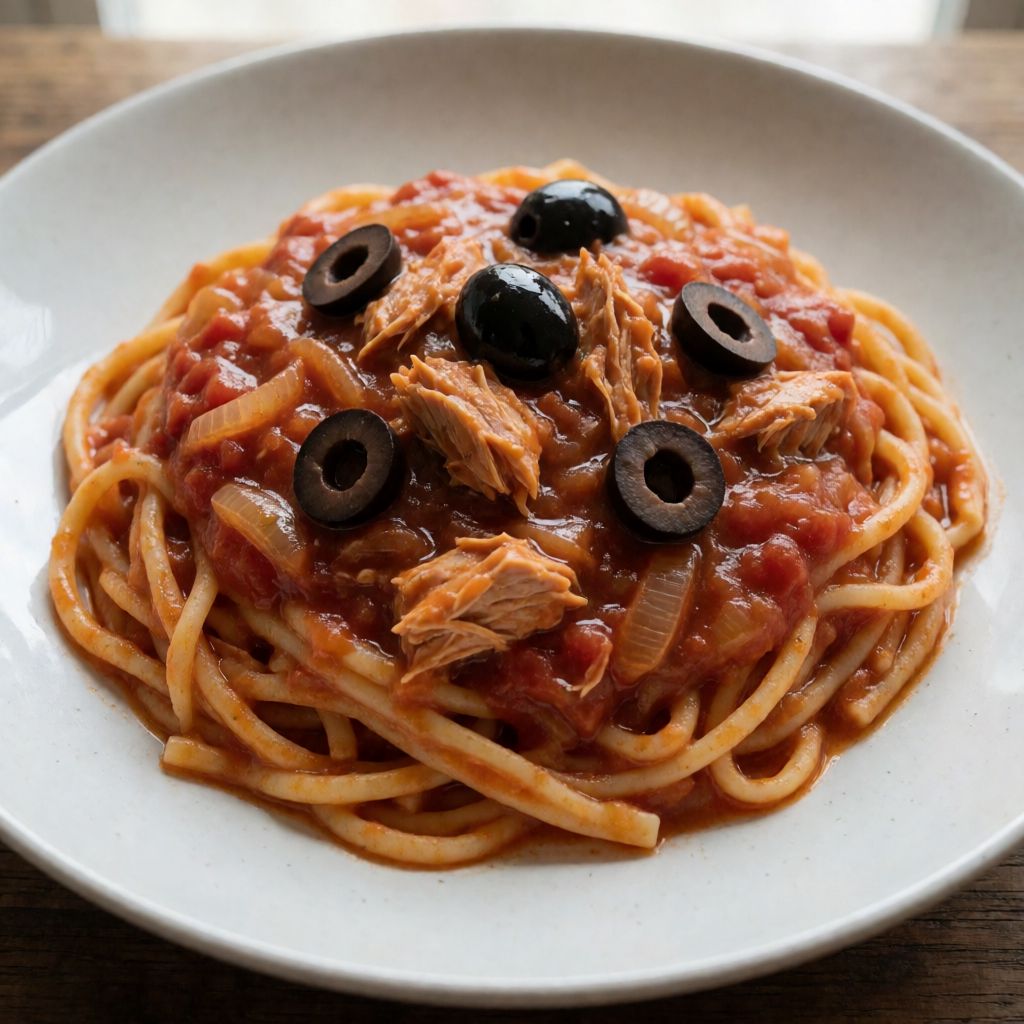
 AI photo
Quick Tuna Pasta Sauce
A simple, fast tomato and tuna sauce for pasta.
Labels are worked out automatically from the ingredients and can be wrong. Check the packaging if it matters to you.
Ingredients
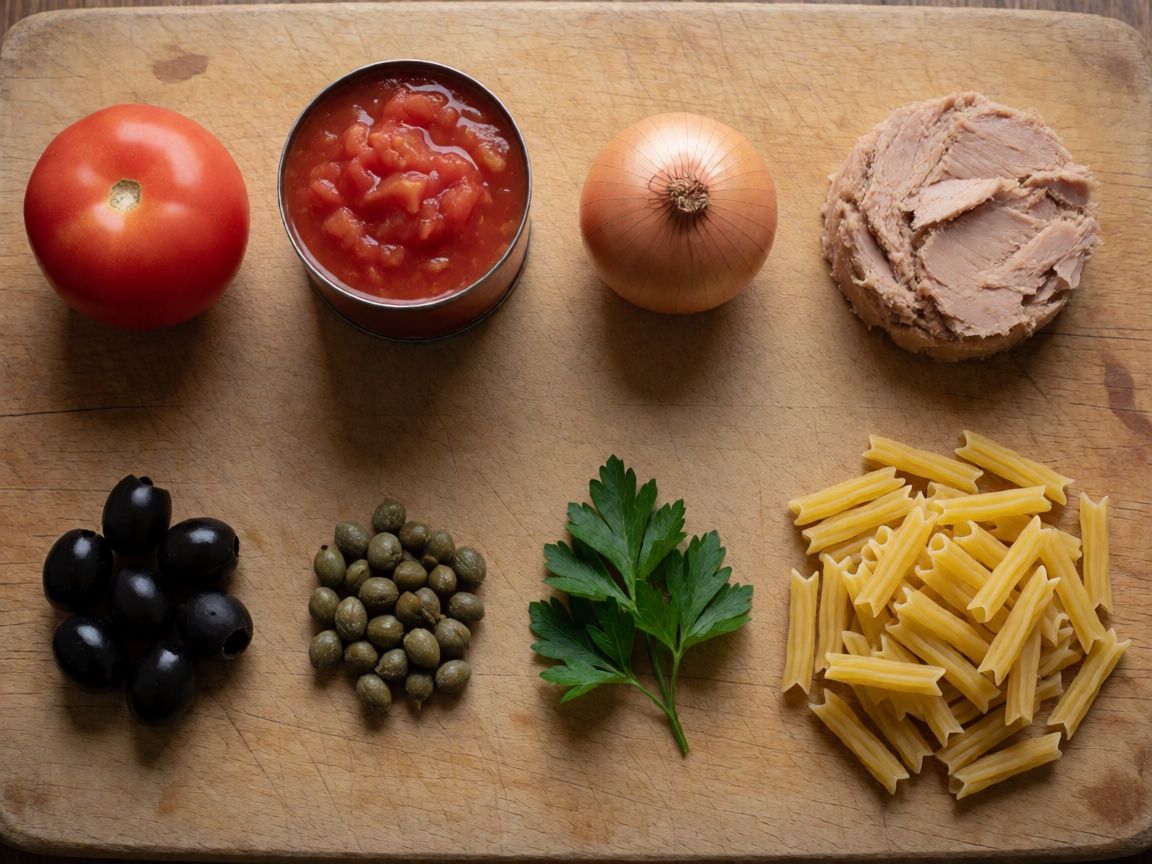
- 2 pcs Tomato
- 250 g Canned chopped tomatoes
- 3 tbsp Olive oil
- 1 pcs Onion
- 120 g Tuna in oil
- Pitted black olives to taste
- Capers to taste
- Parsley to taste, fresh
- Salt to taste
- Black pepper to taste
- Pasta










Steps
Bring water to the boil in a small pan and blanch the tomatoes so the skins come off easily.
Remove the skins and seeds from the tomatoes and dice the flesh. Put the cubes in a colander to drain off some of the juice.
Finely chop the onion and fry it in olive oil in a fairly wide frying pan.
When the onion has coloured slightly, add the diced tomatoes to the pan along with a handful of pitted black olives or capers.
Add salt and black pepper to taste and cook uncovered so the tomato flesh dries out a little.
10 minA few minutes before it's ready, taste the sauce; if it's too acidic, add half a teaspoon of sugar. Cook a little longer, then turn off the heat and let the sauce rest briefly.
When the pasta water comes to the boil, salt it and add the pasta.
Add the tuna with its oil to the pan, roughly mashed with a fork. The tuna shouldn't cook, just warm through slightly.
When the pasta is cooked al dente, drain it and tip it into the pan with the tuna sauce.
Turn the heat back on and fry the pasta for a few minutes, stirring well, so it absorbs the sauce.
Sprinkle with two tablespoons of fresh chopped parsley and serve.
This is a sauce built on a trick, not a shopping list: fresh tomato for sweetness and texture, tinned tomato for body and colour, because fresh tomatoes alone in most of the year give you watery disappointment, and tinned alone gives you flatness with no bite. You need both halves to get a sauce that looks like it simmered all afternoon when it actually took ten minutes.
The tuna is not cooked. It is warmed. That's the whole discipline of the dish — tuna in a tin is already cooked, often twice over by the canning process, so any real heat just dries it into cat food. You fold it in off the direct flame, let the residual warmth of the tomato do the work, and it stays soft. Some recipes tell you to fry the tuna with the onion at the start — don't. That's where tuna pasta goes wrong before it's even begun.
Skinning and seeding the fresh tomato isn't fussiness for its own sake. The skin won't break down in the time you have, and sits in the sauce like plastic; the seeds carry most of the sharp acidity and watery liquid that stops the sauce thickening. Blanching loosens the skin by shocking the outer layer without cooking the flesh underneath — fifteen, twenty seconds in boiling water, no more, you're not poaching it.
What decides whether this works is restraint at two points: letting the tomato dry out a little, uncovered, so it concentrates instead of staying a wet puddle; and not letting the tuna see real heat. Everything else — olives, capers, parsley — is seasoning, adjustable, forgiving.
Onion first, and it only needs to turn translucent-to-gold, not brown. You're not building a deep caramelised base here — ten-minute sauces don't have time for that — you're just taking the raw bite off it so it melts into the tomato instead of announcing itself as "onion" on the plate. A wide pan matters more than people think: a narrow saucepan traps steam and the tomato stews rather than reduces. If your hob only runs one decent-sized pan, use it for the sauce and boil the pasta in whatever's second-best — the sauce is where the reduction has to happen, the pasta water just needs to be hot and salted.
Tinned chopped tomatoes: buy the ones in juice, not a thick purée — you want body you can control by reducing it yourself, not a tin that's already been reduced at a factory and gives you one texture only. Fresh tomato: any ripe one works, but in a British supermarket in January, "ripe" is aspirational — if what you've got is pale and mealy, lean harder on the tin and use less fresh, or skip the fresh tomato step entirely and add a splash more from the tin plus a pinch of sugar earlier, since underripe tomato is almost always short on sweetness, not short on acid.
Tuna in oil, not in water — the oil is doing seasoning work, carrying flavour into the sauce when you tip the tin in, and a dry flaked tuna in water will leave the sauce tasting thinner. If all you have is tuna in water, add an extra tablespoon of olive oil with it to compensate. Mash it roughly with a fork rather than leaving it in solid chunks or shredding it to mush — you want pieces big enough to still taste like fish, not a paste.
Olives and capers are both doing the same job from different directions: salt and sharpness that cuts through the oil and the tuna's richness. Use one or the other if you don't want both — they're not additive, they're alternatives with slightly different personalities, olives rounder, capers sharper. Black pepper and salt — go easy on salt before the olives and capers go in, since both are already salty, and you can always add more at the end but you can't take it out.
Parsley at the very end, off the heat or close to it, because heat is what turns fresh herbs from bright to grassy-flat within a minute. Flat-leaf if you can get it — it has more flavour than curly, which exists mainly for garnishing plates in the 1970s and texture rather than taste.
Fry the drained pasta in the sauce for those last few minutes rather than just ladling sauce over it — this is the one step people skip because it feels redundant, and it's the step that actually marries the two. Starch on the pasta's surface grabs the sauce when they're moved together in a hot pan; tip sauce over plain boiled pasta on a plate and the two stay as neighbours, not a couple. Patience here is short — we're talking minutes, not simmering for an afternoon — but it is still patience: don't rush the final toss just because the pasta's technically done.