
 AI photo
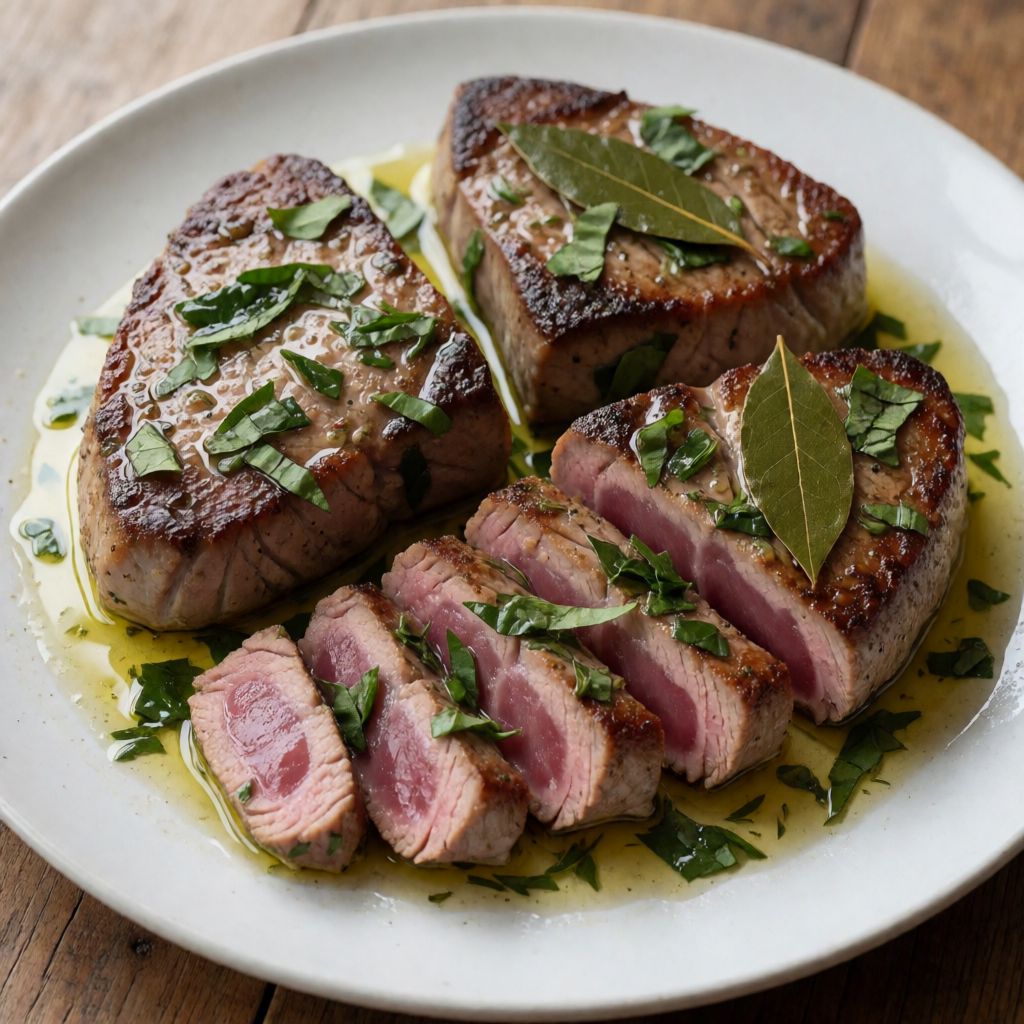
Tuna Steaks with Aromatic Herbs
Grilled tuna steaks marinated with fragrant herbs, olive oil, salt and pepper, served with grilled vegetables.
Labels are worked out automatically from the ingredients and can be wrong. Check the packaging if it matters to you.
Ingredients
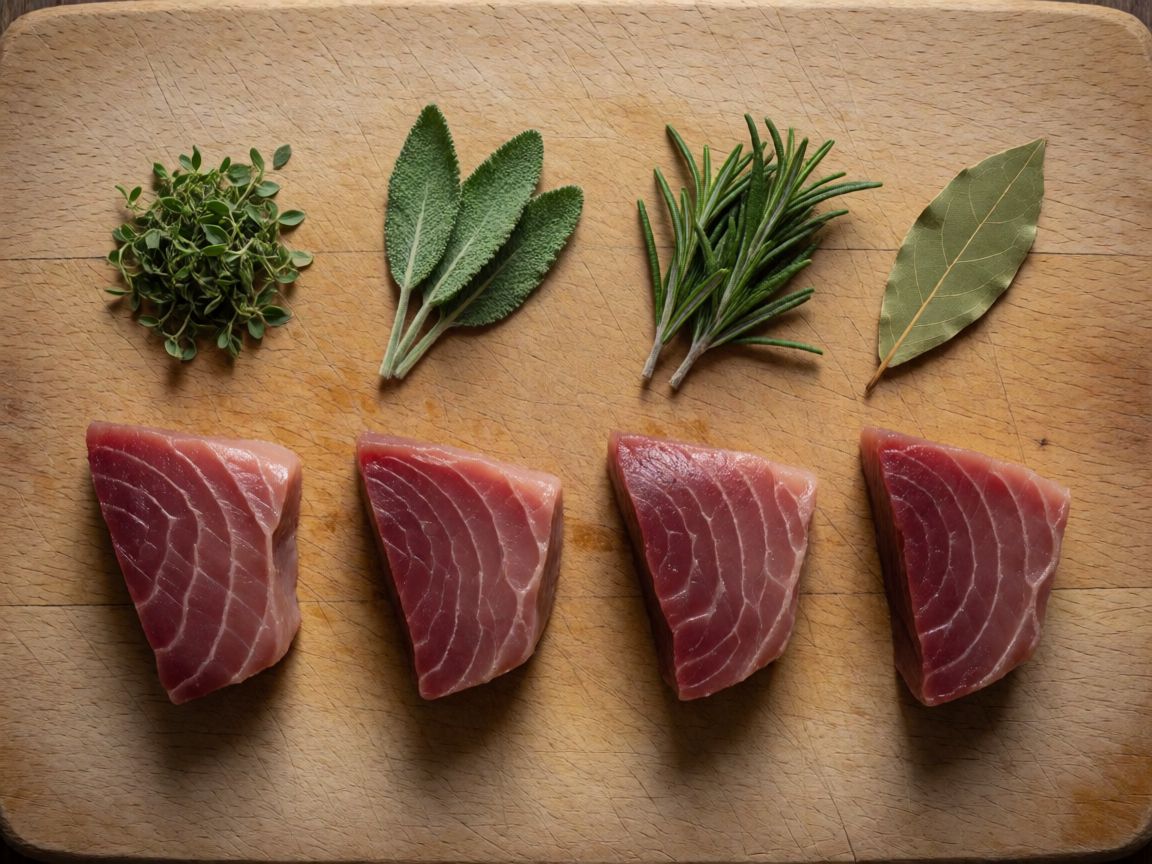
- 4 pcs Tuna steaks
- 1 bunch Marjoram fresh
- 1 bunch Sage fresh
- 1 bunch Rosemary fresh
- 2 pcs Bay leaves
- 4 tbsp Olive oil
- 2 pinch Salt to taste
- 2 pinch Black pepper to taste








Steps
Place the tuna steaks in a bowl, sprinkle with the chopped aromatic herbs and drizzle with olive oil.
Cover with cling film and leave to marinate in the fridge for 30 minutes.
30 minHeat a griddle pan or grill.
Remove the steaks from the marinade and sear for a few minutes on each side until done. Doneness: 63°C at the thickest point.
Season with salt and pepper, sprinkle with fresh rosemary needles on top, and serve with grilled vegetables.
This is a dish built on contrast: a dark, almost crusted outside and a cool, dense, pink centre underneath. Nothing hides a mistake here — no sauce, no long braise to rescue a bad call. What decides whether it works is heat and timing on the pan, full stop. Everything else — the herbs, the oil, the half hour in the fridge — is there to season, not to save you.
Some say tuna, being fish, has to be cooked through the way you'd cook chicken, or it's "not safe". No — because a chicken breast is full of connective tissue and carries a real risk that only heat kills, while a fresh tuna steak is one dense, clean muscle, good enough to eat raw as sashimi if the fishmonger says so. Taking the centre past about 63°C doesn't make this fish any safer to eat; it just pushes the moisture out ahead of the heat and leaves you with warm, grey felt. That 63°C is the point where the protein just starts to firm and change colour — your line between a steak that's done and one that's finished.
So the steaks don't go into the marinade to tenderise — there's no tough fibre here to break down, unlike a Sunday joint that needs hours in the oven before it gives up and goes soft. Thirty minutes is only long enough for the oil to pick up the herb oils and sit them on the surface of the fish. Longer does nothing for the flavour and only risks the salt-free oil starting to "cure" the surface the way it would with a gravlax — which is a different dish entirely.
Buy the tuna thick — a good inch at least — because a thin steak goes from seared edge to overcooked centre before you've had time to think. Look for deep, even red, not brown at the rim, and flesh that's firm, not slack, under your finger. Freshness carries more weight in this dish than in almost any other fish recipe you'll cook, because the middle barely gets touched by heat — if it isn't good enough to eat nearly raw, it has no business being here.
Marjoram, sage, rosemary and bay are chosen for what they can survive: they're tough, oily-leafed herbs that hold their scent under heat and in a marinade, where something soft like basil or coriander would just wilt, blacken and go bitter. The rule for swapping them isn't "use whatever's in the pot on the windowsill" — it's any hardy, resin-scented herb: thyme or oregano will do the same job. Soft, watery herbs won't, no matter how fresh they look in the shop.
The bay leaf is there for a background bitterness, almost resinous, that the others don't give — it infuses the oil during the half hour in the fridge rather than being eaten off the plate, so don't worry about fishing it out precisely.
Olive oil earns its place here for taste, not just as a cooking medium — this pairing of pungent herb and olive oil is Mediterranean kitchen logic, because rosemary, sage and the olive tree grow in the same soil and the same sun, and people cooked with what grew nearby, not by some rule carved in stone. If you've no olive oil, use another oil that actually tastes of something — a good rapeseed oil will carry the herb scent nearly as well; what you don't want is a flavourless oil doing a flavoured oil's job.
Notice the salt and pepper come after the pan, not before. Salting raw fish early draws water out through the cell walls by osmosis — fine if you're curing salmon on purpose, wrong if you want a steak that's seasoned rather than half-cured and firmed up before it's even cooked. Season the crust once it exists, and the fresh rosemary scattered on top at the end is there for smell as much as taste — heat has already taken the raw sharpness off it in the pan, so the leaves you add last stay green and lively against the dark crust.
And once the steaks come off the heat, leave them a minute before you cut — that minute is patience doing its job, letting the juice that's been driven to the centre settle back through the fish instead of running out onto the board the second your knife goes in.