
 AI photo
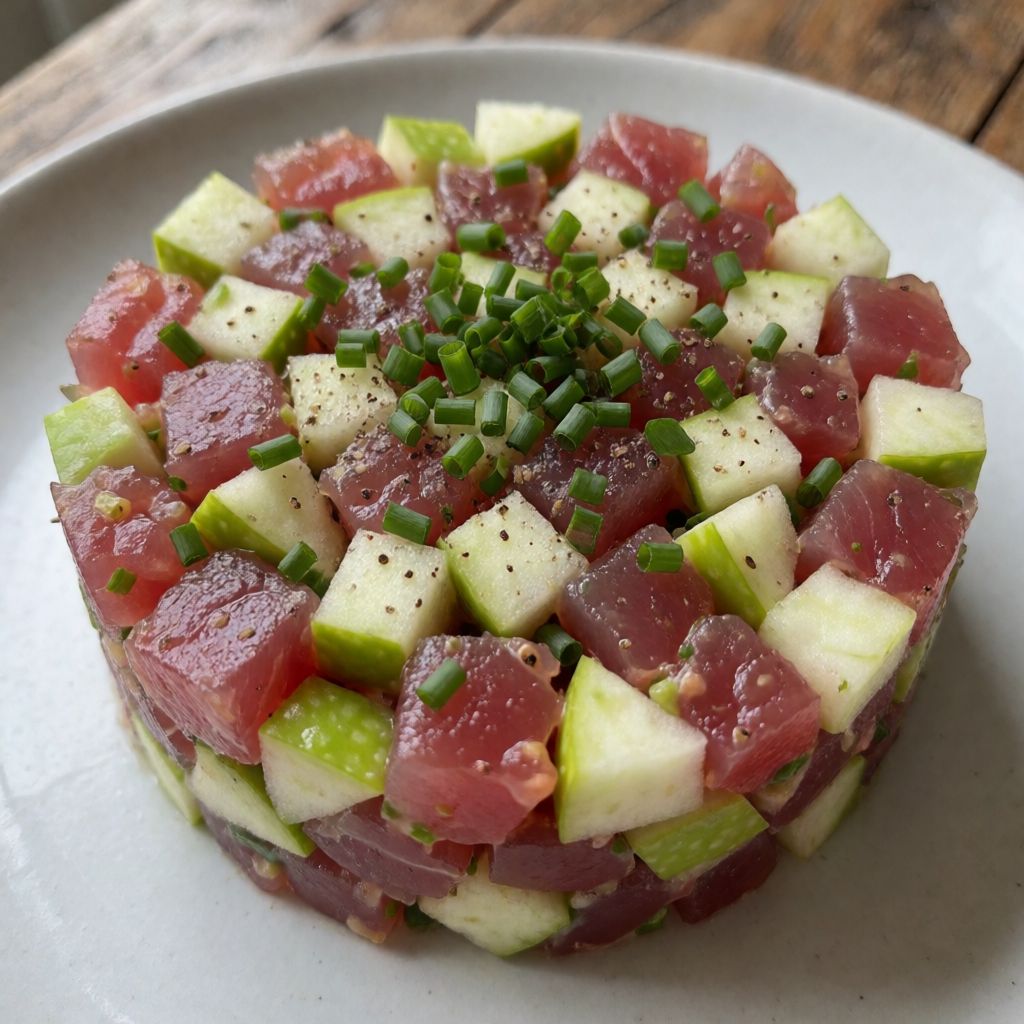
Tuna and Green Apple Tartare
A fresh tartare of diced tuna and tart green apple, dressed with lime juice, olive oil and spices.
Labels are worked out automatically from the ingredients and can be wrong. Check the packaging if it matters to you.
Ingredients
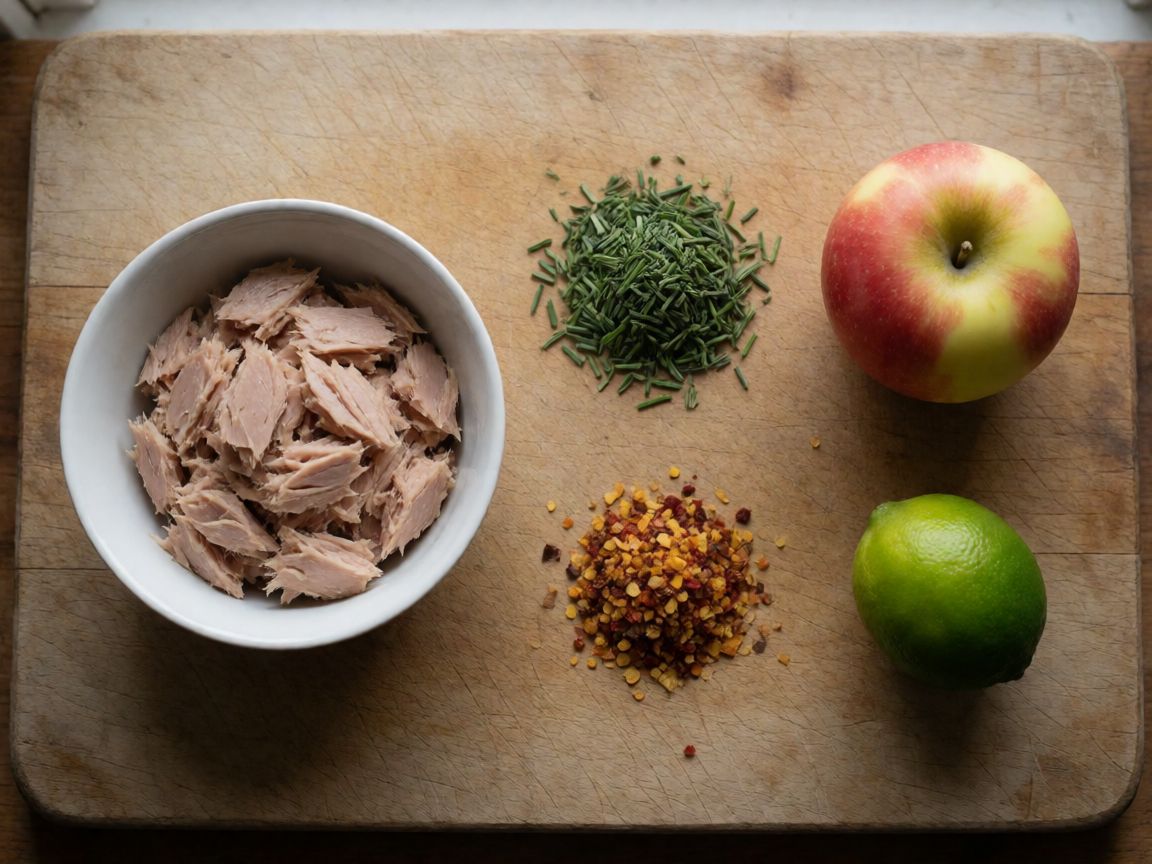
- 500 g Tuna fillet
- 1 pcs Green apple
- Olive oil to taste
- Salt to taste
- Black pepper to taste
- 1 tsp Dried chives dried
- Creole spice mix to taste
- 1 pcs Lime








Steps
Dice the tuna into small cubes and dice the peeled green apple.
Squeeze the lime juice, add the olive oil, salt, black pepper and dried chives, and mix together.
Toss the tuna and apple with the dressing, add the Creole spice mix and mix well.
Chill in the refrigerator.
30 minPlate the tartare using a cooking ring, garnishing with slices of apple.
This is a dish built on the absence of heat, so every mechanism that normally belongs to a stove gets handed over to a knife, an acid, and the cold. There is no 60°C to kill anything off here — the tuna stays exactly as raw as you bought it, which means the whole recipe is really a question of what the fish was before it reached your board.
Some say raw fish is simply dangerous, full stop — no, because the danger is in the fish's history, not in the act of eating it raw. Parasites in tuna are killed by deep freezing (commercial boats and fishmongers who sell "sashimi-grade" do this at temperatures your freezer at home can't reach), bacteria are kept down by an unbroken cold chain. Buy accordingly — ask the fishmonger straight out if it's suitable to eat raw, don't guess from how pink it looks.
What decides whether this works on the plate is the size of the dice and the length of time it sits in the dressing. Cut too big and the lime juice never gets past the surface, so you get raw fish with sour fish-skin and a dry pink middle. Cut too small and the tuna loses its own bite, turns to paste under the spoon. The cubes should be small enough to sit comfortably inside a spoonful, big enough that you still feel them as cubes and not as mince.
Tuna is the one ingredient with no real substitute, because the whole point is fat and clean flavour that needs nothing done to it. Buy a piece cut from the loin, deep red, no browning at the edges — browning on raw tuna is oxidation, the same thing that happens to cut apple, and it tells you the fish has been sitting out meeting air for too long. If sashimi-grade tuna isn't something your fishmonger stocks or you don't trust the chain it's travelled through, use farmed salmon instead, which is more commonly cleared for raw eating in the UK and has its own fat to offer — just don't pretend it's tuna, it's a different dish with the same idea.
The apple is there for exactly one job: crunch and sharp sweetness against fat. Green, because a sweet eating apple goes soft and sugary against raw fish, where you want tartness pulling the other way — a Granny Smith or Bramley will do it, a Pink Lady won't. Dice it the same size as the tuna, for the same reason you dice the tuna that size — so a spoonful gives you both at once, not a mouthful of one and then the other.
Lime juice is doing chemistry, not just flavour — the acid firms the surface of the fish and knocks back the oxidation that would otherwise brown both the tuna's edges and the apple's flesh while they sit in the fridge. Lemon works the same way if that's what's in the fruit bowl; it's a touch less fragrant, that's the only loss. Squeeze it fresh — bottled juice has lost most of what makes this worth doing.
For the oil, the rule is: no smell of its own. Its job is to carry the dressing round every cube without adding a competing flavour on top of fish, lime and spice. A light, fairly neutral olive oil does this; a heavy, grassy extra-virgin will fight the tuna rather than carry it. Any flavourless vegetable or sunflower oil is a fair stand-in if that's the bottle on your shelf.
Creole spice mix usually means paprika, cayenne, garlic and onion powder, oregano, thyme, black pepper in some ratio — heat plus a background of dried herb. If you don't have a jar labelled that way, build it from what's in the cupboard: smoked paprika, a pinch of cayenne, a pinch of garlic powder, a little dried thyme. Dried chives give a mild oniony green note rather than real heat or crunch — fresh chives, snipped, are better if you have them, since dried herbs are really just a way of storing flavour for the months fresh ones aren't around, not an improvement on fresh.
The ring mould is for the plate, not the fish — it does nothing to the tartare itself, just gives it a clean edge when you lift it off, so use a cookie cutter, a trimmed tin can, or just a neat spoonful if you don't own one. And give it the half hour in the fridge it asks for — patience is the one ingredient here with no substitute at all, because the dish is genuinely a slightly different thing ten minutes in and thirty minutes in.