
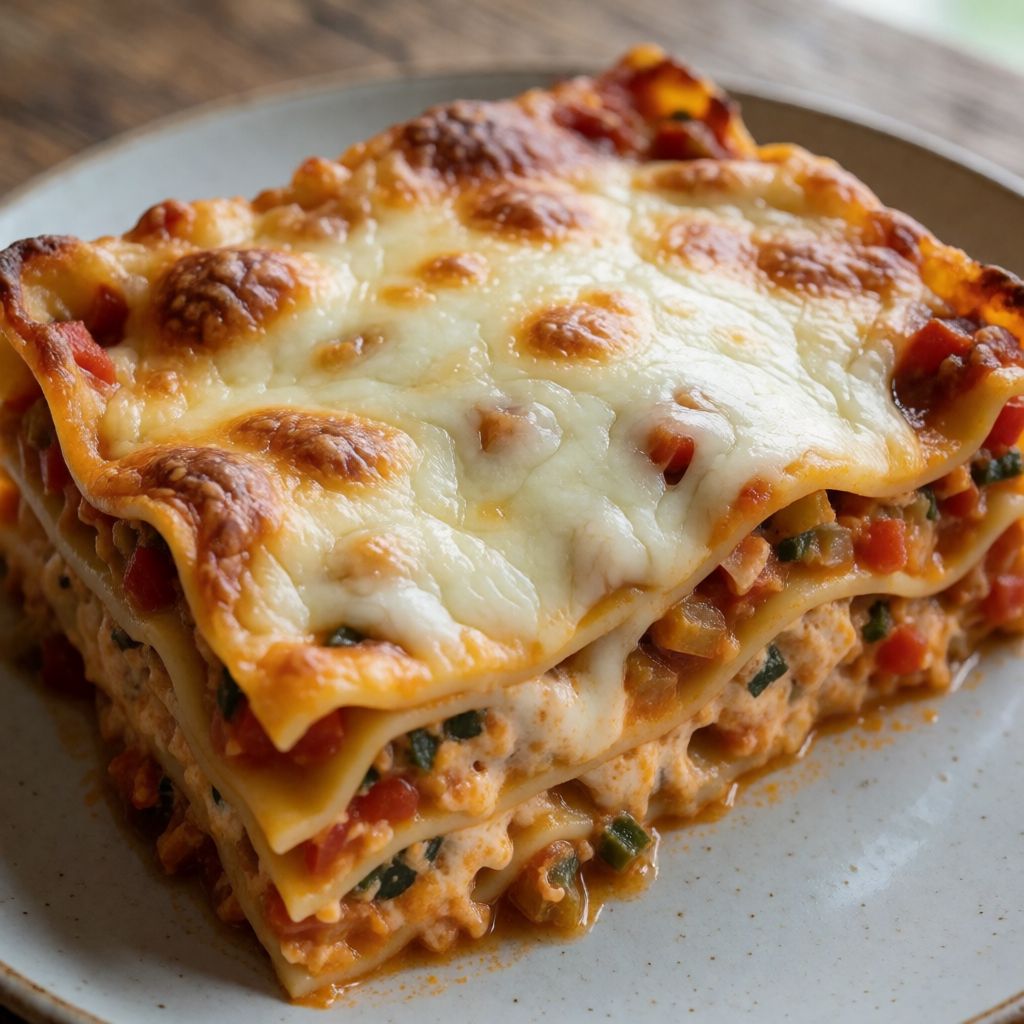
 AI photo
Turkey Ragù Lasagne with Mozzarella
A comforting layered lasagne with a slow-cooked turkey ragù, béchamel and melting mozzarella.
Labels are worked out automatically from the ingredients and can be wrong. Check the packaging if it matters to you.
Ingredients
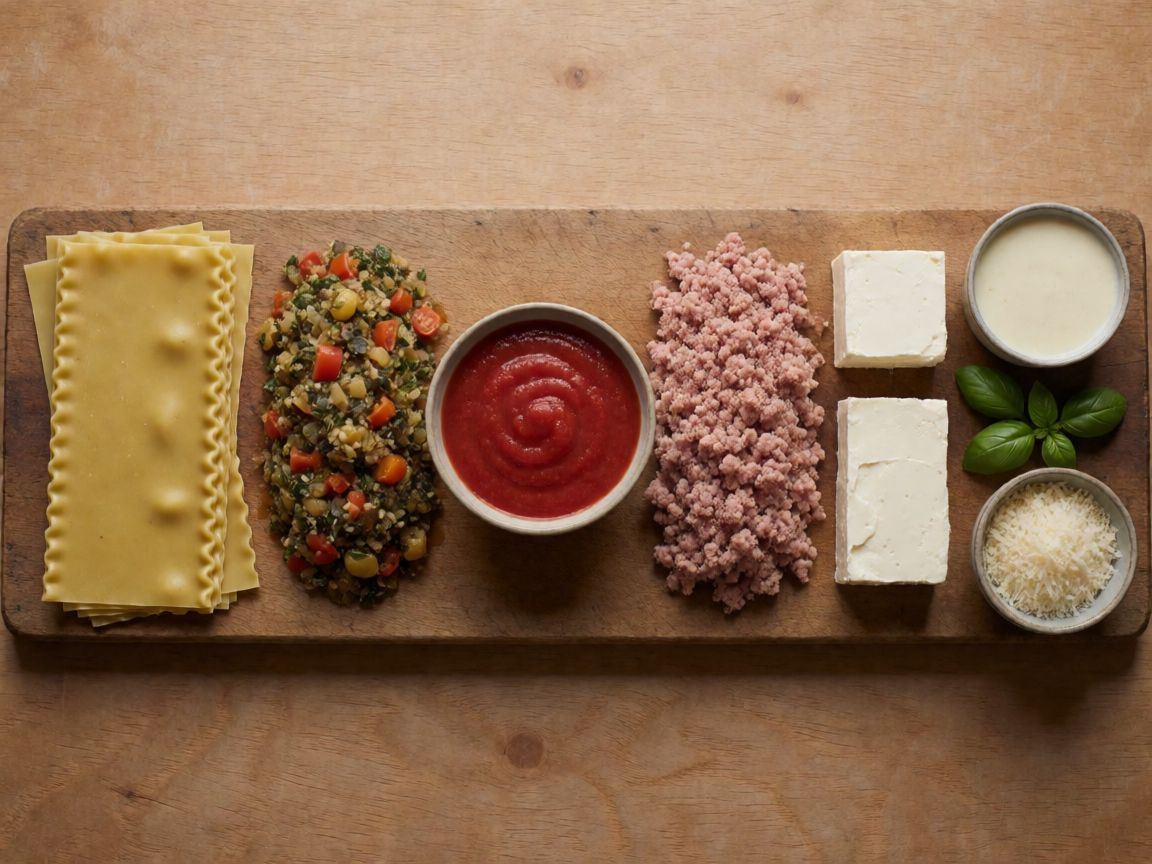
- Lasagne sheets
- 100 g Soffritto mix (onion, carrot, celery)
- Olive oil
- Salt
- Black pepper
- 200 g Tomato passata
- 250 g Minced turkey
- 200 g Fior di latte mozzarella
- 40 ml Béchamel sauce
- 2-3 pcs Basil
- Parmesan
- Butter
- 118 ml White wine













Steps
In a saucepan, fry the soffritto mix in two tablespoons of olive oil.
Add the minced turkey and pour in the white wine to deglaze.
Let the wine evaporate and cook gently.
10 minPour in the tomato passata, add chopped basil, season with salt and pepper, and cook.
10 minGrease a baking dish with olive oil, then spread a spoonful of sauce and a spoonful of béchamel.
Layer up: lasagne sheets, ragù, béchamel, diced mozzarella and grated Parmesan.
Finish with a top layer of ragù, béchamel, grated Parmesan and a few small pieces of butter.
Bake at 200°C. Doneness: internal temperature 74°C.
Serve sprinkled with grated Parmesan.
This is a weeknight lasagne that swaps beef mince for turkey, and that one swap changes almost every mechanism underneath. The ragù, the béchamel, the baking — all of it is built around one fact: turkey has next to no fat of its own. Beef ragù forgives you a few mistakes because the fat carries flavour and keeps things moist even if you overcook it a bit. Turkey doesn't. It dries out, it seizes up, it goes from tender to sawdust in the time it takes to answer the phone.
So the whole recipe is really a set of insurance policies against that dryness. The wine deglaze isn't a flourish — it lifts the browned bits off the pan and gives the lean mince some acid and moisture to cook in instead of its own (absent) fat. The béchamel layered through the lasagne, not just the top, is the same insurance repeated: a wet, fatty layer sitting next to the lean meat so the sheets and the ragù don't bake dry in an oven that doesn't care about turkey's feelings.
Some say turkey lasagne is just naturally drier than beef lasagne, full stop, nothing to be done — no. It's drier when you brown the mince hard and starve it on sauce. Fry gently, deglaze properly, don't be stingy with the béchamel, and the texture holds.
What decides whether this works isn't a clock, it's two checkpoints: the ragù has to thicken enough to sit in a layer without running, and the inside of the dish has to actually reach a safe temperature for poultry, not just look golden on top. Those two things matter more than any minute count on the page.
Start with the soffritto — onion, carrot, celery, diced small. Its job is to melt into the fat before the meat goes in, so its sugars and aromatics are already carried into the oil rather than sitting raw and sharp in the finished sauce. You're looking for the onion to turn soft and translucent, going toward gold at the edges, and the carrot to bend rather than snap when you press it with the spoon. Don't chase deep caramelisation here — that's a beef-ragù habit. Turkey is a mild, quiet meat, and a heavily caramelised base will just shout over it. No soffritto mix at the shop? Dice your own in the same rough 1:1:1 ratio — it's not a special product, it's a cut.
The turkey mince itself wants gentle heat, not a hard sear. Lean mince under high heat loses its moisture fast and turns rubbery, because there's no fat marbling to protect it as the proteins tighten. This is the real reason some people find turkey ragù dry — not the meat, the method. The wine goes in right after the meat to deglaze: it lifts the stuck-on bits of flavour off the base of the pan and, as the alcohol cooks off, leaves behind acid that balances the sweetness of the tomato later. You'll know the wine's done its job when the sharp, boozy smell stops rising off the pan and what's left smells rounder, more like fruit than spirit. If you're out of white wine, use something dry and acidic with no sugar in it — a dry vermouth works, a squeeze of lemon added late is a poor but workable last resort.
The passata is there to give body and a clean, strained texture — no seeds, no skins fighting the béchamel for attention in each forkful. Chopped tinned tomatoes will do if that's what's in the cupboard, but blitz them first, or you'll get pockets of raw tomato texture breaking up the layers. Basil goes in for scent more than taste at this quantity — add it once the sauce is already simmering, not at the start, or the heat just cooks the smell away before it reaches the plate. The sauce is done not by the clock but by the spoon: tip it, and it should sit on the spoon rather than run straight off. Ten minutes is the floor, not the finish line — a watery sauce after ten minutes just needs longer, full stop.
Fior di latte mozzarella, diced rather than torn, is chosen for being low-moisture — it melts and pulls without flooding the dish the way a wet buffalo mozzarella would. If fior di latte isn't to hand, any firm, low-moisture mozzarella sold for cooking does the same job; save the properly wet buffalo ball for eating cold with tomatoes, not baking. The béchamel is the moisture-and-fat layer doing double duty throughout — between sheets, not just on top — because that's what stops the lean ragù and the pasta drying into cardboard in the oven. Parmesan is doing a different job entirely: salt, and the savoury edge that turkey alone doesn't bring, plus the crust on top as it browns. Butter on top, in small pieces, exists because turkey brings no fat of its own to brown and crisp that surface — the butter is standing in for the fat the meat doesn't have.
The oven is set to a temperature that will brown the top and melt the cheese, but the actual finish line is the internal temperature — 74°C. That number isn't arbitrary: it's the point at which poultry is reliably cooked through, and it's a far more honest test than colour, because a lasagne can look perfectly golden on top while the centre is still shy of safe. A probe thermometer earns its keep here — cheap, and worth having in a flat kitchen where you've only got a conventional domestic oven and no way to judge by eye alone.
One more thing worth saying plainly: turkey mince, in a British kitchen, is often what's left in the freezer after a roast, or what's cheaper than beef that week — this recipe isn't chasing some Bolognese ideal, it's a practical, economical rework of lasagne using what's actually common and affordable here. Treat it as its own dish with its own logic, not a lesser cousin of the beef version, and build in the patience — the slow fry, the full wine evaporation, the properly thickened sauce — because with lean meat, patience is doing the work that fat would otherwise do for you.