
 AI photo
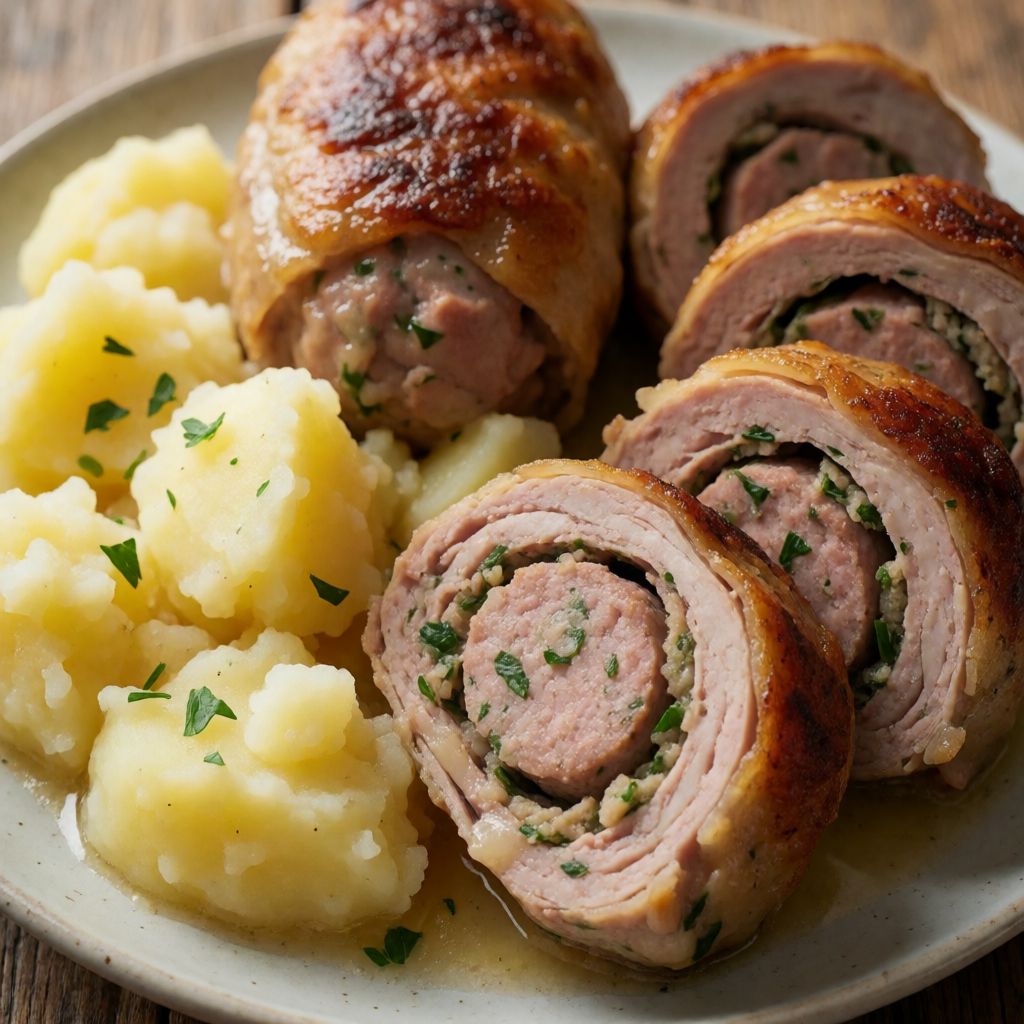
Veal Rolls with Stewed Potatoes
Veal rolls filled with a savoury sausage stuffing, browned then braised with white wine, potatoes and tomatoes.
Labels are worked out automatically from the ingredients and can be wrong. Check the packaging if it matters to you.
Ingredients
- 150 g minced veal
- 100 g minced sausage meat
- 1 pcs egg
- 1 tbsp parsley
- 2 clove garlic
- salt to taste
- 4 pcs veal schnitzel slices flattened
- olive oil to taste
- 250 ml white wine
- 200 g tomato
- 3 pcs potato
- basil to taste
- black pepper to taste













Steps
In a bowl, mix the minced veal with the minced sausage meat, egg, crushed garlic, parsley and a pinch of salt.
Spread the filling over the veal slices, roll them up and tie with kitchen string.
In a pan, fry a crushed garlic clove in olive oil, and once golden, remove it.
In the same oil, brown the rolls on all sides until golden.
Pour in the white wine and let it fully evaporate.
Cover with a lid and braise over low heat.
40 minAdd the potatoes and cherry tomatoes, stir and cook further. Ready when the inside reaches 71°C.
Season with salt and pepper to taste, sprinkle with chopped basil and parsley and serve.
This is braciole, more or less — a thin slice of veal rolled around a filling it didn't come with, and the whole thing stewed until the string becomes pointless. The dish is a trick of economics: a cheap flat cut, bulked out with sausage meat and egg, dressed up as something that looks and chews like a proper joint. Southern Italian kitchens have been doing this for generations, because veal was expensive and sausage meat was not, and a roll feeds the eye before it feeds the stomach.
What decides whether it works is the browning and the braise, not the rolling. You sear the rolls hard enough to build a crust — that crust is where the flavour of the finished sauce comes from, not the wine, not the tomato. If you skip it and go straight to simmering, you get grey meat in a thin liquid, technically cooked but tasting of nothing in particular.
The second thing that decides it is patience with the braise. Forty minutes is the floor, not the target. A rolled, stuffed piece of meat is thicker than a flat schnitzel, and thick meat on low heat needs time to let the collagen in that connective tissue turn to gelatine — that's what makes the texture soft instead of stringy. Pull it early because the clock says forty and you'll get rolls that are cooked through but still tough at the core.
The schnitzel slices need to be thin and even — if your butcher hasn't flattened them, do it yourself between two sheets of greaseproof with the flat side of a rolling pin, not the edge, or you'll tear the meat and the filling will leak out mid-braise instead of staying sealed. Veal is the traditional choice because it's lean and takes well to slow, wet cooking without turning rubbery the way a fattier cut might; thin-cut pork escalope or even turkey breast steak will do the same job if veal isn't to hand or budget — the filling supplies the richness that the wrapper doesn't need to.
The minced veal and sausage meat together are the point, not an accident. Minced veal alone is dry and bland once cooked; sausage meat brings fat and seasoning it already has built in — that's the whole reason butchers started seasoning sausage meat in the first place, so cooks could borrow its flavour without doing the seasoning work twice. If you're using British sausage meat, taste it first: some brands lean sweet or heavily on sage, and that will come through in the filling, so adjust the garlic and parsley accordingly rather than fighting it.
The egg in the filling is a binder, nothing more mysterious — it's what stops the mince falling apart into crumbs inside the roll once it heats and the fat renders out. Skip it and you risk the filling fragmenting the first time you turn the roll in the pan.
Kitchen string is for tying the rolls shut, and this matters more than it sounds: an unsecured roll unrolls the moment it hits hot oil, and now you're frying a flat burger patty wrapped in veal, which is a different and worse dish. If you don't have string, a couple of toothpicks through the seam will hold, just remember to pull them before serving.
The garlic fried and discarded at the start is there to perfume the oil, not to be eaten — this is a classic Italian move for dishes where garlic flavour is wanted but garlic texture, bitten into, would be too sharp against the softer meat and sauce. Any oil with no smell of its own works here — olive oil is traditional and gives a faint fruitiness that suits tomato and wine, but a neutral vegetable oil will brown the rolls just as well if that's what's in the cupboard.
The wine goes in and is told to evaporate fully — that's not for show, it's because wine that hasn't cooked off brings raw alcohol sharpness into the sauce; letting it reduce right down concentrates the acidity into something that balances the tomato instead of fighting it. If you're avoiding alcohol, a splash of stock with a spoon of wine vinegar gets you a similar acidic backbone, though the flavour won't be identical.
Potatoes and tomatoes go in only once the braise is underway, because raw potato takes roughly the same time to soften as the meat takes to tenderise — put it in too early with a very wet braise and it can break down to mush before the meat's ready; too late and it stays chalky. You're looking for a potato that yields to a knife point without resistance, not one that's falling apart on its own — that's your real cue, more reliable than any clock. In a domestic pan rather than a proper pot with a tight lid, you'll lose more liquid to evaporation than a kazan or Dutch oven would allow, so check partway through and top up with a splash of water or stock if the sauce is drying out faster than the potatoes are softening — an ordinary hob runs hotter and less evenly at "low" than people expect, and a wide shallow pan loses moisture fast.
Basil and parsley go in at the end, raw, because heat kills the top notes in both herbs fast — cook them through the braise and you'd be left with a flat green bitterness instead of the fresh lift they're meant to give. This feeds four as a main, each person getting one roll, and it sits happily enough next to the instinct for a Sunday roast — same idea, slow-cooked meat and vegetables in one pan, just with a Mediterranean accent instead of gravy.