
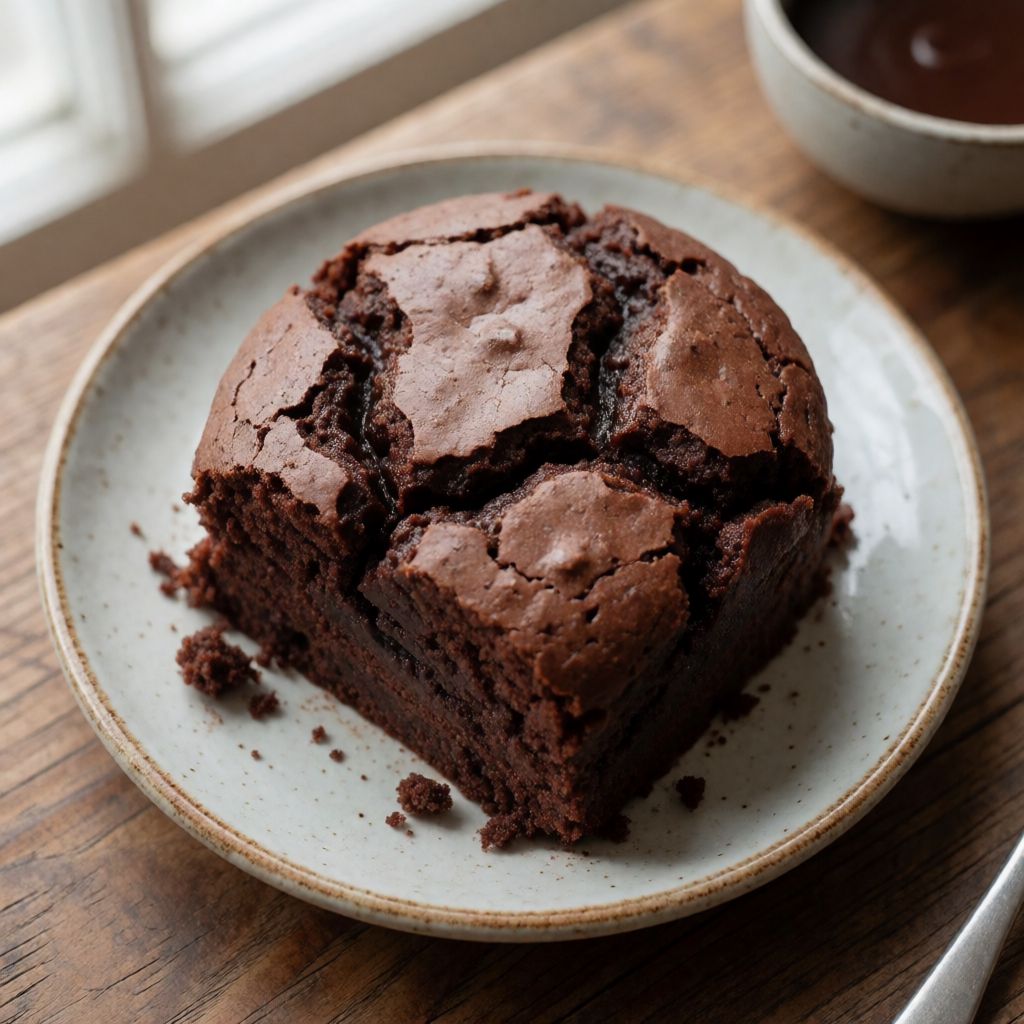
 AI photo
Vegan Chocolate Cake
A rich vegan chocolate cake made without eggs or dairy, perfect for any occasion.
Labels are worked out automatically from the ingredients and can be wrong. Check the packaging if it matters to you.
Ingredients
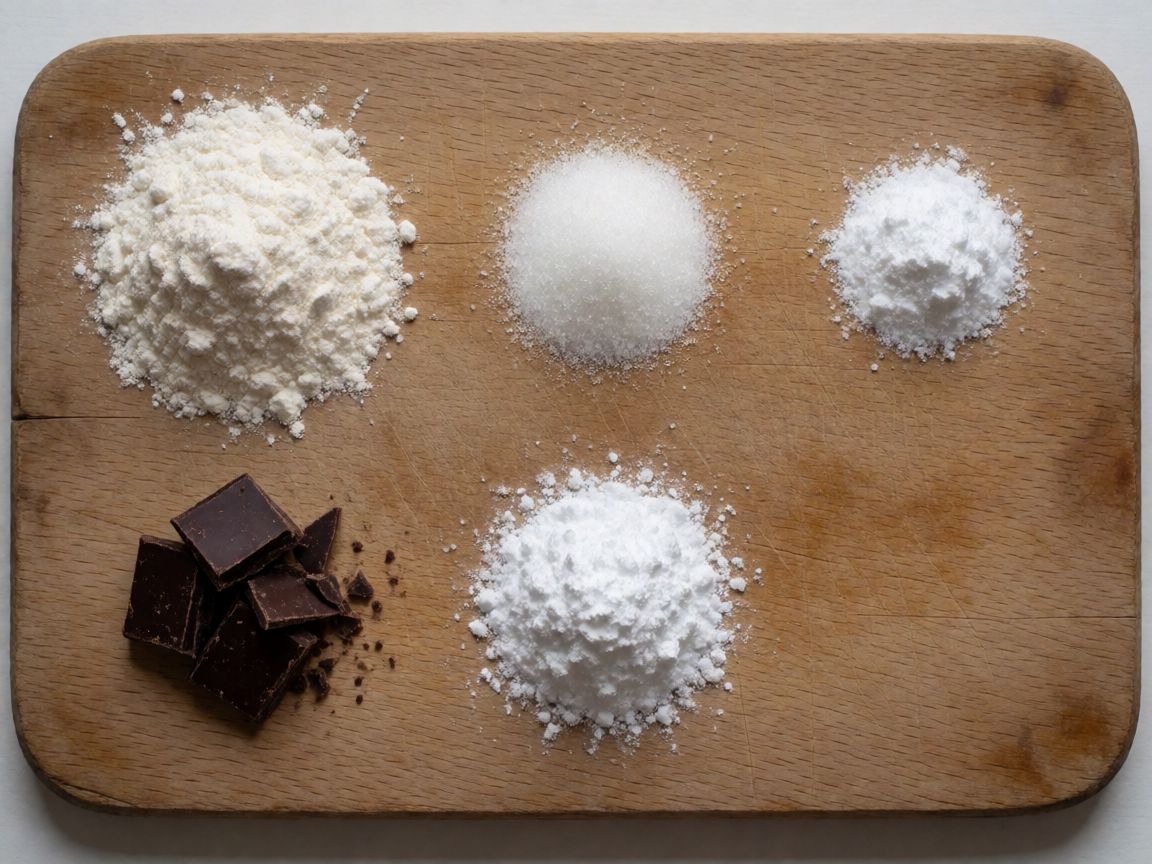
- 250 g Plain flour
- 130 g Caster sugar
- 16 g Baking powder
- 250 ml Water
- 70 g Vegetable oil
- 130 g Dark chocolate
- 1 tbsp Icing sugar to taste, for dusting







Steps
In a large bowl, mix all the dry ingredients: sift the flour and stir in the baking powder and sugar.
Gradually pour in the vegetable oil and water, mixing with an electric whisk until smooth.
Break the dark chocolate into pieces and melt it over a bain-marie or in the microwave. Let it cool slightly, then fold it into the batter.
Grease a 24 cm round tin with vegetable oil or line it with baking parchment.
Pour the batter into the tin and bake in a preheated oven on static (conventional) setting at 170°C.
48 minCheck doneness with a wooden skewer; if needed, leave the cake in the oven for a few more minutes.
Let the cake cool, remove it from the tin, and transfer it to a serving plate.
If desired, dust with icing sugar before serving.
This is a cake built without eggs and without butter — the two things that normally do the lifting and the binding in a sponge. Here the lift comes only from baking powder, and the richness comes from oil and melted chocolate instead of butter and whipped eggs. That changes what you get: not an airy sponge, but something closer to a dense, fudgy, almost brownie-leaning cake — because no air has been beaten into anything, the gas is chemical, not mechanical.
Some say a cake without eggs can't rise properly. No — baking powder does that job on its own, it's the same mechanism behind soda bread and most scones, no eggs anywhere near them. What you lose is the egg's other job, binding and tenderising the crumb; oil takes over tenderising, and the melted chocolate, once it cools and firms a touch, helps hold things together.
What decides whether it works: mix the dry ingredients first, flour, baking powder, sugar, together and dry, so the raising agent is spread evenly through the flour and not sitting in one wet pocket where it'll fire unevenly. Then move fast through the wet stage — the moment baking powder meets liquid it starts reacting, and every extra minute it spends in a warm, wet batter before the oven is gas you're losing before it can do its job lifting the cake.
Plain flour, not self-raising, matters here — the recipe already carries a deliberately generous dose of baking powder, 16 g against 250 g flour, almost double what a standard sponge would use, because there's no egg foam to help the lift. Self-raising flour would stack another raising agent on top of that, and you'd get a bitter, slightly soapy aftertaste along with a cake that rises fast, overshoots, and sinks back once it cools — too much gas, not enough structure built yet to hold it.
Baking powder works in two stages — once on contact with liquid, once again under heat — which is exactly why the batter survives the short wait between mixing and oven without going flat. It is not interchangeable with bicarbonate of soda alone; soda needs an acid in the batter to react at all, and there isn't one here in any useful quantity.
Oil stands in for butter, and the criterion for which oil is simple: it has to stay liquid and carry no flavour of its own. Sunflower or a plain vegetable oil does the job; rapeseed too. Leave out olive oil — it has a voice, and it will argue with the chocolate instead of getting out of its way. Oil also explains the texture difference from a butter cake: it coats the flour's proteins more completely than solid butter ever creamed into sugar does, which keeps the crumb tender but also denser — there's no air pockets left behind from creaming, because nothing was creamed.
Water is the plainest, cheapest liquid you can use, and that's the real history behind cakes like this one — recipes built on oil and water instead of butter, milk and eggs go back to times and households where the second set of ingredients wasn't always to hand or affordable. It's not a lesser cake for it, it's a more resourceful one; you could swap in oat or soya milk for a slightly rounder flavour, but water earns its place by not getting in the chocolate's way.
Dark chocolate carries both flavour and some of the fat and binding that eggs would otherwise supply — check it's genuinely free of milk solids if that matters to you. Its cocoa percentage sets the balance against 130 g sugar: go much higher in cocoa solids and the cake turns bitter and needs more sugar to match; go lower and it can turn cloying. Melt it gently, bain-marie or short bursts in the microwave, and let it cool a little before folding it in — tip it in still hot and it'll start cooking the batter at the edges and waking the baking powder up too soon, before the mixture's even in the tin.
Icing sugar goes on only once the cake is properly cool — dust it warm and the moisture coming off the crumb will melt the sugar into damp patches instead of a clean white layer. Patience here isn't decoration, it's the difference between a dusting and a smear. Good with tea, milk or not — that part's nobody's business but yours.