
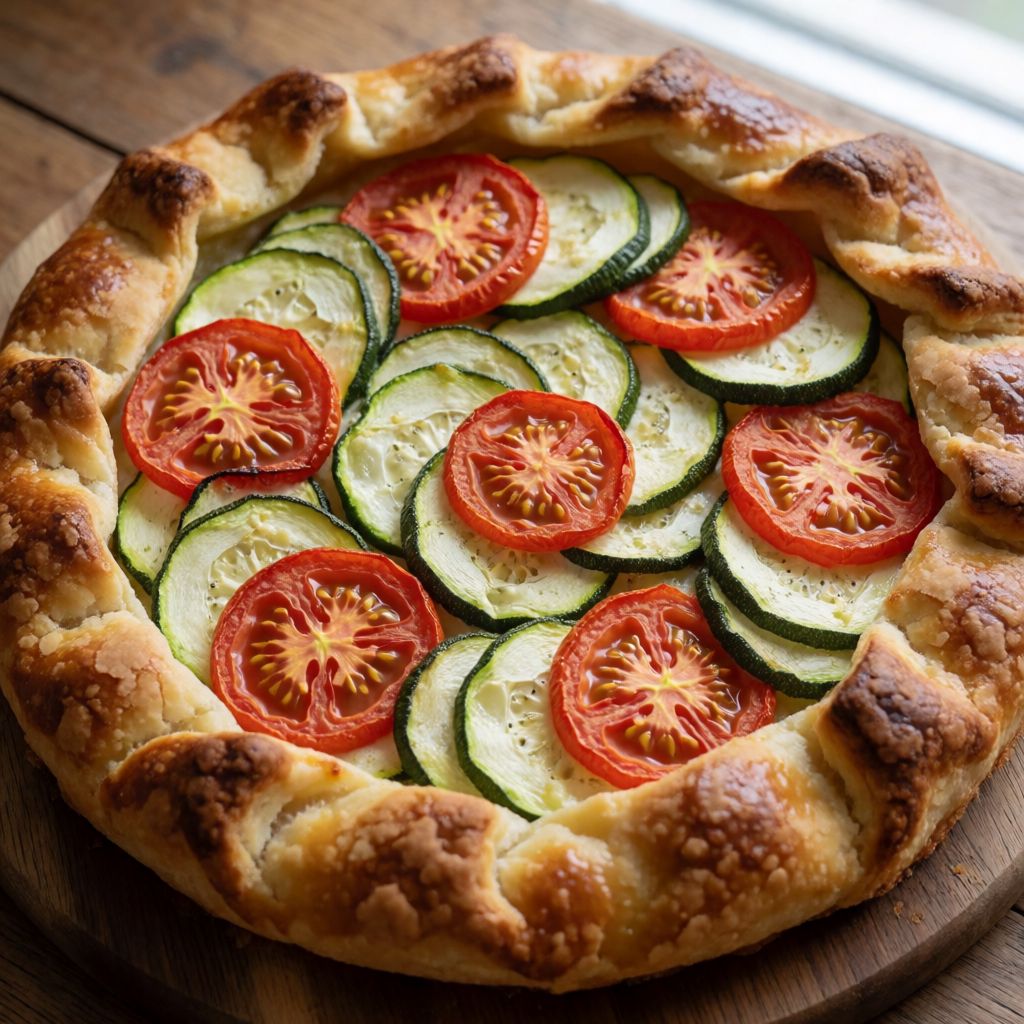
 AI photo
Vegetable Crostata
A savoury shortcrust tart filled with courgettes, cherry tomatoes and mozzarella, finished with Parmesan and basil.
Labels are worked out automatically from the ingredients and can be wrong. Check the packaging if it matters to you.
Ingredients
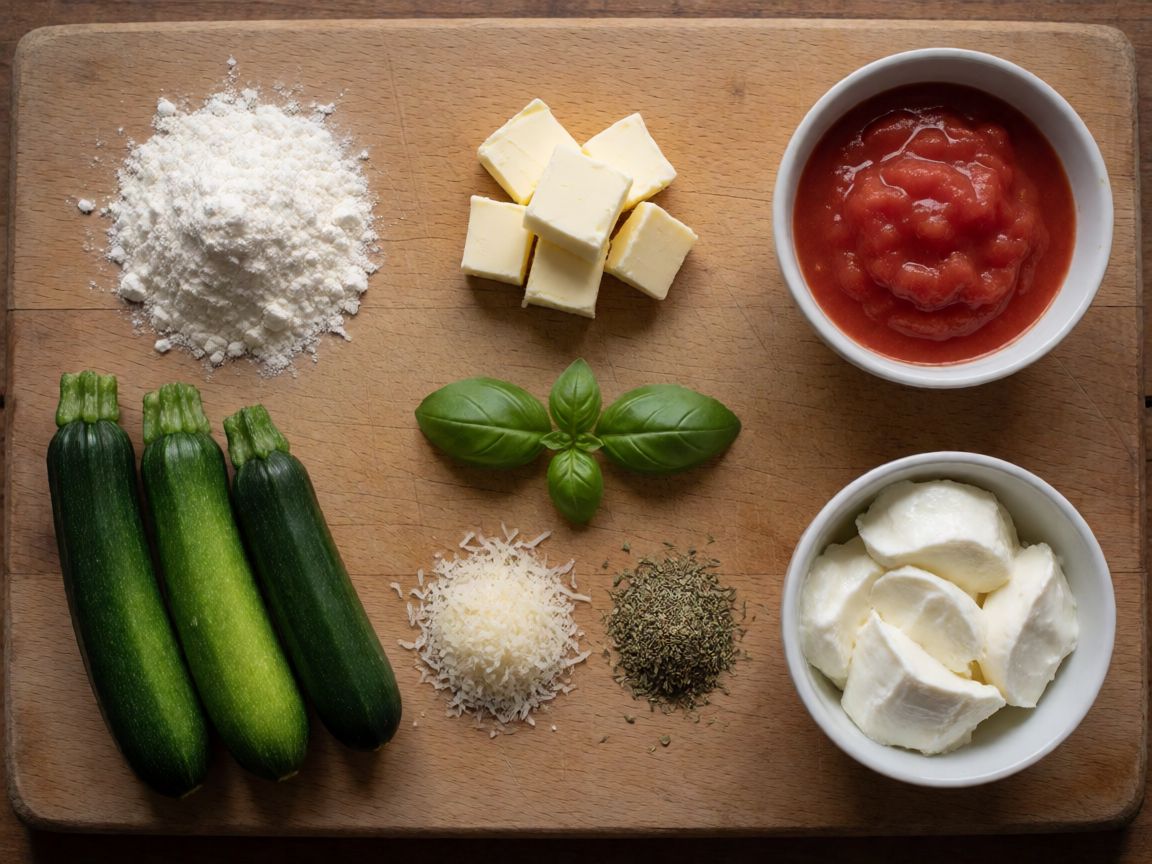
- 250 g Plain flour
- 125 g Butter cold, cut into cubes
- 85 ml Water cold
- Salt to taste
- 3 pcs Courgettes
- 200 g Pachino cherry tomatoes
- 125 g Mozzarella
- 30 g Parmesan
- Olive oil to taste
- Dried herbs thyme, marjoram, oregano, to your taste
- Black pepper to taste
- Basil to taste, for garnish











Steps
On a work surface, pile the flour into a mound, make a well in the centre, add the cold butter cut into cubes and a pinch of salt, then pour the cold water into the centre.
Quickly knead the dough by hand until smooth and elastic, shape into a ball, wrap in cling film and chill in the fridge.
30 minRoll out the chilled dough on a lightly floured surface to a thickness of 4-5 mm and transfer it to a buttered 26 cm baking tin.
Prick the base of the dough with a fork, mix half the Parmesan with the chopped dried herbs and spread evenly over the dough.
Wash and quarter the Pachino cherry tomatoes, wash the courgettes and cut into small cubes, and cube the mozzarella too.
Mix the tomatoes, courgettes and mozzarella with oil, salt and pepper to taste, then spread the filling evenly in the tin.
Sprinkle the remaining Parmesan over the top and fold the edges of the dough inward.
Bake in a preheated oven at 200°C until the crostata turns golden.
25 minGarnish with basil before serving.
A crostata is just an open-faced tart that trusts the filling to speak for itself — no top crust hiding what's inside, no fuss pretending this is more than it is. What decides whether it works is the pastry, and the pastry is decided by temperature: cold butter, cold water, a quick hand. The moment the butter softens and smears into the flour instead of staying in flecks, you've made a biscuit base, not a crust that shatters.
Some say pastry needs resting because "that's the rule." No — it rests because gluten, once worked, is elastic and stubborn; it springs back when you roll it, shrinking the base as it bakes and pulling the walls down with it. Thirty minutes in the fridge lets that tension relax and the butter re-firm, so what you roll out stays where you put it.
The second thing that decides the dish is water. Courgettes and tomatoes are both mostly water, and a raw pastry base under a wet vegetable filling for twenty-five minutes is an invitation to a soggy bottom — the actual enemy here, not some abstract lack of skill. The Parmesan-and-herb layer under the vegetables isn't decoration; it's a barrier, a thin dry buffer between crust and juice.
Flour is just flour — nothing exotic, the same bag you'd use for shortbread or a pie. The ratio that matters is butter to flour, here exactly half: 125 g to 250 g. That's a shortcrust proportion, firmly on the "crisp, slightly crumbly" end rather than the stretchy end. Don't be tempted to add egg for richness unless you want a different, sturdier dough — this one is built to be fragile, which is correct for a tart base, not a fault.
Butter must be cold and in cubes, not softened "for ease." The point is that small unmelted lumps of fat coat flour particles and later melt in the oven, leaving pockets of steam — that's what gives shortcrust its short, flaky bite instead of a dense one. If your kitchen is warm, work fast, or chill the cubed butter again before you start; a food processor pulsed in short bursts does the same job as cold hands if yours run warm. Any neutral fat with a real melting structure could substitute at a push, but margarine behaves differently under heat and will give you a softer, less crisp result — not a disaster, just not the same dish.
Courgettes: pick firm, glossy ones with tight skin — a soft or wrinkled courgette has already lost water and will leak more, not less, once cooked, because its cell walls have broken down. Cube them small and don't salt them in advance expecting to "draw out water" before baking — here you want them raw and fresh into the filling; the short, hot bake and the Parmesan barrier underneath are doing the moisture-management work, not a salting step.
Pachino tomatoes are small, dense, and notably low in water for a tomato — that's exactly why a Roman or Sicilian recipe calls for them by name rather than just saying "tomatoes." Any firm cherry tomato works as a substitute; what you're choosing for is flesh-to-juice ratio, not the label. A big, juicy salad tomato would flood the base and undo the whole point of the Parmesan layer.
Mozzarella here is for pockets of melt, not for stretch — so the ordinary cow's-milk ball from the fridge, well drained, is fine; you don't need the pricier buffalo version, and you actively want it on the firmer, less watery side. Parmesan does two jobs at once, as I said — barrier underneath, savoury crust on top — so don't skip splitting it in half; all of it on top and none underneath defeats the purpose.
200°C and "until golden" is the honest way to describe the oven cue, because ovens lie about their own numbers and a home oven's hot spots vary tray to tray. Twenty-five minutes is where to start checking, not where to stop the clock blind — look at the pastry edge, not the filling, since the filling will look done long before the base is properly set. And folding the dough edges inward instead of trimming them isn't rustic styling for its own sake — it's a wall, keeping the filling's juices from running straight off the tin onto your oven floor on a Sunday when you've also got a roast in there.