
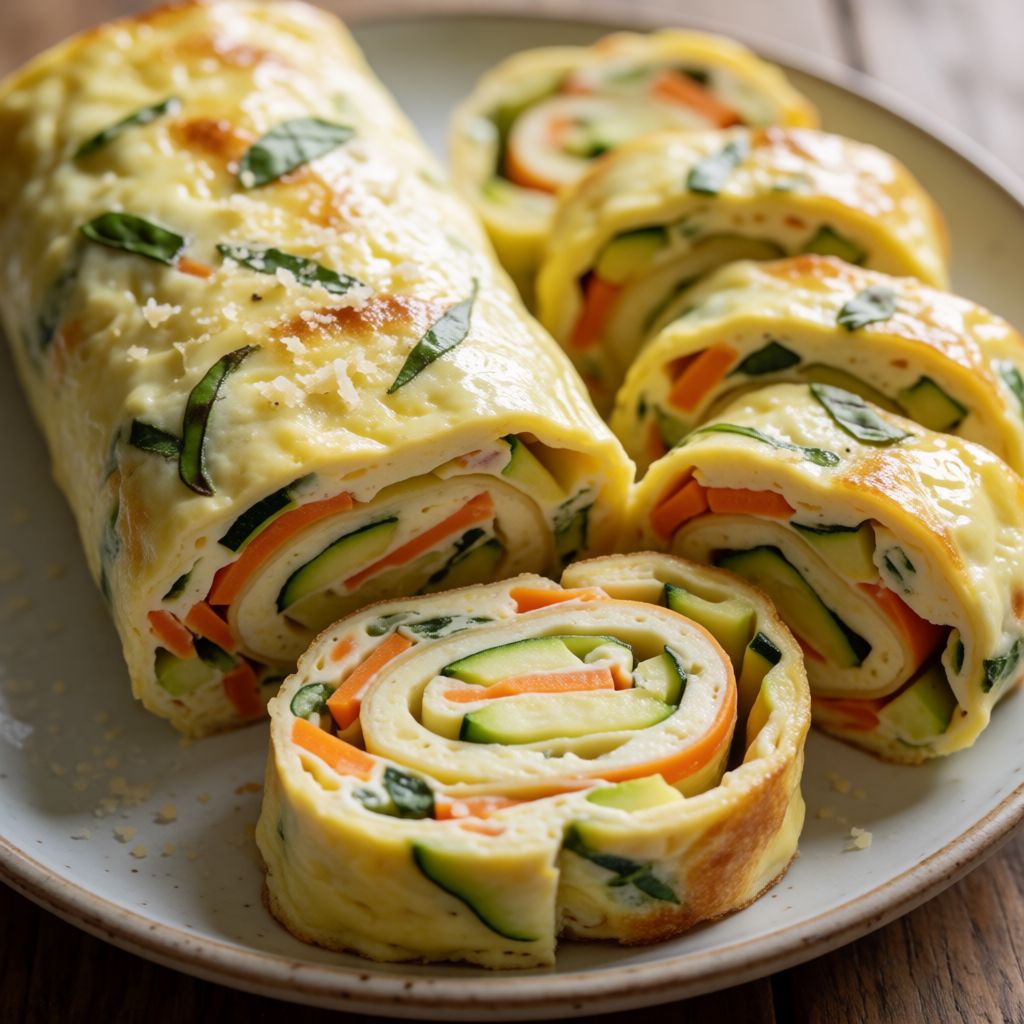
 AI photo
Vegetable Frittata Roll
A light courgette and carrot frittata rolled around cream cheese, chilled and sliced into pinwheels.
Labels are worked out automatically from the ingredients and can be wrong. Check the packaging if it matters to you.
Ingredients
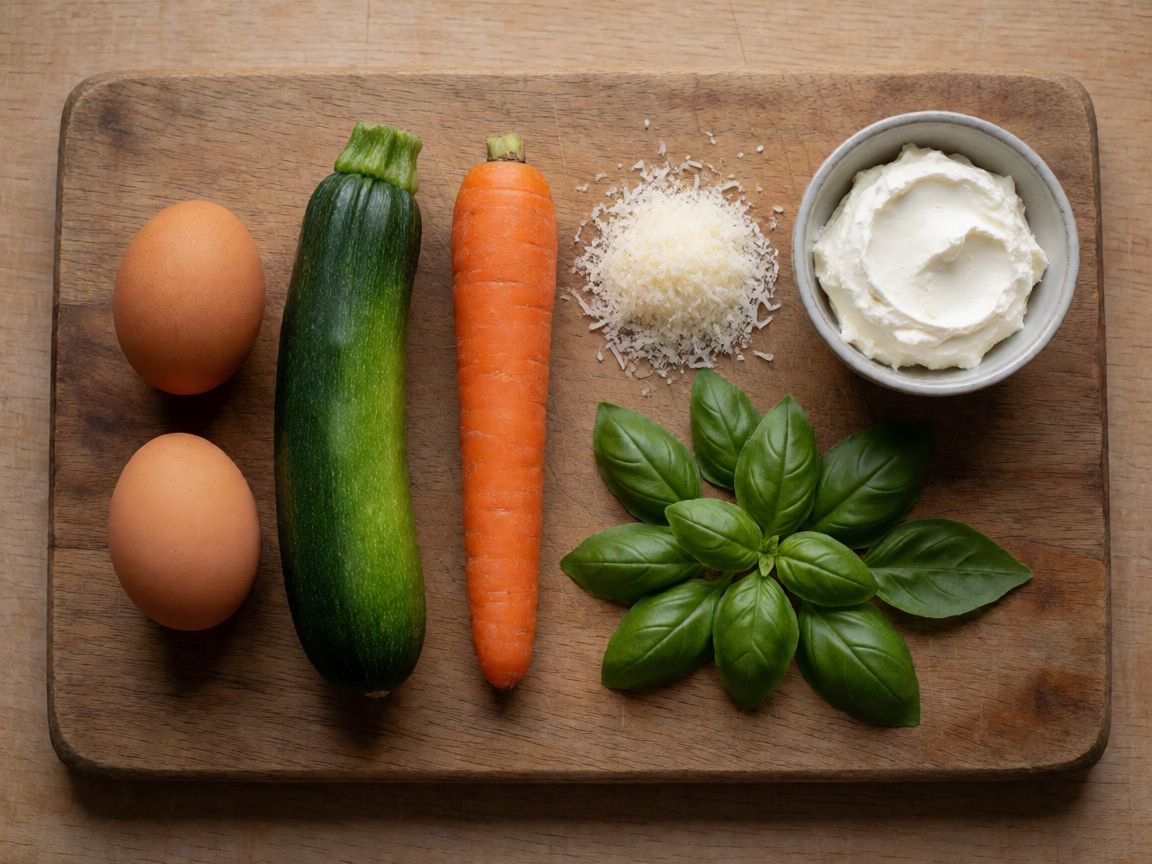
- 2 pcs Eggs
- 1 pcs Courgette
- 1 pcs Carrot
- 15 g Parmesan
- 6-7 pcs Basil leaves
- Salt to taste
- Black pepper to taste
- Olive oil for frying
- 50 g Cream cheese








Steps
Wash the courgette and peel the carrot. Grate both vegetables on the coarse side of a box grater, then squeeze out the excess moisture well using a paper towel.
5 minTip the vegetables into a large bowl, add the Parmesan, eggs, salt, black pepper and chopped basil. Mix quickly until smooth.
5 minHeat a little olive oil in a 22–24 cm frying pan, pour in the vegetable-egg mixture and spread it out evenly.
2 minCook over medium heat until the frittata is golden underneath, then carefully flip and cook on the other side for a couple more minutes.
6 minTransfer the frittata to a board, let it cool, then spread the cream cheese evenly over the surface.
5 minCarefully roll the frittata up, wrap it in cling film and chill in the fridge for at least 30 minutes before slicing into rounds and serving.
30 min
Forget the word frittata for a second. What you're making is a thin, firm sheet of egg and vegetable that has to behave like a scroll, not a biscuit — it needs to bend around a layer of cheese without snapping. Everything in this recipe serves that one requirement.
Courgette and carrot are mostly water wearing a vegetable costume. Grate them and you've opened every cell wall you can reach — now that water wants out. If it stays in, it dilutes your two eggs, and two eggs were never going to be a strong binder to begin with. The result is a mixture that never truly sets: wet in the middle, tough at the edges, and it tears the second you try to roll it instead of folding like cloth. Squeezing the grated veg dry isn't fussiness — it's the difference between a roll and a pile of scrambled vegetables.
Some say eggs need a hot pan to "seal" quickly. No — a hot pan sets the underside into rubber while the top is still runny, and rubber doesn't bend, it cracks. You want gentle, steady heat: the kind where the edges turn matte and opaque within moments rather than browning on contact. That's protein doing its job slowly and evenly, not seizing up. Flip it like a thin pancake, not like something you're defending yourself against — this is a wide domestic frying pan, not a kazan, and a plate slid under and over is lid enough.
On the eggs: they're the glue, not the bulk, which is unusual for a frittata — most recipes lean egg-heavy and treat vegetables as the extra. Here it's the reverse, vegetable-heavy with just enough egg to bind it, so the whole dish behaves more like a savoury terrine than a classic Italian frittata. Use whatever eggs you have, but know that a tired old egg has thinner, runnier white and binds worse — if that's all you've got, you'll want to squeeze the vegetables even harder to compensate.
Courgette and carrot: pick firm, smallish ones. A huge overgrown courgette is mostly seed cavity and water, and you'll be squeezing out half the vegetable along with the moisture. Grate coarse, not fine — fine shreds collapse into paste and lose the bite that tells you there's a vegetable in there at all.
Parmesan is doing two jobs: salt and dryness. Its saltiness means you can go lighter on the salt pot, and its dryness quietly soaks up some of whatever moisture escaped your squeezing. Any hard, aged, salty cheese does the same work — pecorino, grana padano, even a sharp mature cheddar grated fine if that's what's in the fridge. What you don't want is a soft or young cheese here; it won't firm the mixture, it'll loosen it.
Basil gives a clean, grassy lift against the sweetness of carrot and the richness of cheese. The criterion for swapping it is simple: any soft, tender herb that bruises easily under a knife — parsley, dill, even mint in a thin scattering. Woody herbs like rosemary or thyme fight the dish rather than lifting it.
Cream cheese is the filling, and its job is to be soft enough to spread on a cooled sheet but firm enough, once chilled, to hold a spiral when you cut through it. The criterion is thickness and mildness — ricotta beaten smooth with a spoonful of soft cheese works, as does strained Greek yoghurt or labneh if you want something lighter and tangier. A runny soft cheese will just ooze out the ends of the roll, however patient you were with the chilling.
Olive oil here is just there to stop the egg sticking and to brown the underside gently — in most recipes I'd tell you to use anything with no smell of its own, but olive oil's faint flavour actually belongs in this dish, sitting comfortably next to the basil and Parmesan. If you only have a neutral oil in the cupboard, that's fine too; you'll lose nothing essential, just a quiet background note. As for servings — two eggs, one courgette, one carrot makes a light dish for two, more of a starter or a light lunch with bread than a Sunday-roast-sized main. Don't try to stretch it to four by eye; you'll just end up with a thinner, weaker sheet that tears before it even gets to the rolling stage.