
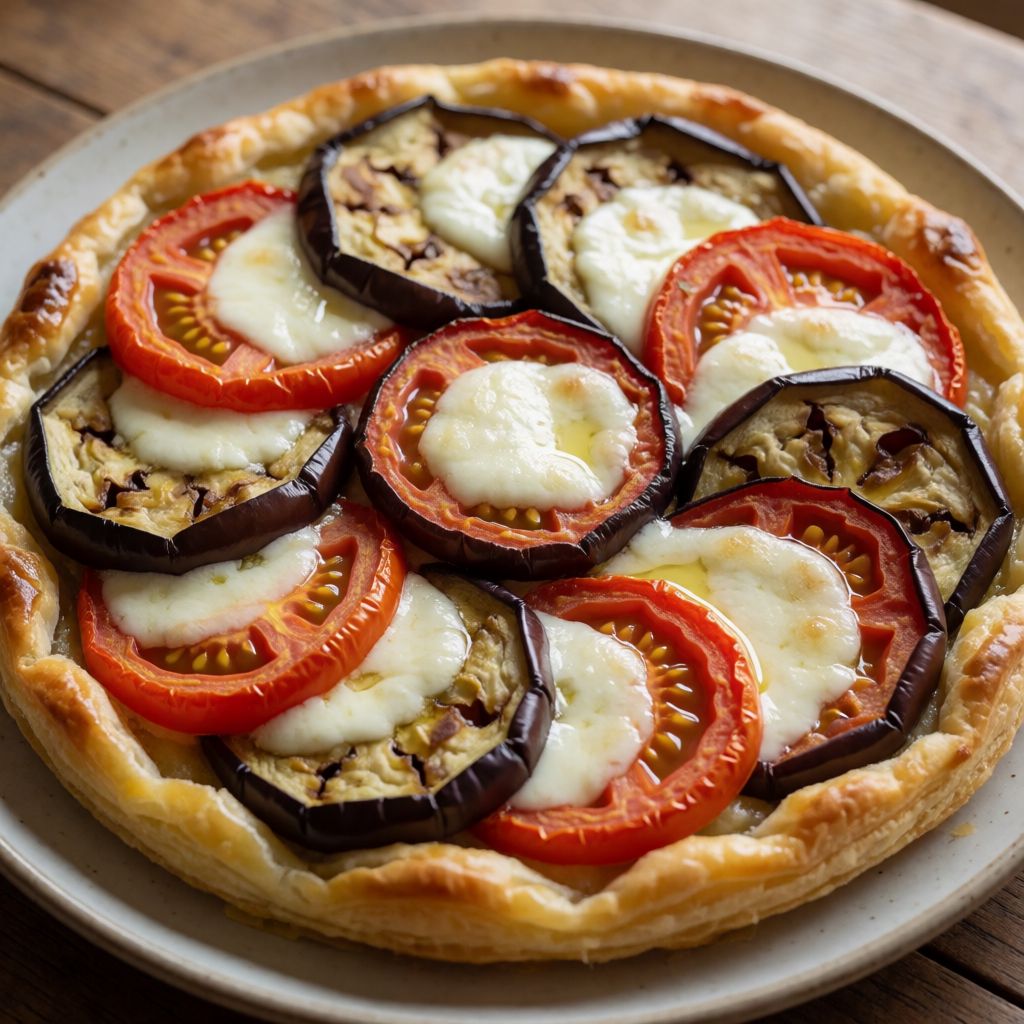
 AI photo
Vegetable Pie
A savoury puff-pastry pie filled with aubergine, tomato and mozzarella.
Labels are worked out automatically from the ingredients and can be wrong. Check the packaging if it matters to you.
Ingredients
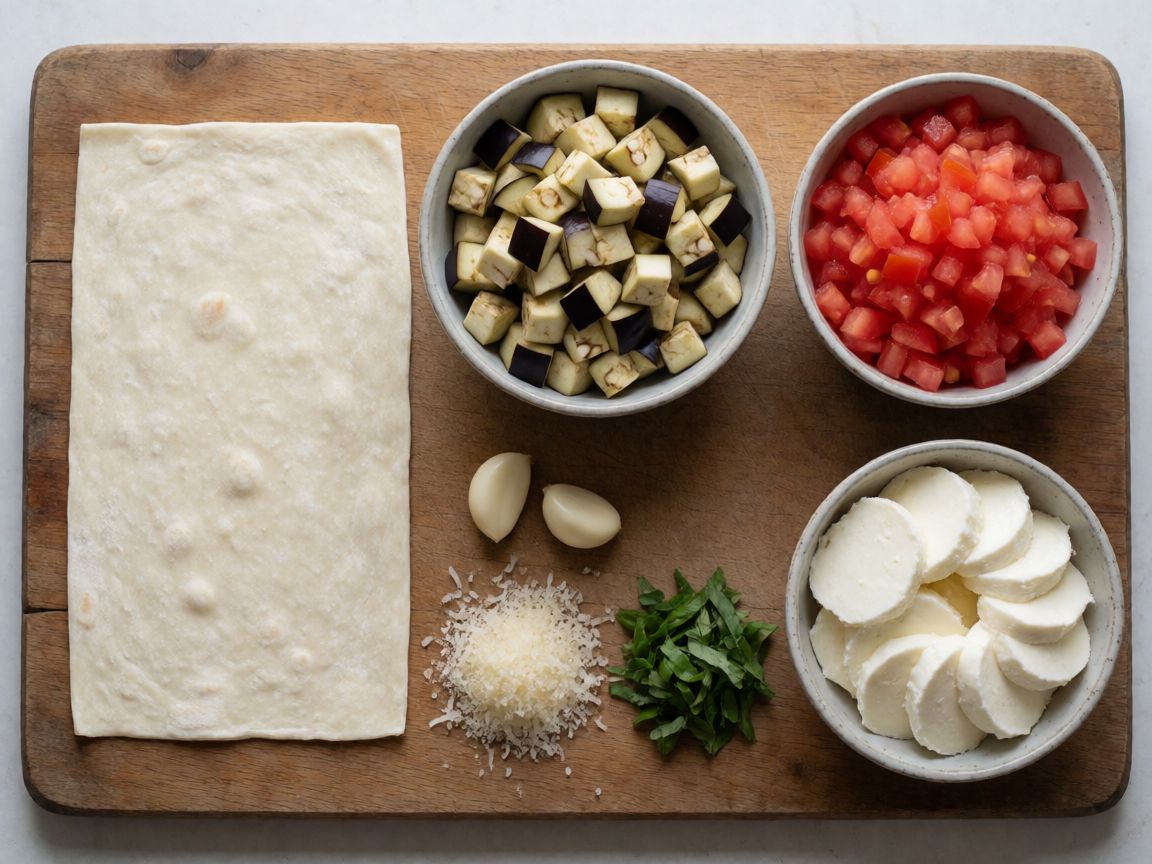
- 1 pcs Ready-rolled puff pastry
- 400 g Aubergine
- 320 g Tomato
- 130 g Mozzarella
- 2 clove Garlic
- Olive oil to taste
- Parmesan to taste
- Salt to taste
- Basil to taste








Steps
Trim, wash and dice the aubergines into small cubes; wash the tomatoes and dice them the same way.
In a non-stick pan, sauté the garlic cloves in a little olive oil; as soon as they turn golden, remove them and add the aubergines.
Cook the aubergines, stirring occasionally.
Transfer the aubergines to a bowl and mix with the diced mozzarella, tomatoes and basil.
Take a baking tin, lay in the puff pastry and prick the whole surface with a fork.
Spread the filling evenly and fold the edges of the pastry inward.
Preheat the oven to 180°C and bake for about 30 minutes, until the top turns golden.
30 minRemove from the oven and serve while still warm.
This is a free-form vegetable tart built on a sheet of bought puff pastry: cooked aubergine, raw tomato and diced mozzarella folded into a rough parcel and baked till the rim lifts and goes gold. There's no egg custard holding it together like a quiche — the filling is held by melted cheese and whatever juice the vegetables still carry. So the one question that decides whether this works is simple: how much free water goes into the oven with it.
That's why the aubergine gets heat before anything else. Raw aubergine is spongy, full of tiny air pockets, and mildly bitter — tip it in uncooked and in thirty minutes at a gentle 180 it won't soften properly, and on the way it will shed its own water straight onto your pastry base. Cooking it first, hot, in a little garlic-scented oil, drives that moisture off as steam in the pan instead of as sog in the tin.
The tomato, by contrast, goes in raw and stays raw — diced and mixed in cold, after the aubergine has cooled a little, so it keeps its acid bite against the softened vegetable and the melting cheese. Dicing without deseeding does mean juice, but by then the aubergine has already done the job of carrying less water into the oven, so the tomato's small contribution is one the pastry can usually absorb without turning to paste.
Start with the pastry, since it's doing more work than it gets credit for. Ready-rolled puff from the fridge — Jus-Rol and the like are what most UK kitchens actually have — should go into the tin cold and firm, straight from the fridge, not left out to go floppy on the counter. The lift in puff pastry comes from thin layers of fat trapped between thin layers of dough; warm pastry lets that fat start melting into the dough before it ever sees the oven, and you lose the separation that gives you a crisp, lifted rim instead of a flat biscuit. An all-butter block tastes better on its own, but here the filling carries the flavour, so a standard vegetable-fat block pastry does the job fine — the criterion is cold and intact, not expensive.
Garlic: two cloves, bruised rather than minced, fried gently in oil until gold, then fished out. A whole or lightly crushed clove can be pulled the moment it colours; mince it and it catches in seconds and turns bitter before you've noticed. The point of this step isn't the garlic itself ending up in the pie — it's perfumed oil, nothing more, and the clove is discarded because burnt garlic ruins a dish out of all proportion to how little of it there is.
The aubergine, 400g, is roughly one large one. Dice it to about the size of the mozzarella and tomato pieces so every forkful gets all three, not a mouthful of one. Use a non-stick pan, because aubergine flesh is naturally greedy for oil — those air pockets soak it up — and a pan that needs extra oil to stop sticking just feeds that greed further, leaving you with an oily, heavy filling instead of a soft one.
Tomato, 320g, is three or four decent salad tomatoes — pick ones with real weight for their size, not the hollow, pale sort that are mostly water and skin. No need to peel or deseed for something this quick and rustic; if yours turn out unusually watery, a pinch of salt and a few minutes in a sieve before mixing will spare the base, but that's a precaution, not a rule.
Mozzarella, 130g, one ball, diced rather than torn — torn gives long stringy pulls that make a slice hard to serve cleanly for six people; diced, it melts into pockets and holds a cut edge. Any mild, moist cheese that melts without going rubbery will do instead — scamorza, a soft provolone — the test is in how it behaves under heat, not the label on the packet. Parmesan on top, if you use it, is there for a savoury crust and colour on the pastry edge, not for bulk.
The fork-pricking before filling isn't decoration — it's docking, letting trapped steam escape through small holes instead of ballooning the whole base into one uneven bubble that tips your filling sideways. Folding the rim in rather than blind-baking a proper shell makes this a galette, not a pie in a tin — one tray, nothing fluted, which suits a flat with one oven and no drawer full of tins. If yours is a fan oven, knock the temperature down a little; they push heat harder than the dial admits. And judge it the way you'd judge a roast potato, not a timer: the rim should have lifted and gone that same deep gold, not pale and not dark. Give the finished tart a few minutes out of the oven before cutting — the mozzarella needs that pause to set just enough that a slice holds together on the plate. Rush either end, the aubengine stage or this one, and you get either sog or a mess; patience here isn't sentiment, it's the last ingredient on the list, unwritten.