
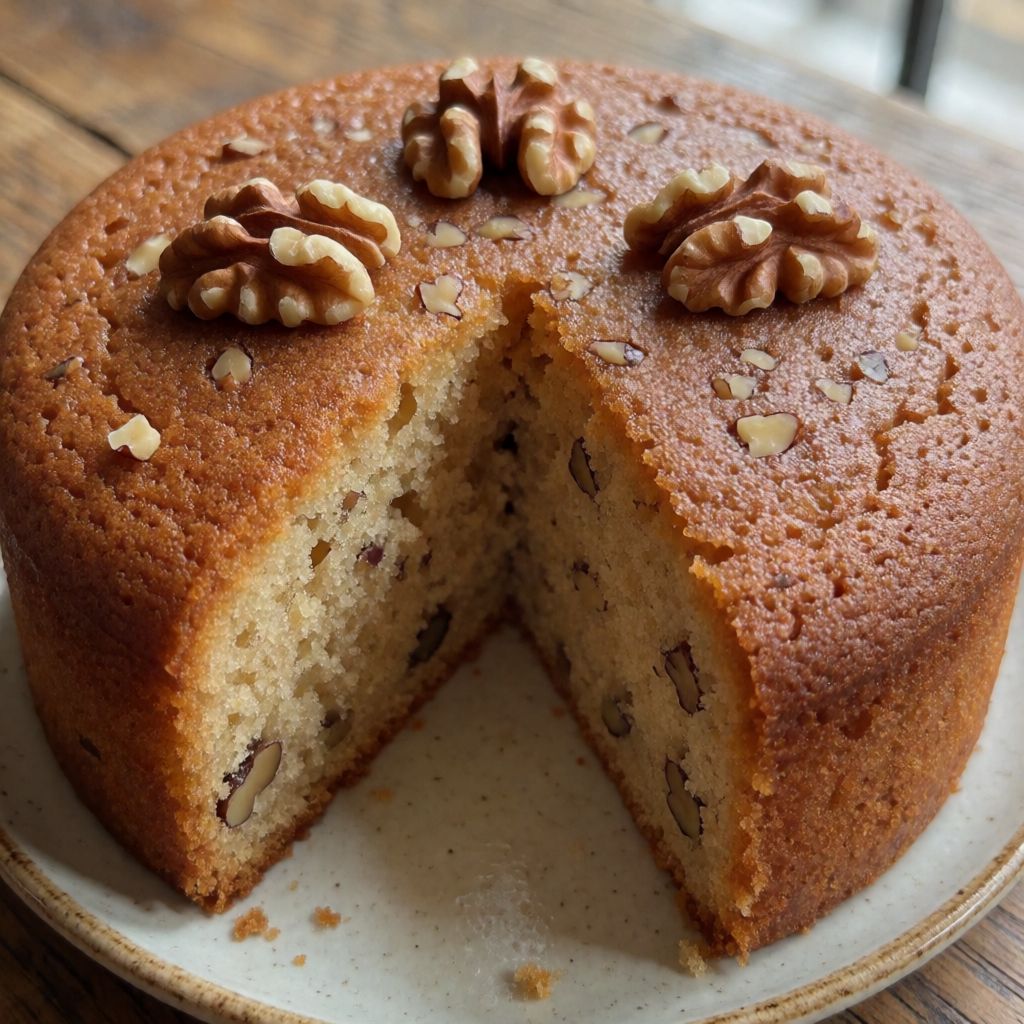
 AI photo
Walnut Cake
A layered sponge cake filled with whipped cream, chocolate and walnuts, finished with a coffee glaze.
Labels are worked out automatically from the ingredients and can be wrong. Check the packaging if it matters to you.
Ingredients
- 5 pcs Eggs
- 1 pcs Vanilla pod
- 125 g Caster sugar
- 70 g Butter softened, at room temperature
- 100 g Plain flour
- 75 g Walnuts ground to a flour-like texture
- 1 pinch Salt
- 1.5 tsp Baking powder
- 1 pcs Vanilla pod
- 1 tbsp Caster sugar
- 800 ml Whipping cream
- 150 g Dark chocolate roughly chopped
- 125 g Walnuts roughly chopped
- 3 tbsp Rum
- 200 g Icing sugar
- 50 ml Coffee
- 30 g Walnuts for decoration











Steps
Separate the egg whites from the yolks.
Cut the vanilla pod lengthways and scrape out the seeds. Mix them with the sugar. Beat the sugar, vanilla and egg yolks until light and fluffy.
Beat the softened butter into the batter.
Mix the plain flour, ground walnuts, salt and baking powder, then quickly fold into the batter.
Whisk the egg whites to stiff, firm peaks.
Gently fold 1 tablespoon of the egg whites into the batter, then carefully fold in the rest without knocking out the air.
Spread the batter into a greased 20 cm springform tin lined with baking paper on the base.
Bake the sponge in a preheated fan oven at 175°C for about 30 minutes.
Leave the sponge to cool completely in the tin, then slice it into three layers.
Cut the vanilla pod lengthways and scrape out the seeds. Mix them with the sugar.
Whip the cream with the vanilla sugar until stiff.
Fold the chopped walnuts and chopped chocolate into the vanilla whipped cream.
Drizzle the sponge layers with a little rum.
Place one layer base-side down on a serving plate and spread some of the cream mixture over it.
Place the next layer on top and repeat the layering.
Place the final layer base-side up, press the cake down gently and smooth the edges with a palette knife.
Beat the icing sugar with the coffee to a thick glaze and spread it over the cake.
Decorate with walnuts.
Let the cake rest in the fridge for a few hours before serving.
This is a walnut sponge, three layers deep, stacked with rum-soaked cream, chocolate and nuts, and finished with a coffee glaze. It looks like a special-occasion cake because it is one — five eggs, 800ml of cream and a cake tin that needs a full afternoon are not a Tuesday-evening proposition. But nothing about it is difficult. It falls apart, when it does, for one reason: you knock the air out of the egg whites before they ever reach the oven.
A sponge like this has almost no raising agent doing the real work. A pinch and a half of baking powder is a safety net, not the engine. The engine is egg white, whisked to stiff peaks and folded in gently enough to survive the trip into the tin. Whisking builds a mesh of tiny air bubbles held together by protein; folding carelessly — stirring, beating, rushing — tears that mesh open and the air leaves before the heat can set it in place. That's why you fold in one spoonful first, to loosen the thick batter so it doesn't bully the rest of the whites into collapse, then fold in the remainder slowly, cutting and turning rather than mixing. Some say a flat sponge means your oven runs cold. No — it almost always means the whites went in angry instead of patient.
Eggs are doing two jobs at once here and that's worth separating in your head. The yolks, beaten with sugar and vanilla until pale and thick, are an emulsifying and flavour-carrying base — that's where the fat from the butter gets absorbed smoothly instead of sitting in greasy pools. The whites are structural, the scaffolding that gives the sponge its lift. Use eggs at room temperature if you can — cold whites whisk up more slowly and hold less air, which is a small thing but it stacks with the folding technique above. There's no substitute for egg here that behaves the same way; this isn't a cake you can make eggless and expect the same lift.
Butter softened at room temperature, not melted — melted butter is liquid fat and behaves completely differently when beaten into a batter, it won't trap air the same way and the crumb goes denser and greasier. "Softened" means you can press a thumbprint into it without a fight.
The ground walnuts aren't a flavouring sprinkled in, they're replacing roughly a third of the flour you'd expect in a sponge this size. Any finely ground nut with reasonably neutral oil would behave similarly — almonds, hazelnuts — but walnuts carry a slight bitterness and tannic edge that plays nicely against the sweetness of the glaze, which is the actual reason this recipe calls for them rather than tradition for tradition's sake. Grind them yourself if you can get whole walnuts cheaply; pre-ground walnut meal from a shop is often older and the oils in it can turn rancid and musty, which you will absolutely taste.
Vanilla pod twice in this recipe, once for the sponge and once for the cream, is there because vanilla extract and vanilla seeds taste genuinely different — the seeds carry little flecks of actual flavour and a rounder, less alcoholic aroma. If pods are expensive where you are (and in the UK they often are), a good vanilla paste does nearly the same job; a teaspoon of ordinary extract is the fallback, just added at the same point rather than scraped.
The whipping cream needs to be cold from the fridge right up until the moment you whip it — not "fairly cool," cold — because warm cream fat doesn't trap air properly and will split into butter and liquid before it reaches stiff peaks if you're not careful. 800ml is a lot of cream for one sponge, and that volume is the point: this cake is cream-forward, the sponge is really a frame for it. Dark chocolate roughly chopped rather than melted gives you bite and little pockets of bitterness through the cream instead of a uniform chocolate flavour — melt it and fold it in and you'd get a denser, heavier filling, not better, just different.
Rum brushed onto the layers isn't decoration, it's moisture insurance: a walnut sponge, being drier than a plain flour sponge because of the nut flour and the baking time, needs that liquid to stay pleasant three layers deep instead of chalky by the third bite. If you don't want alcohol, a light sugar syrup with a dash of vanilla does the same structural job, just without the warmth rum adds.
The coffee glaze — icing sugar beaten with coffee rather than water or milk — is an old trick for cutting the flatness of icing sugar's sweetness with bitterness, the same logic as the dark chocolate inside. Instant coffee dissolved strong works fine; you're not making an espresso here, you're making a flavoured liquid to loosen sugar into a spreadable paste, so brew it stronger than you'd drink it.
One honest note about equipment: a 20cm springform tin is specified because releasing a delicate sponge from a solid tin without one is how sponges get wrecked at the final hurdle. If you don't have one, a loose-bottomed cake tin is the next best thing — a solid tin with no release mechanism at all is asking for trouble on a cake with this much structure to protect.