
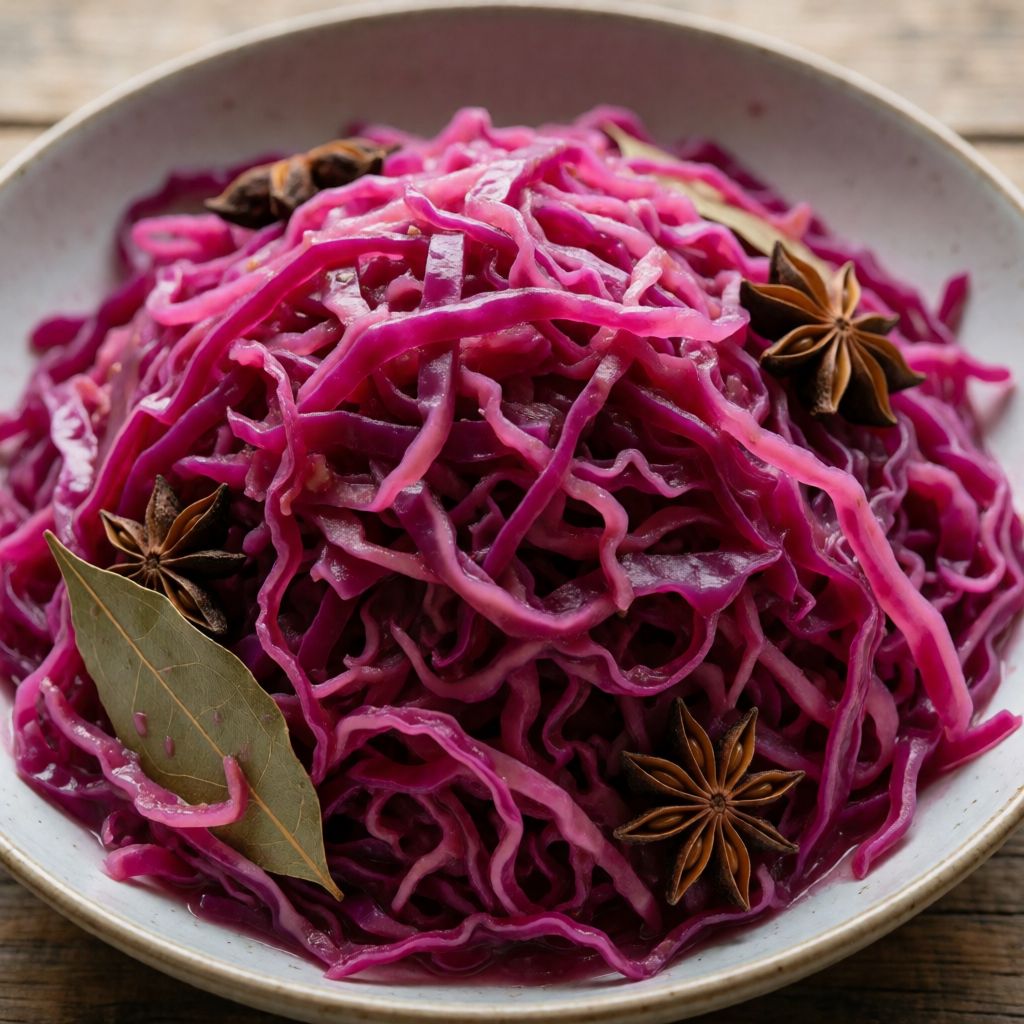
 AI photo
Warm Red Cabbage Salad for Christmas Dinner
A warm, spiced red cabbage salad, perfect as a side for Christmas dinner.
Labels are worked out automatically from the ingredients and can be wrong. Check the packaging if it matters to you.
Ingredients
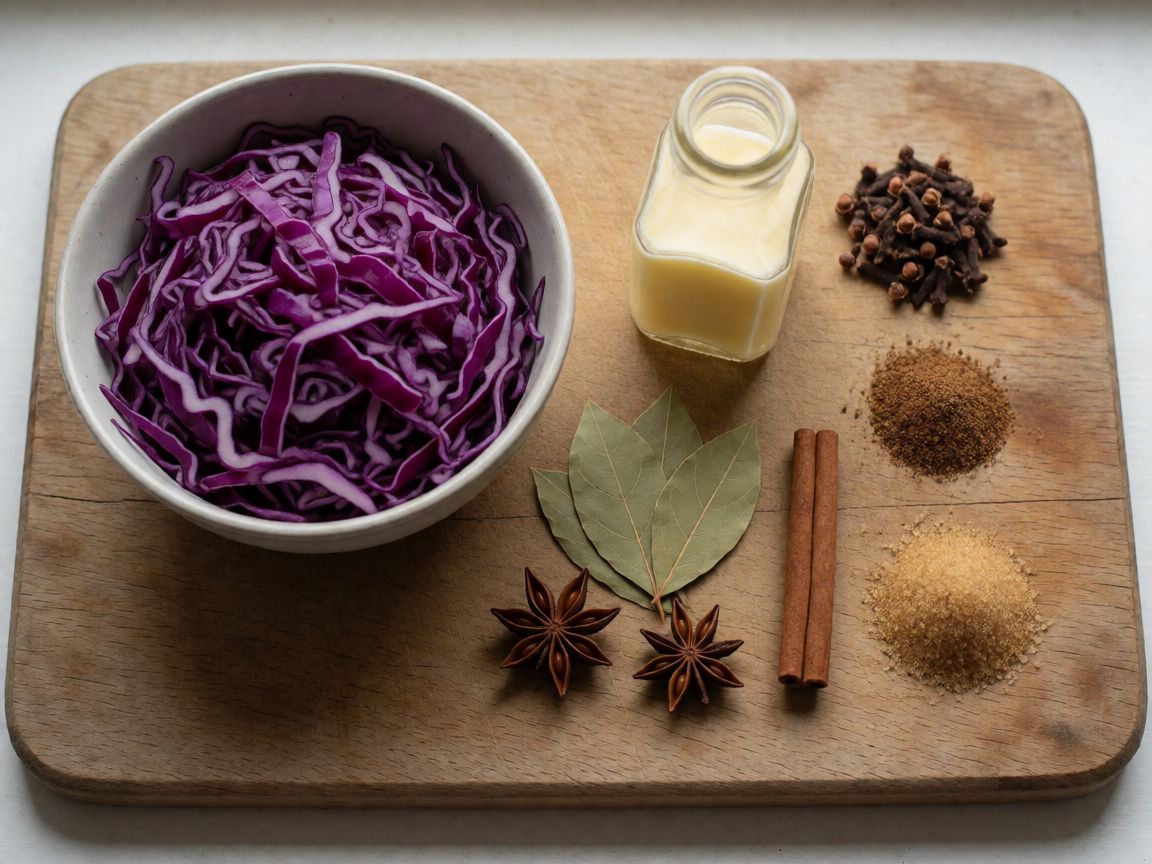
- 500 g Red cabbage sliced into strips
- 2 tbsp Butter
- 1 pinch Cloves ground
- 1 pinch Allspice ground
- 3 pcs Bay leaves
- 2 pcs Star anise whole
- 1 pcs Cinnamon stick
- 1 tbsp Brown sugar
- 2 tbsp Redcurrant jelly
- 50 ml Apple cider vinegar
- Salt to taste
- Black pepper to taste, freshly ground











Steps
Sauté the red cabbage in a pan with the butter and heat for a few minutes, stirring.
5 minAdd the cloves, allspice, bay leaves, star anise, cinnamon stick, apple cider vinegar, brown sugar and redcurrant jelly, and mix well.
2 minCover with a lid and let it simmer for 30 minutes.
30 minSeason to taste with salt, pepper, redcurrant jelly and apple cider vinegar, to reach a good balance between a light sharpness and a hint of sweetness.
2 minRemove the star anise, cinnamon stick and bay leaves, then serve the salad warm.
This is braised red cabbage eaten warm — not a crunchy slaw, a thing that's been coaxed slowly into softness and colour. It comes from the German-Nordic Christmas table (Rotkohl, rødkål), where a roast bird or a joint of pork needed something sharp and dark red next to it to cut the fat. On your table it sits next to the same job: the Sunday roast, the turkey, the thing that's rich and needs a foil.
What decides whether it works is not time — it's the acid. Red cabbage is full of anthocyanin pigment, the same stuff that makes it turn from deep purple to dull blue-grey the moment it meets anything alkaline — hard tap water, a pinch of bicarbonate, even just too little vinegar. The acid in this dish (apple cider vinegar, and the tartness in the redcurrant jelly) isn't seasoning first and colour-keeper second. It's colour-keeper first. Skip it or go light on it and you get cabbage the colour of a bruise, however long you cook it.
Some say you have to simmer red cabbage a long time to get it tender — no, because what actually softens it is the acid breaking down the pectin in the cell walls, and heat doing the rest. Thirty minutes covered is the lower bound here, not a target: the real cue is the cabbage losing its raw squeak between the teeth and turning an even, deep wine-red, strands that bend under a fork instead of staying stiff. If you boiled this in a lot of water instead of braising it in its own little liquid, you'd wash the pigment and the sugar straight down the drain — that's the other reason it's covered and barely wet, not swimming.
The cabbage itself: buy it firm, heavy for its size, no soft patches at the cut end — a soft spot means it's been sitting and the sugars have already started breaking down unevenly, which is what gives you patchy colour in the pan. Sliced into strips, not shredded fine — fine shreds collapse to mush under thirty minutes of heat, strips hold a shape you can still see on the plate.
Butter is there to coat the cabbage and start the sauté without sticking — a British kitchen worry, since a thin domestic pan scorches faster than a kazan's thick base ever would. If you want a fat with no flavour of its own, use a neutral oil, but you lose the faint milk-sugar sweetness butter adds early on; that's the trade, not a crime either way.
The ground spices — cloves, allspice — go in small and stay in, because a pinch disappears into the dish and you'd never fish it back out anyway. The whole ones — bay, star anise, cinnamon stick — go in precisely because they're too woody and bitter to eat; they're there to lend their oil to the liquid over the simmer and then get pulled out before serving. That's the whole logic of using whole spices over ground ones: you want the aroma, not the splinter of bark on someone's fork.
Brown sugar and redcurrant jelly are doing the same job from two directions — sweetness to balance the vinegar's sharpness — but the jelly also carries its own acidity and a little pectin of its own, which is why it's tasted and adjusted twice, once mid-cook and once at the end. No redcurrant jelly in the cupboard? Any tart fruit preserve with a set to it — cranberry sauce, quince, even a good blackcurrant jam loosened with a splash more vinegar — does the same two-part job. Don't reach for plain sugar alone; you'll get sweet, but you'll lose the fruit-sourness that redcurrant brings, which is really what the dish is leaning on.
The vinegar, as said, is not optional seasoning — it's the thing keeping the colour from sliding into grey. Any vinegar with real sharpness and no competing strong flavour of its own will do the job; cider vinegar is traditional because it's mild and a little fruity, which suits cabbage better than, say, malt, which would fight the Christmas spices for attention.
Lid on: if your pan has no lid that fits, a plate set over the top does the same work — trapping the steam so the cabbage braises in its own liquid instead of drying out at the edges while the middle stays raw. That's the one bit of kit worth faking if you don't own it.