
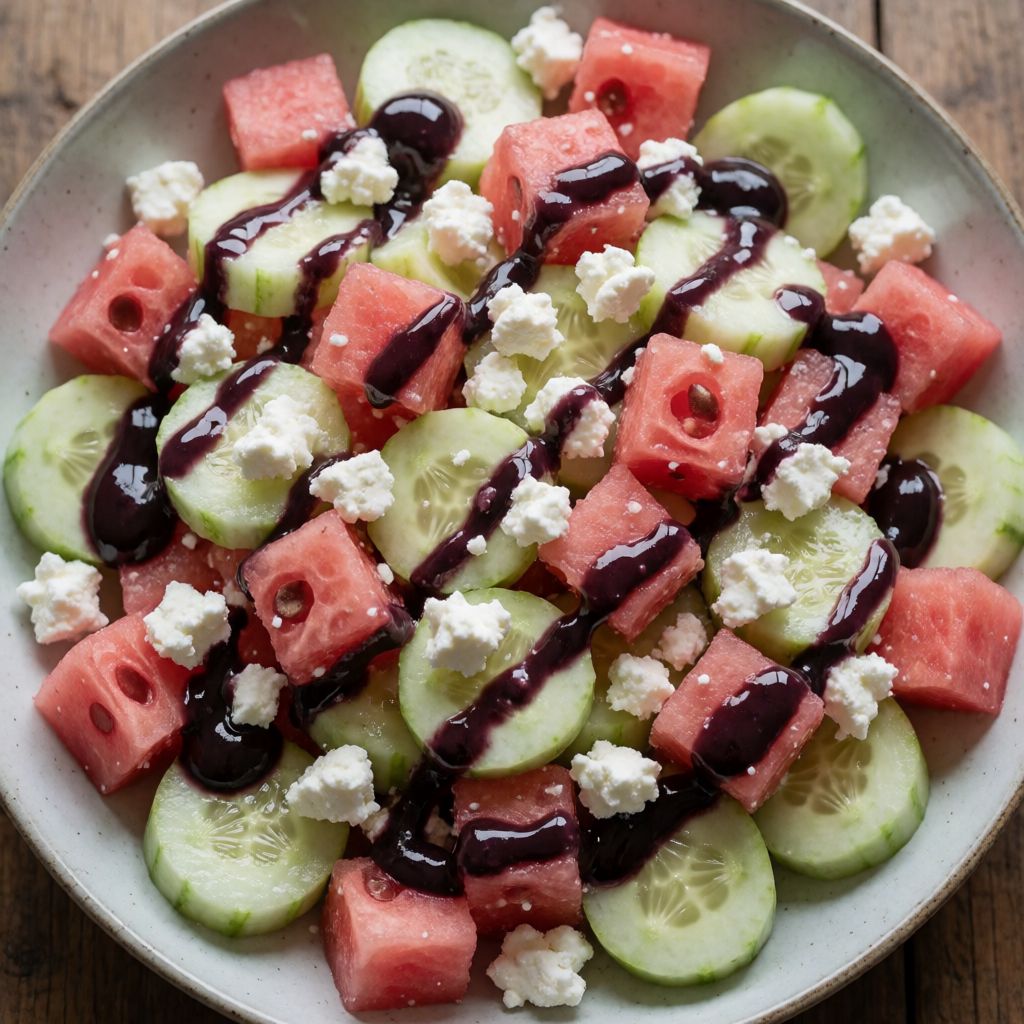
 AI photo
Watermelon, Cucumber and Feta Salad with Olive and Almond Paste
A refreshing summer salad of watermelon, cucumber and feta, finished with a blended olive and almond paste.
Labels are worked out automatically from the ingredients and can be wrong. Check the packaging if it matters to you.
Ingredients
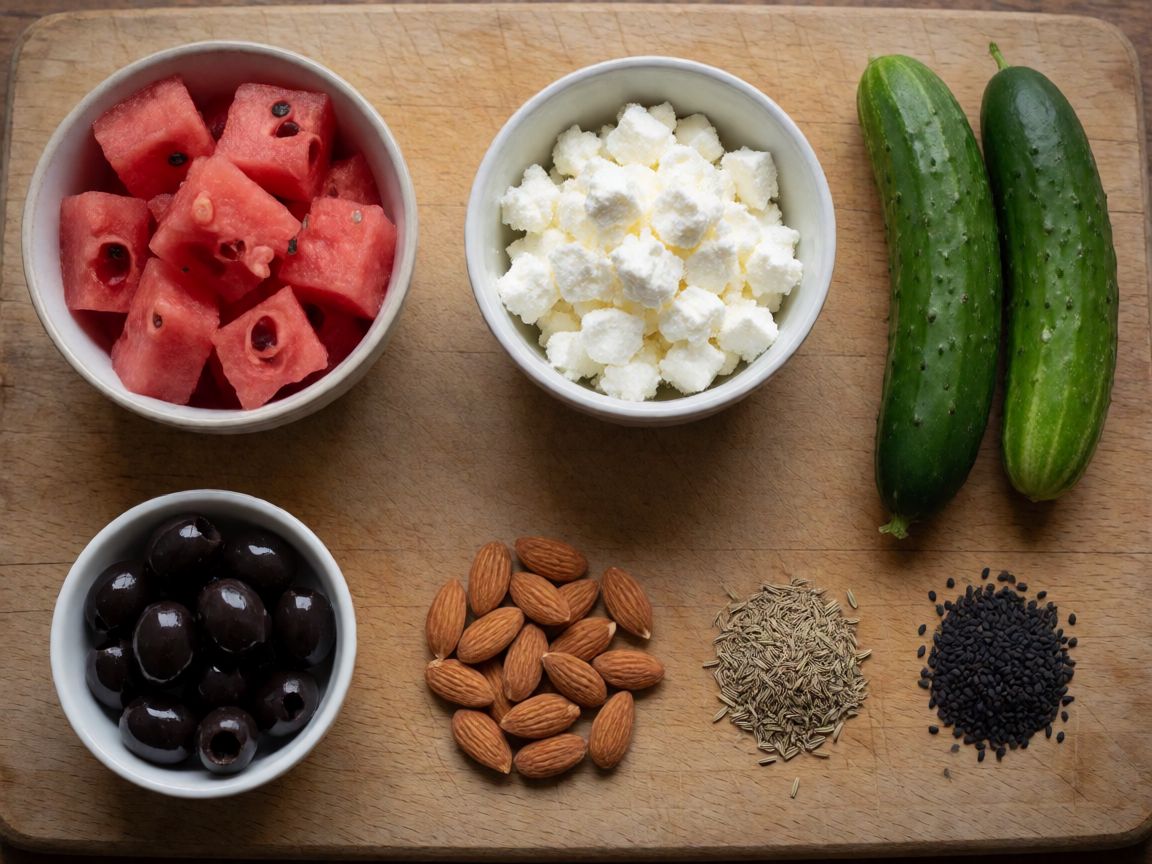
- 600 g Watermelon
- 250 g Feta
- 2 pcs Cucumber
- 100 g Green pitted olives
- 20 g Almonds
- 3 tbsp Olive oil
- 4 pcs Fennel seeds
- Salt to taste
- Black sesame seeds to taste









Steps
Cut the feta into cubes.
Peel the watermelon and remove the seeds, then cut the flesh into cubes the same size as the feta.
Wash and peel the cucumbers, then slice thinly or cut into small wedges.
In a blender, blitz the green pitted olives with the almonds, fennel seeds and olive oil; add salt to taste if needed.
In a large bowl, combine the feta, watermelon and cucumber.
Add the olive paste and gently toss all the ingredients together.
Chill the salad in the fridge for 2 hours.
120 min
This is not really a salad — it's a cold plate built around one engine: a thick paste of green olives, almonds and fennel that you drag watermelon and feta through. The fruit and the cheese are the stage; the paste is the actor. Get the paste wrong — too smooth, too salty, too thin — and you just have fruit salad with cheese in it, which is nice but not this.
What decides it is contrast, and contrast needs cold. Watermelon at room temperature goes soft and weepy within the hour; feta at room temperature starts to sweat its own brine and lose the crumble that makes it feta rather than cream cheese. The two hours in the fridge aren't there for 'flavours to develop' in some vague mystical sense — they're there so the watermelon's own juice, pulled out by salt and standing, has time to mix with the paste and become a thin dressing that coats everything instead of sitting on top of it. Skip the wait and you're eating dry cubes with paste blobs stuck to them. Patience here isn't optional seasoning, it's the dressing-maker.
Watermelon: the only real test is ripeness, and you can't fix a bad one with sugar. Tap it — a ripe one gives a low, hollow sound, an unripe one sounds tight and high. The skin should look slightly dull, not shiny. In a UK supermarket in winter you'll mostly get imported melon that's fine but rarely excellent — buy it close to when you'll use it, and if the flesh looks pale pink rather than deep red, it will be less sweet and the salad will lean more on the paste for flavour, which is not a disaster, just a different balance.
Feta: you want a firm, crumbly, genuinely salty block cheese packed in brine, not the soft pre-crumbled tub version sold as 'reduced fat' — that one is wetter, blander, and falls apart into mush the second you toss it. If you can't get sheep's or goat's feta, a firm salted cheese that holds a cube shape and tastes properly salty will do — a Bulgarian-style white brined cheese, for instance. The criterion is: firm enough to cube, salty enough that a little goes a long way.
Cucumber: peeling isn't tradition for its own sake — UK supermarket cucumbers are often waxed, and the skin can carry a slight bitterness that fights the sweetness of the melon. If you've got a thin-skinned, unwaxed cucumber, you can leave some skin on for colour and crunch. Either way, you want it cool and firm — a soft, seedy cucumber adds water you don't need, since the melon is already providing plenty.
Olives and almonds: green pitted olives bring the brine and a slight bitterness that a raw almond doesn't have on its own — this is what stops the paste tasting like almond butter with salt added. If green olives aren't to hand, black olives work, but they're more tannic and less bright, so taste before you add extra salt. Almonds are there for fat and body, to turn crushed olives into something that coats rather than crumbles — any raw nut with a mild flavour of its own (cashew, blanched hazelnut) can stand in, but skip anything roasted or salted, which will fight the olives rather than support them.
Olive oil and fennel seed: here the oil is doing flavour work, not just lubrication, so use one with a taste you actually like — a mild extra virgin, not the cheapest bitter one, which will dominate four small fennel seeds without trying. Fennel seed gives a warm, faintly aniseed note that keeps the paste from tasting purely salty-fatty; if you don't have it, a small pinch of ground fennel or even crushed aniseed will do the same job in a smaller dose, since ground spice is more concentrated. Black sesame on top is purely for crunch and contrast against the soft fruit and cheese — leave it off and nothing structural changes, the dish just loses one small textural accent.
A hand blender or a small food processor does the paste perfectly well — you're not after a smooth hummus texture, a bit of visible almond grit is fine and even welcome, since it gives the paste something to bite against instead of just melting into the fruit juice.