
 AI photo
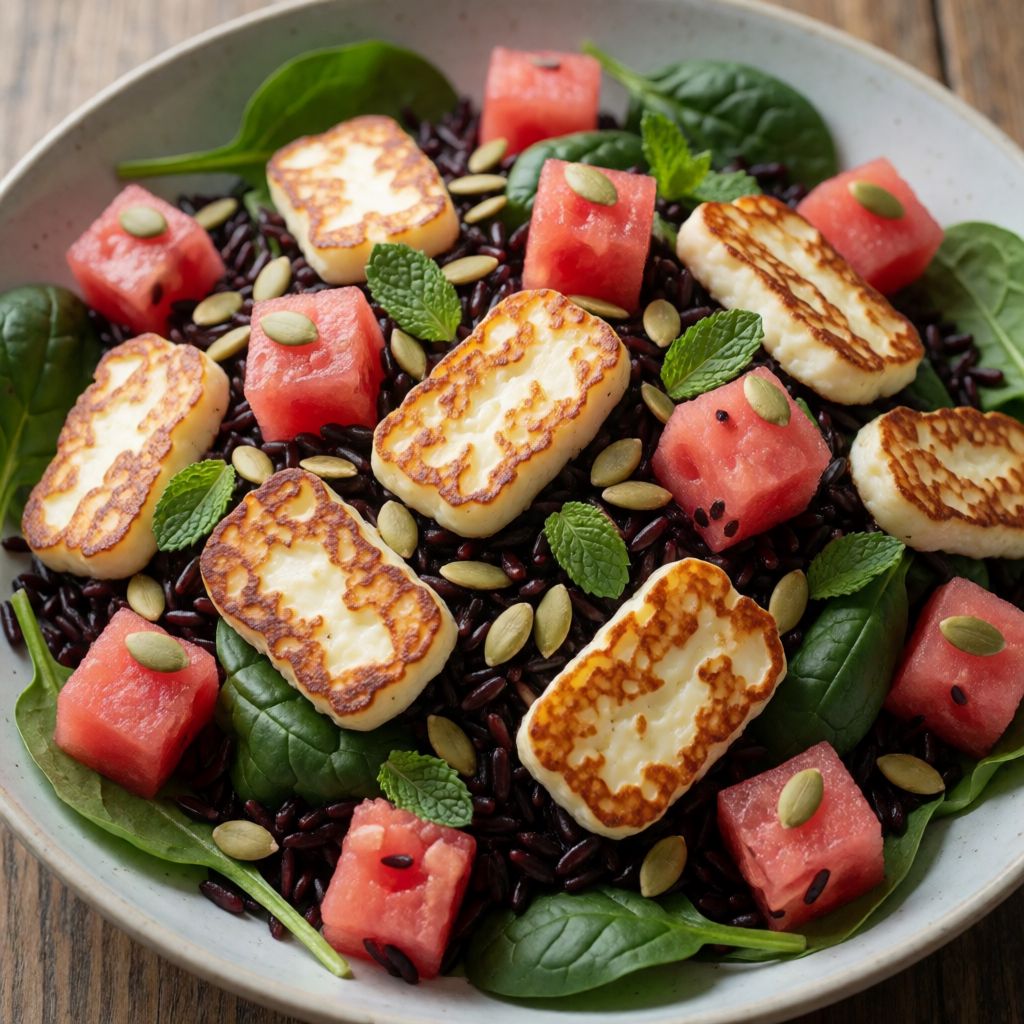
Watermelon, Halloumi and Black Rice Salad
A fresh salad pairing sweet watermelon with salty halloumi, black rice, spinach and a light elderflower vinaigrette.
Labels are worked out automatically from the ingredients and can be wrong. Check the packaging if it matters to you.
Ingredients
- 200 ml Black rice
- 100 ml Pumpkin seeds
- 250 g Halloumi sliced
- 1 bunch Mint fresh
- 125 g Spinach
- 1 pcs Watermelon half, diced
- 1 tbsp Olive oil
- 1 tsp Salt
- Salt to taste
- Black pepper freshly ground








For the elderflower vinaigrette
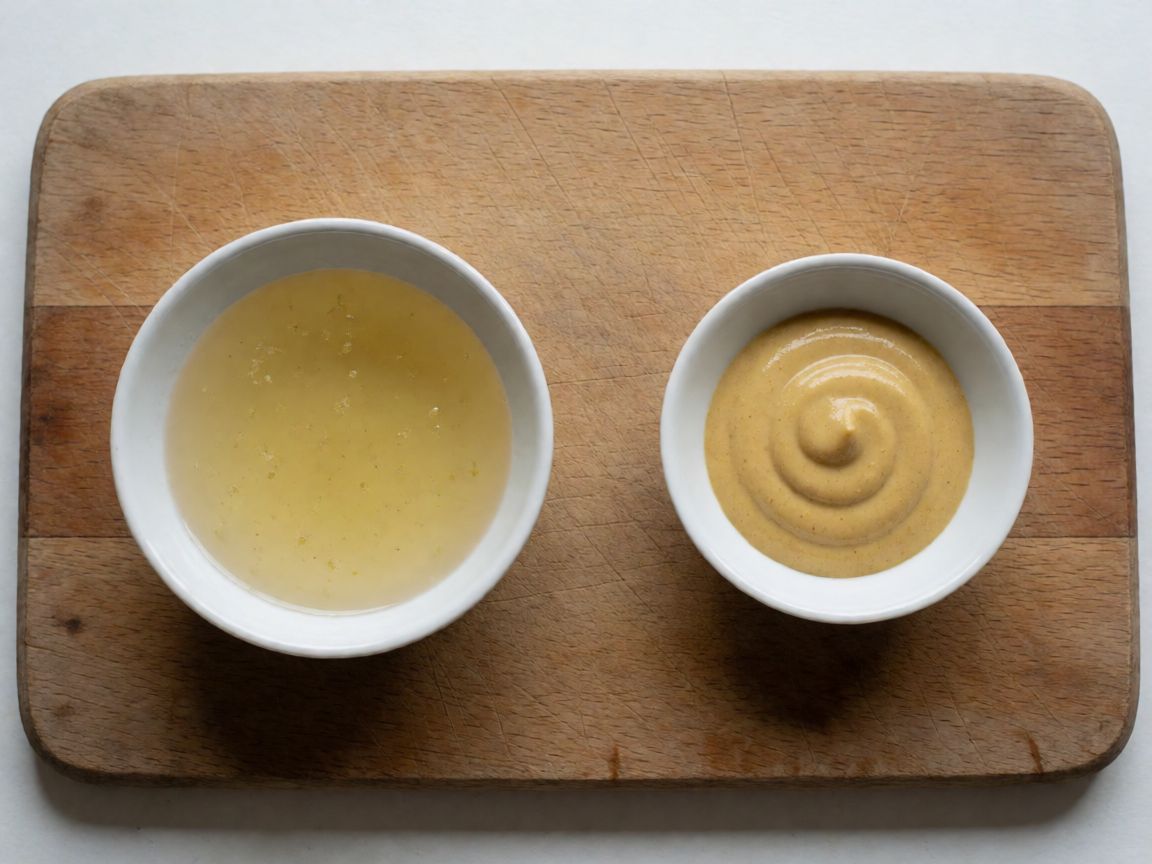
- 2 tbsp Elderflower syrup
- 1 tsp Dijon mustard
- 1 tbsp Olive oil


Steps
Cook the black rice according to the packet instructions, then let it cool.
20 minToast the pumpkin seeds in a hot pan with oil until they start to pop, then sprinkle with salt.
5 minIn the same pan, fry the halloumi slices on both sides until golden brown.
5 minFor the elderflower vinaigrette: whisk the elderflower syrup, Dijon mustard and olive oil together until smooth.
5 minToss the cooled rice with the elderflower vinaigrette and finely chopped mint.
5 minArrange the salad on a plate with the spinach, rice, watermelon and fried halloumi, and sprinkle with the pumpkin seeds.
5 min
This is a salad built on one contrast doing all the work: salty, squeaking halloumi against watermelon that's basically sugar water in solid form. Everything else — the black rice, the mint, the pumpkin seeds — is scaffolding around that one collision. Get the contrast wrong and you have a fruit bowl with cheese in it, which is fine, but it isn't this.
Black rice is not a flavour choice, it's a texture and timing choice. It stays separate grain by grain once cooked, doesn't go gluey the way some white rices do under dressing, and it needs to be properly cold before the vinaigrette goes anywhere near it. Dress warm rice and the starch on the surface drinks the oil and sugar straight in — you get a heavy, stuck-together mass instead of grains that still roll off a fork. So "let it cool" in step one isn't a formality, it's the one instruction in the whole recipe that actually protects the texture of the finished dish.
Halloumi behaves like no other cheese because it's been heated once already in its making, which is exactly what stops it collapsing into a puddle in your pan. Some people are nervous frying cheese — the memory of mozzarella sliding into oil puts people off. Halloumi doesn't do that. What it does is seize up and squeak if you keep flipping it; leave each side alone until it's properly gone gold — the colour, not a clock — then turn once. A domestic hob running a normal frying pan hot is plenty for this; you're not trying to char it, just set a crust before the inside goes rubbery.
Watermelon itself needs almost no handling, but it does need judgement: pick it by weight-in-hand heaviness and a dull, not shiny, skin — a shiny melon is often underripe. Dice it and leave the pieces loose until the very end of assembly, because watermelon bleeds juice the moment it's cut, and if it sits dressed or crowded against the rice too early, that juice waters down your vinaigrette and turns your spinach limp. This is why plating happens last, not a presentation choice, a leak-prevention one.
Pumpkin seeds toast in the same pan you'll fry the halloumi in afterwards — not laziness, but sense: the seeds leave a little oil and roasted flavour behind that the cheese then fries in. You're listening for the seeds, not timing them: they start popping and jumping slightly when the oils inside heat up, and that pop is your doneness cue, not a stopwatch. Push past it and they go bitter, because the natural oil in a pumpkin seed scorches fast once it gets going.
Spinach is the one ingredient here doing a thankless job — it's bulk and base, there to carry everything else and give the plate some green that isn't mint. If you haven't got spinach, any soft leaf with no strong taste of its own works: baby chard, rocket if you don't mind a peppery note creeping in, even shredded little gem in a pinch. What you don't want is anything bitter or tough enough to need chewing against the cheese — the whole point is a plate where textures contrast but nothing fights.
Mint goes in finely chopped and only into the rice, not scattered loose over the top, because whole mint leaves on a plate are decoration, chopped mint tossed through warm-to-cool rice actually flavours the grain. Elderflower syrup is the one ingredient without an easy substitute in flavour, but structurally you need a mild sweet syrup with no sharp acidity — honey loosened with a splash of water does the job if elderflower isn't on your shelf, though you lose the floral note that makes this dish what it is rather than just "cheese and watermelon."
Dijon mustard's role, again, is binding, not heat — any smooth mustard works, English mustard is sharper and will push through more than you want, so go easy if that's what's in the cupboard. And the olive oil in the vinaigrette should be something unremarkable — oil with its own strong personality will argue with the elderflower. Save the good, grassy, expensive olive oil for drizzling at the table if you want it; use something plain for the dressing itself.
This feeds four as a light lunch or a starter rather than a main meal on its own — it's not built around protein weight the way a Sunday roast is, so don't expect it to sit in the stomach the same way. Patience here isn't long, but it's specific: the ten minutes you give the rice to actually go cold is doing more for the final dish than any other single step, and skipping it is the most common way this salad goes wrong.