
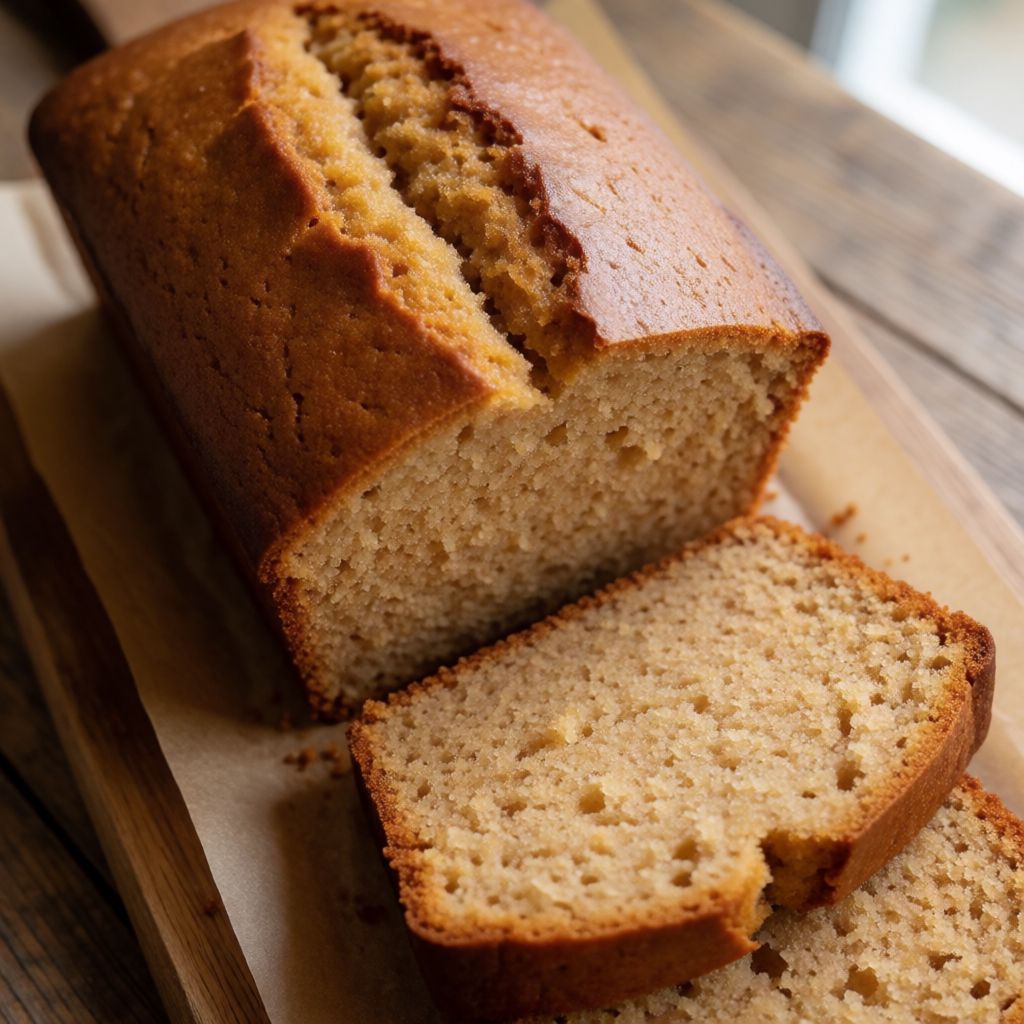
 AI photo
Wholemeal Loaf Cake
A soft wholemeal loaf cake flavoured with lemon zest, dusted with icing sugar before serving.
Labels are worked out automatically from the ingredients and can be wrong. Check the packaging if it matters to you.
Ingredients
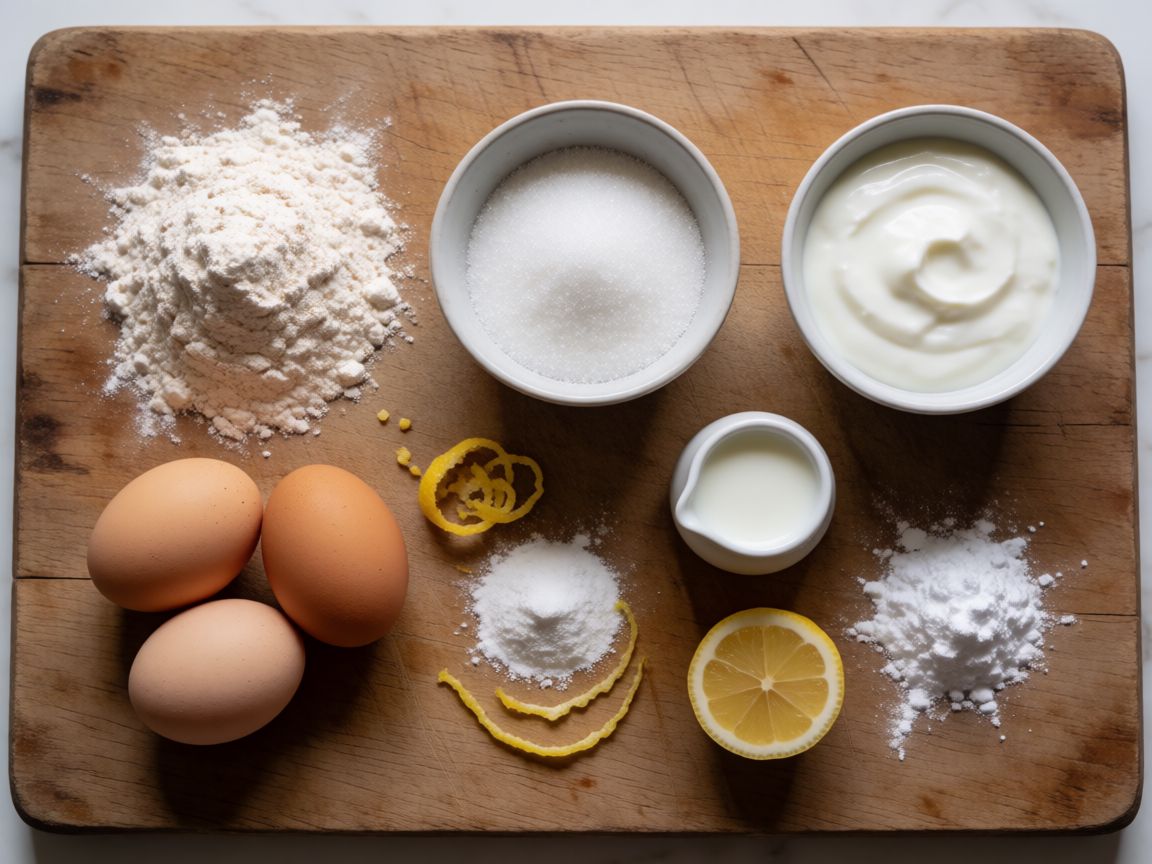
- 350 g Wholemeal flour
- 3 pcs Eggs
- 150 g Sugar
- 125 ml Yoghurt
- 100 ml Milk
- 70 ml Vegetable oil
- 16 g Baking powder
- 1 pinch Salt
- 1/2 pcs Lemon zest
- Icing sugar to taste










Steps
Break the eggs into a bowl, add the sugar and beat with a mixer until light, pale and fluffy.
Add the yoghurt and keep beating. Flavour with the lemon zest.
Add a pinch of salt.
Sift the wholemeal flour with the baking powder and fold it gradually into the batter.
Pour in the oil and milk, continuing to beat with the mixer.
Pour the batter into a 28x10 cm loaf tin, greased beforehand with butter.
Bake in an oven preheated to 170°C for about 50 minutes.
50 minLet the loaf cake cool completely before removing it from the tin.
Dust with icing sugar before serving.
This is a loaf, not a sponge — and that distinction decides everything about how you handle it. Wholemeal flour carries the bran and germ, both of which drink more liquid than white flour and both of which are heavier. So this isn't a cake pretending to be light; it's a cake that's honest about its weight, dense in the way good brown bread is dense, not dense in the way a sunk cake is dense. The yoghurt and milk are there to feed that thirsty flour, not to make it fluffy — fluffy is the wrong goal here.
What decides whether it works is the egg-and-sugar stage at the start. You're not just mixing, you're trapping air into the eggs before the heavy flour goes in — because once that bran is folded through, the batter won't lift itself anymore, it has no lightness left to find on its own. Whisk until the mixture is pale and holds a ribbon off the beaters for a second before sinking back. Skip this and the loaf will bake into something closer to a flour brick, because there was never any air stored to begin with.
Some say wholemeal cakes are always meant to be dense and a bit sad, so a flat loaf is just "how it is." No — a flat, gummy middle means the raising agent couldn't lift the extra weight of bran and liquid fast enough, not that wholemeal is cursed. 16g of baking powder for 350g of flour is already a generous dose precisely because it's fighting that weight.
Let's go through what's actually in the bowl and why each thing earns its place.
Wholemeal flour is the whole point here, and also the whole problem. It gives the loaf its colour, its slight grain, its ability to sit comfortably next to a cup of tea with milk rather than disappearing like a sponge cake does. But bran is sharp-edged under a microscope and it cuts through gluten strands as they form, so wholemeal cake batters never get the same stretch a white-flour batter gets. That's exactly why you fold it in gradually rather than dumping it all at once — folding spreads the damage evenly instead of collapsing whole pockets of air at once. If you want a lighter result without losing the character entirely, swap half the flour for plain white and keep half wholemeal; you'll lose some of the nuttiness but keep more lift.
Eggs and sugar whisked together aren't just "mixed" — the sugar crystals are physically shredding the egg proteins open so they can trap air as a foam, which is the only real leavening this cake gets before the baking powder joins in. Three eggs for 350g flour is a moderate ratio; it's enough to bind and lighten but this isn't a cake built on eggs the way a genoise is.
Yoghurt does double duty: its acidity reacts with the baking powder for an extra, gentler lift, and its fat and moisture soften that rough wholemeal texture so the crumb doesn't eat dry. Milk, added later with the oil, is there purely to loosen the batter to the right pouring consistency — thinner than icing, thick enough to coat a spoon without running off. If you're out of yoghurt, soured cream or even buttermilk does the same acidic job; plain cream won't, because it lacks the acidity that baking powder needs to react against.
Oil, not butter, is deliberate and it's worth saying why: oil stays liquid at room temperature, so the loaf stays moist for days instead of firming up the way a butter cake does once the butter re-solidifies in the fridge or a cool British kitchen. Any oil with no smell of its own works — sunflower, rapeseed, a light vegetable oil — but don't reach for olive oil unless you want its flavour fighting the lemon.
Baking powder at 16g for this amount of flour is doing heavy lifting, literally, against the weight of bran — don't be tempted to cut it back because it looks like "a lot." Lemon zest cuts the nutty flatness of wholemeal; if you've no lemon, orange zest does similar work, slightly sweeter, slightly less sharp.
On the tin and the oven: a 28x10cm loaf tin on a domestic hob-and-oven setup means the heat comes from all sides at once, unlike the open-ended bake of a flat cake tin, so the middle takes real time to catch up to the edges — that's the whole reason the recipe gives 170°C and roughly 50 minutes as a floor, not a fixed stop. Trust a skewer coming out clean, not the clock, because ovens vary more than recipes admit. Let it cool fully in the tin before turning it out — cutting into it warm means the crumb, still setting its structure, tears and sticks rather than slicing clean. That's patience as an ingredient, not an inconvenience: the starches need the cooling time to firm up around the air they trapped, and rushing it undoes the whole first step of beating eggs and sugar.