
 AI photo
Green Witch's Fingers for Halloween
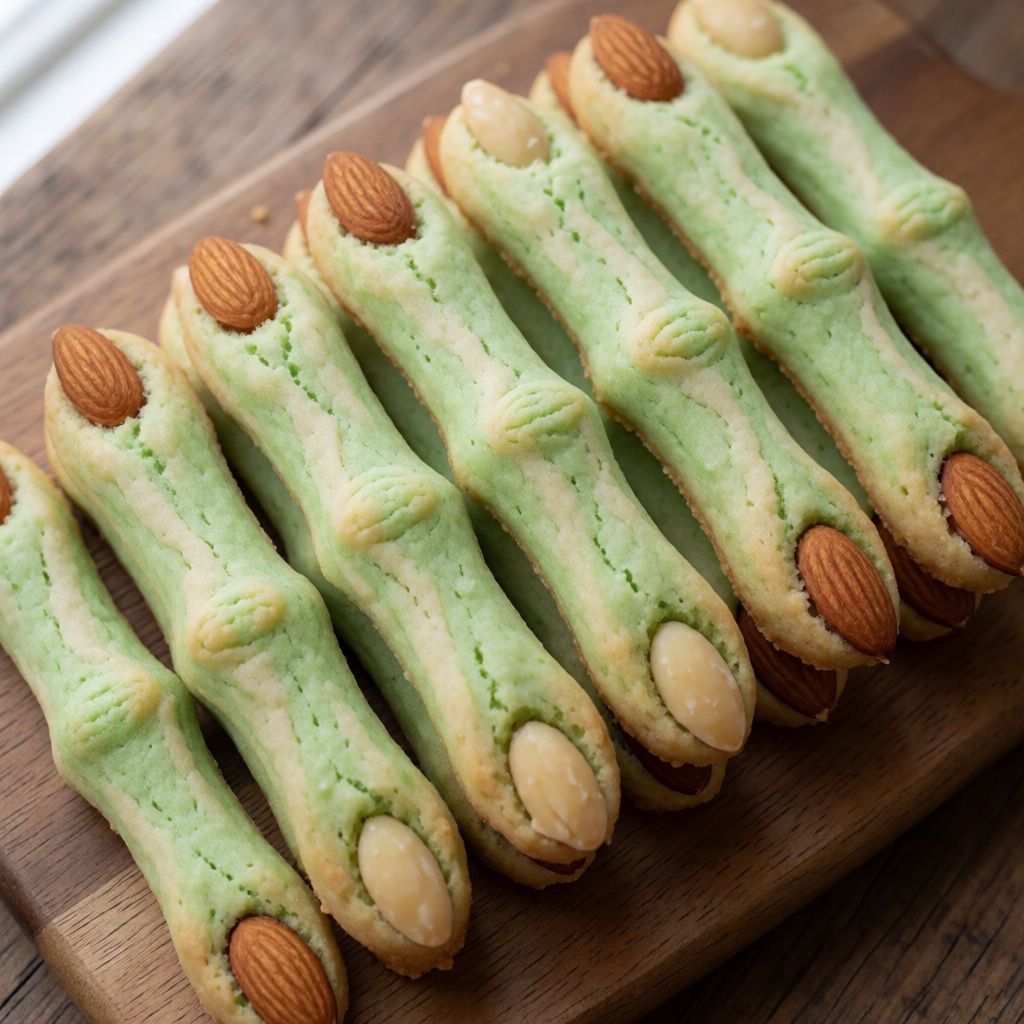
Spooky green biscuit "witch's fingers" with an almond nail on each tip, a fun Halloween bake.
Labels are worked out automatically from the ingredients and can be wrong. Check the packaging if it matters to you.
Ingredients
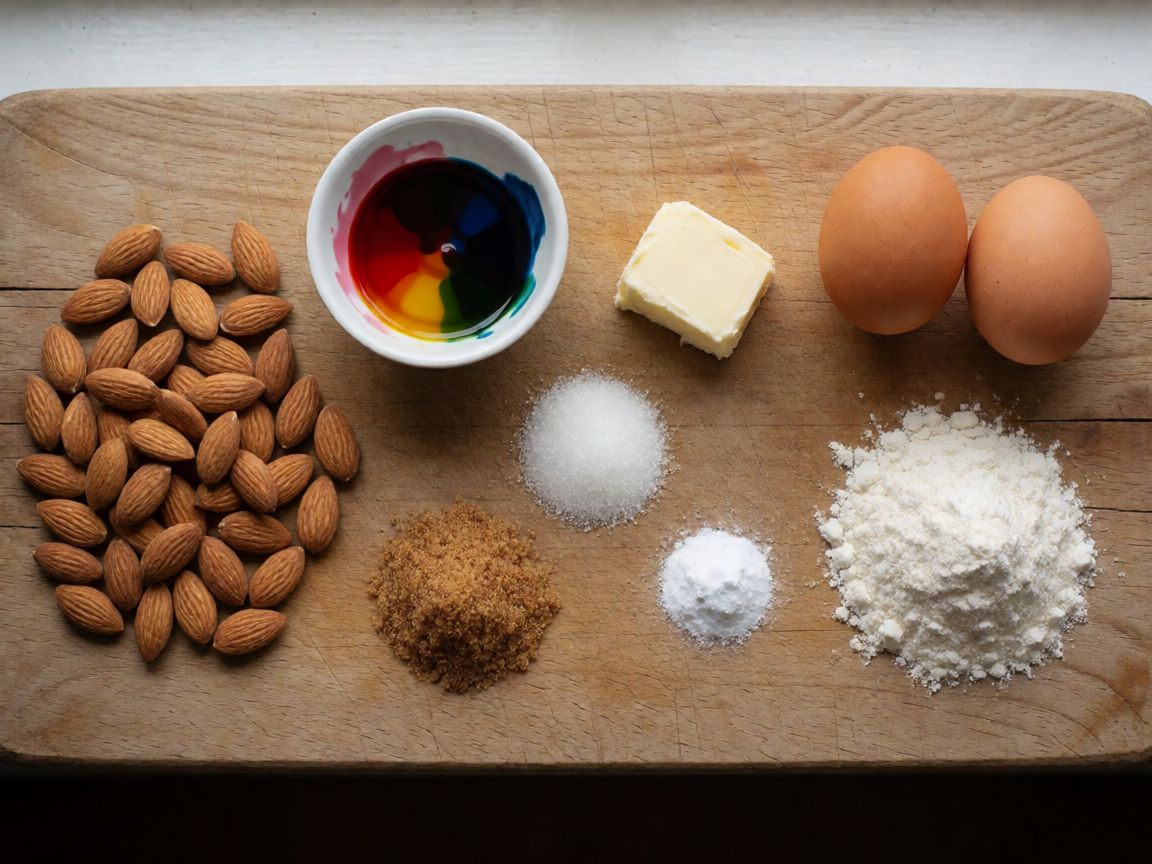
- 30 pcs Almonds for the nails
- Green food colouring to taste
- 100 g Butter softened
- 5 tbsp Caster sugar
- 5 tbsp Soft brown sugar
- 2 pcs Eggs
- 1 pcs Baking powder sachet
- 280 g Plain flour
- 1 pinch Salt








Steps
In a bowl, combine the softened butter, caster sugar, soft brown sugar, eggs and salt. Beat with an electric mixer until smooth.
Gradually add the flour, baking powder and green food colouring. Mix until you have a smooth, pliable dough.
Divide the dough into small cylinders and shape into wrinkled "fingers".
Line a baking tray with baking paper and arrange the fingers on top.
Brush each finger with egg white.
Press an almond onto the tip of each finger to look like a nail.
Bake in an oven preheated to 180°C for 11 minutes.
11 minLeave the fingers to cool, then arrange on a serving plate.
This is a plain British biscuit dough wearing a costume. Butter, two sugars, eggs, flour, baking powder — that's a cookie, the kind you'd roll into any shape and bake for a children's party. The whole trick of this recipe is not flavour, it's disguise: colour the dough green, roll it long and thin, wrinkle it where a knuckle would be, stick an almond on the end. What decides whether it works isn't taste, it's restraint at the oven door.
The real danger here isn't under-baking, it's the opposite. You want these to look like something that's been dead a while — pale, greenish-grey, faintly unwell. The moment the surface turns gold, you've won a shortbread finger and lost the joke. So the oven's job is to set the dough, not to colour it. Eleven minutes at 180°C is enough heat to cook a thin cylinder through before the sugars on the outside have time to caramelise into that honest biscuit tan. Pull them the instant the edges feel firm under a fingertip and the middle still gives a little — don't wait for golden, golden is the wrong finish line tonight.
Butter, softened, not melted: melted butter runs, softened butter creams. Beaten with the two sugars it traps a bit of air and coats every grain of flour evenly, so the dough bakes to a biscuit rather than a cracker. Any solid fat with no strong taste of its own will do the same job — margarine works, though you lose a little richness; what you can't use is oil, because oil won't hold air the way a creamed solid fat does, and your fingers will spread flat and thin instead of staying finger-shaped.
Two sugars, not one, and that's not fussiness. Caster sugar is fine and dissolves quickly into the fat, giving a crisp edge. Soft brown sugar carries a little molasses and a little extra moisture, which keeps the inside of each finger from drying out in eleven minutes of direct heat. Drop the brown sugar and use all caster if that's what's in the cupboard — the fingers will be a touch crisper and a touch paler, nothing ruined.
Eggs do two jobs here, which is why you need to think about them twice. Beaten into the dough, they bind flour and fat into something that holds a shape without crumbling when you roll it between your palms. But step five calls for egg white separately — don't crack open a third egg for a teaspoon of glue. The mixture you've already got has plenty of white in it; a light brush of the leftover beaten egg sitting on the side of the bowl, or the smear left on the whisk, is enough to make an almond stick to raw dough and stay stuck once it bakes. Without it the almond would simply roll off the tip the moment the dough puffs slightly in the heat.
Baking powder is the only thing in this dough asking it to rise, and it's asking gently — a sachet in 280g of flour is a small lift, just enough to turn a flat strip into something with a rounded, finger-like cross-section, not enough to make it balloon and lose the wrinkles you pressed in. Too much baking powder here would be worse than none: it would push your careful knuckle-dents out flat as the dough expanded around them.
Green food colouring is cosmetic and has no effect on baking whatsoever — don't adjust time or temperature for it. Use a gel colour over a liquid one if you have the choice: liquid colouring adds water to the dough, and a wetter dough spreads more and holds a shape less, which again costs you your wrinkles. A drop goes a long way; mottled, uneven green actually helps the dead-skin effect, so don't chase a flat, perfect shade.
For the almonds, reach for the blanched kind — skin off, pale ivory. Almonds with their brown skin still on look like almonds with skin on, which is to say, nothing like a fingernail. Peeled ones, oval and smooth, are doing ninety percent of the costume's work. This whole dish is cheap theatre built on a basic British biscuit base — flour, sugar, butter, eggs are the Sunday-cupboard staples, and the horror is bought for the price of a food-colouring bottle and a bag of almonds, which is rather the point of a Halloween table: the spectacle should cost less than the roast.