
 AI photo
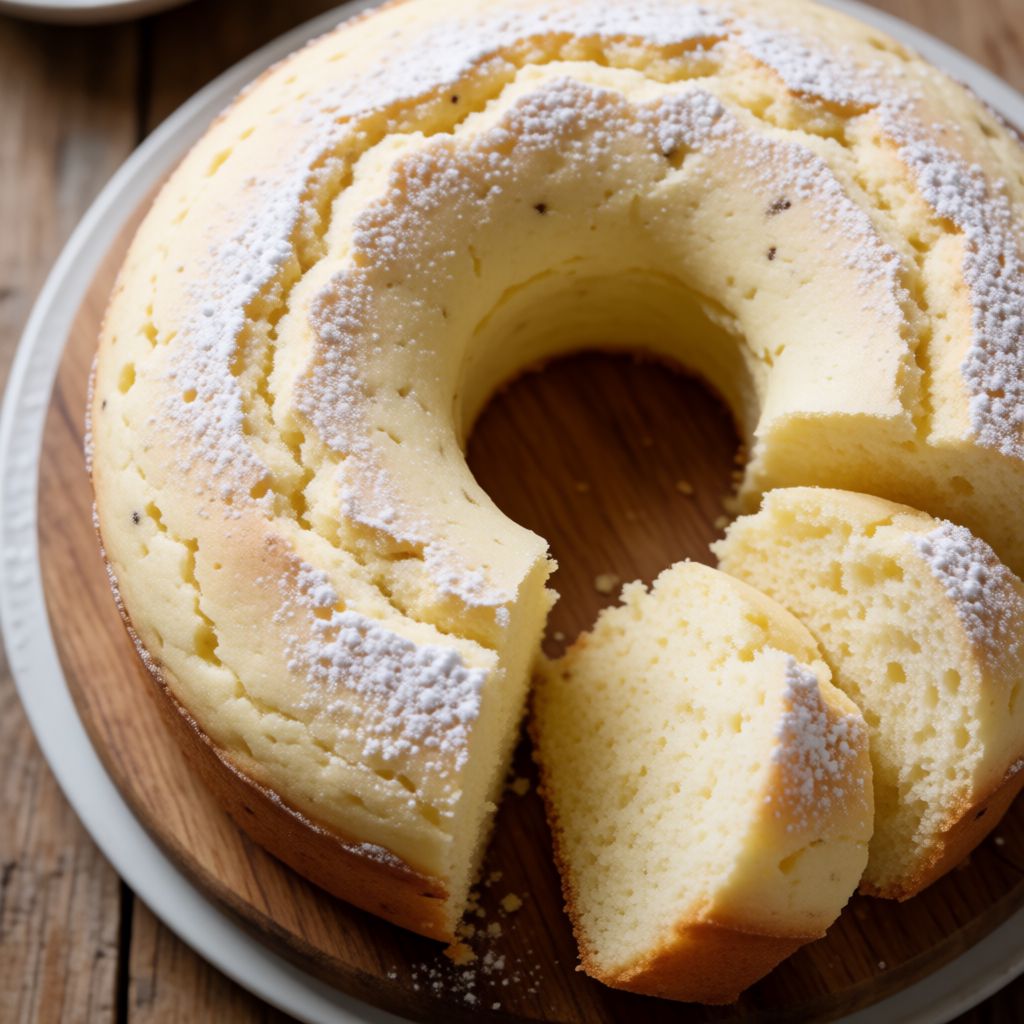
Ciambellone with Yoghurt
A soft Italian yoghurt bundt cake, light and fragrant with vanilla.
Labels are worked out automatically from the ingredients and can be wrong. Check the packaging if it matters to you.
Ingredients
- 300 g Plain flour
- 200 g Greek yoghurt
- 1 pcs Vanilla pod
- 4 pcs Eggs
- 180 g Caster sugar
- 1 tbsp Cornflour
- 16 g Baking powder with a little vanilla extract
- 1 pinch Salt
- 120 ml Vegetable oil
- Icing sugar to taste










Steps
In a bowl mix the flour, cornflour, seeds scraped from the vanilla pod, baking powder and salt.
Whisk the eggs with the sugar using an electric mixer on high speed for 10-15 minutes, until the mixture is light, pale and well whipped.
12 minPreheat the oven to 180°C, conventional (non-fan).
Still whisking on medium speed, pour in the oil in a thin stream, add the yoghurt and whisk for a few more minutes.
Whisking on low speed, fold in the dry ingredients.
Pour the batter into a 22cm bundt tin, greased and dusted with flour, and bake for 40 minutes.
40 minLet the cake rest out of the oven for 10 minutes.
10 minTurn out onto a cooling rack and wait until completely cool before dusting with icing sugar.
What was changed
Baking powder replaced with plain baking powder and a touch of vanilla extract, since vanilla baking powder sachets are not sold in UK shops.
Ciambellone is the everyday ring cake of Italian kitchens — the one that lives on the counter under a glass dome, not the one you bring out for anyone's birthday. The name just means "big ciambella", a bagel-shaped cake, and the ring shape isn't decoration: a hole in the middle means the batter cooks from both the outside and the centre at once, so a dense, egg-and-oil batter like this one sets through without a raw, gluey core. Try to bake this same mixture as a loaf and you'll get a wet seam down the middle — the ring is the fix, not the aesthetic choice.
What decides whether this works is air, and where it comes from. There's no butter here to cream, so the lift has to come from two places: the eggs whipped properly pale and thick, and the baking powder. Six to seven minutes with an electric mixer on high is not a suggestion you can shortcut by hand with a fork for two minutes — you're folding bubbles into the eggs and sugar until the mixture holds a ribbon when it falls off the whisk. Skip that, and the baking powder is doing all the work alone, and it shows: dense near the base, a rubbery crumb.
Yoghurt earns its place for a reason beyond flavour: it's acidic, and that acidity reacts with the baking powder to help the rise, while its fat and water keep the crumb moist for days — this is a cake that's often better on day two than day one, which is exactly why it suits a Sunday-to-Monday life rather than a dinner-party flourish.
On the flour: plain flour, nothing stronger. You want gluten formed loosely enough that the cake is tender, not a bread crumb — that's also why cornflour is in there, a tablespoon to soften the structure further, the same trick behind a lot of Italian sponge work. If you've no cornflour, use the same weight of more plain flour and accept a slightly firmer crumb; it won't fail, it'll just be a touch less cloud-like.
The eggs and sugar stage is the one place patience is non-negotiable — call it an ingredient, because without the time, nothing else compensates. You're after a mixture that's pale, thick, and leaves a trail on itself when you lift the whisk; that structure is what carries the oil and yoghurt without collapsing, since there's no gluten network doing the heavy lifting here.
Oil: anything with no smell of its own — sunflower, a neutral rapeseed, a mild vegetable oil, the kind you'd already have for Sunday roast potatoes works fine. Don't reach for olive oil unless it's a very mild, delicate one; a peppery extra virgin will fight the vanilla rather than support it. Pour it in a thin stream while the mixer runs on medium — this is an emulsion, not a dump-and-stir, and pouring slowly stops the oil pooling and separating out instead of binding into the egg foam.
Yoghurt: Greek yoghurt specifically for its thickness and lower water content — a thin, watery yoghurt will slacken the batter and you'll lose some of the structure you worked for in step two. A full-fat natural yoghurt is the nearest stand-in if Greek isn't in the fridge; thin it down mentally, not literally — don't add extra liquid to compensate.
Vanilla pod seeds plus a baking powder laced with vanilla extract is a belt-and-braces flavour choice, not an error — vanilla's aroma fades fast in baking, so a double dose front- and back-loads it. If a pod feels extravagant for a Tuesday bake, a teaspoon of vanilla extract or paste stirred in at the egg stage does the job; vanilla sugar in the caster sugar is another old trick for the same reason.
On the tin and the oven: 180°C conventional, not fan — fan ovens push air harder and dry the surface faster than the inside can set, which on a cake this size can mean a cracked, over-browned top before the centre's cooked through. If fan is all you have, drop to around 160°C and expect to judge doneness by feel rather than the clock: a skewer in the thickest part of the ring should come out clean, and the top should spring back rather than dent when pressed. Forty minutes is where to start checking, not where to stop the oven.
Greasing and flouring the bundt tin isn't fussy ritual — it's the only thing standing between you and a cake that tears in half trying to leave its mould, because this batter has enough sugar and oil to caramelise and stick to bare metal. Ten minutes resting out of the oven lets the structure firm up before you turn it out; do it straight from the oven and the warm, still-soft crumb can collapse under its own weight as it drops from the tin. Icing sugar waits for full cool for the dull reason that sugar melts into damp cake — dust it warm and you get wet patches instead of a clean white dusting, which matters if this is going on the table with Sunday's tea.