
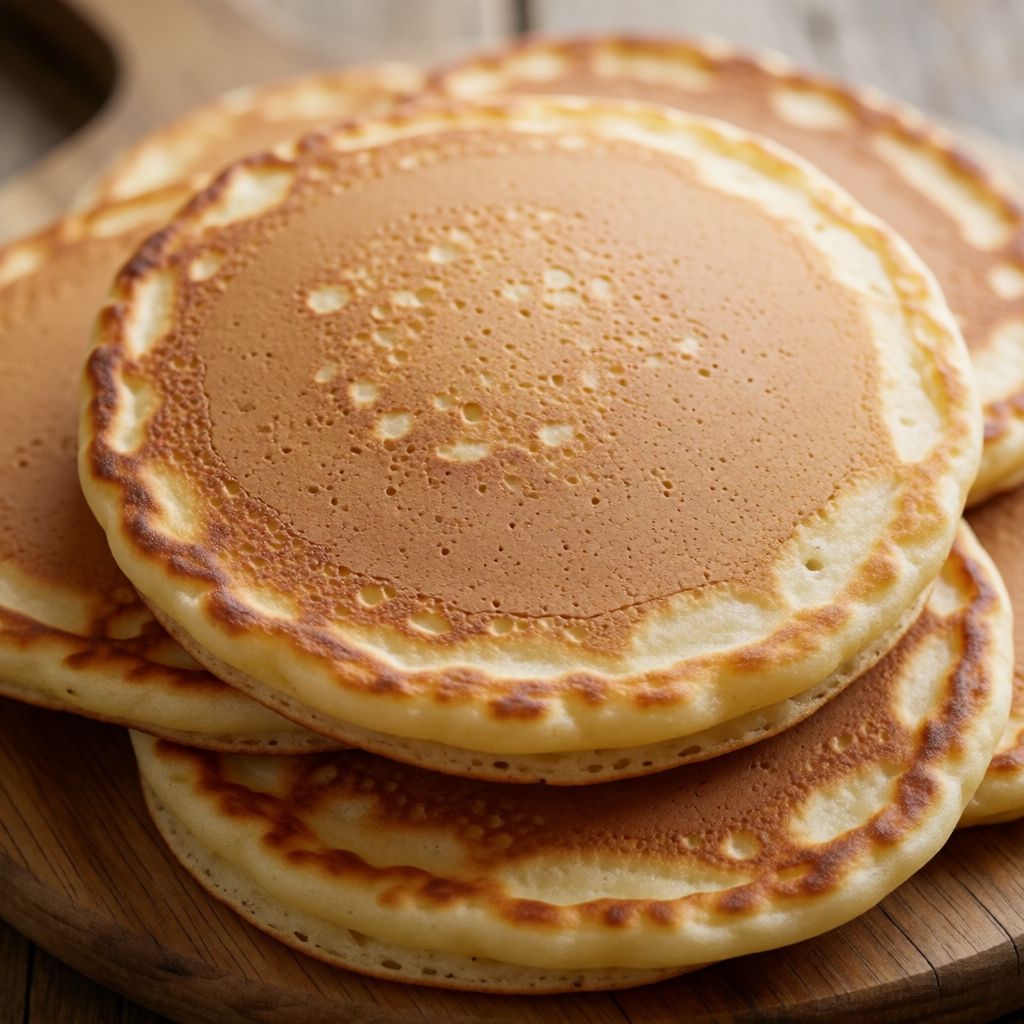
 AI photo
Pancakes with Yogurt
Light, fluffy pancakes made with yogurt, quick to whisk up for a weekend breakfast or brunch.
Labels are worked out automatically from the ingredients and can be wrong. Check the packaging if it matters to you.
Ingredients
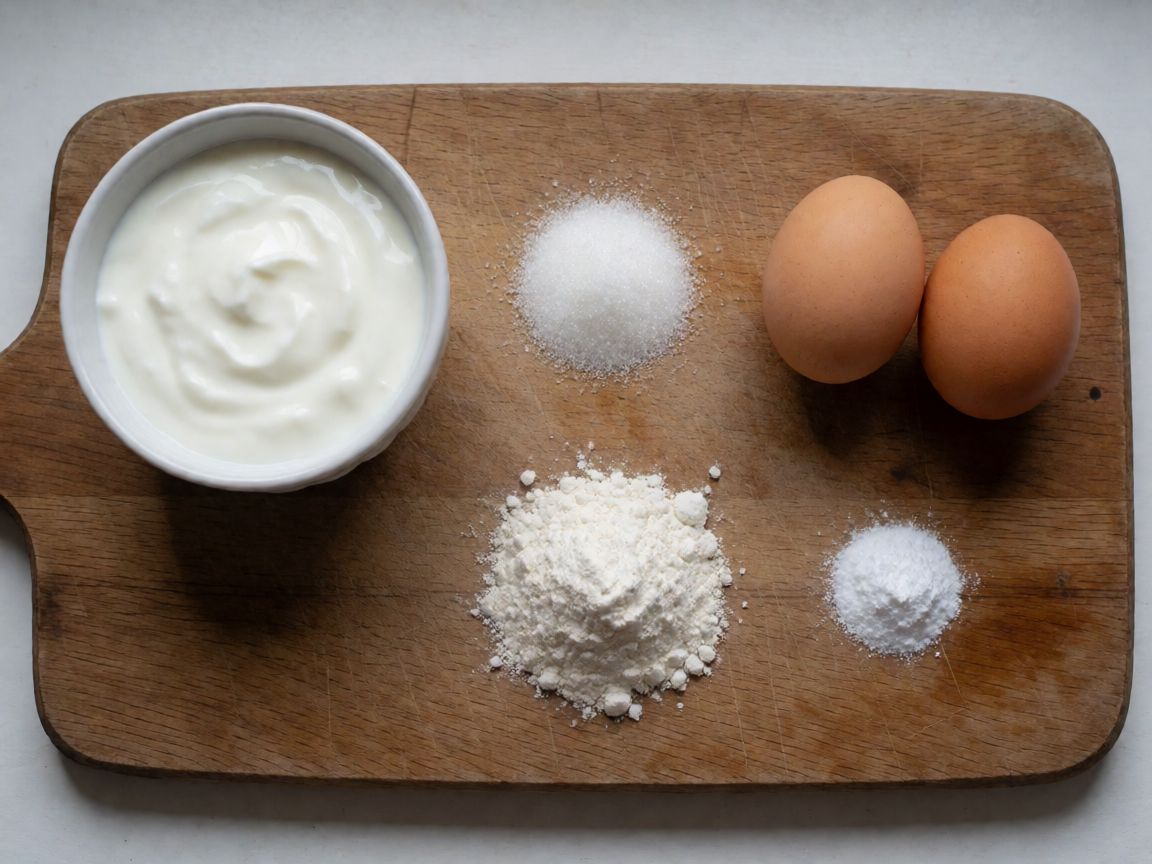
- 125 g Yogurt
- 25 g Caster sugar
- 2 pcs Eggs
- 20 ml Vegetable oil
- 100 g Plain flour
- 1 tsp Baking powder





Steps
Crack the eggs into a bowl, add the sugar and yogurt, pour in the vegetable oil and whisk together.
5 minSift in the flour and baking powder, add to the mixture and stir until you have a smooth, lump-free batter.
5 minHeat a non-stick frying pan with a drop of oil or a small knob of butter, then pour in a ladleful of batter.
2 minFry until bubbles appear on the surface, then flip with a spatula and cook the other side.
3 minRepeat until all the batter is used.
10 minServe the pancakes hot with coffee or juice, topped with maple syrup, Nutella or fresh fruit.
These are not the Pancake Day crêpes the British calendar trains you to expect from the word "pancake." Thin and lacy is a different dish; this one, batter lifted by baking powder, is the diner style — thick, soft, cooked in separate rounds rather than one sheet you fold around sugar and lemon. Worth saying up front, because if you go in expecting a crêpe, you'll see this batter as wrong and thin it with milk — and a too-thin batter spreads flat, traps no bubbles, and loses the fluff the baking powder is there to give it.
What decides this dish is two reactions, one in the bowl and one in the pan. First: yogurt is acidic, baking powder meets that acid and starts to fizz the moment you stir it in — that's your rise, and it happens whether or not you let the batter sit, because you're not waiting on yeast, you're waiting on a chemical handshake that's mostly done in minutes. Second: the fry, where egg protein and flour starch set from heat and turn wet batter into solid crumb — the bubbles rising through that half-liquid surface tell you when the bottom has set enough to survive being flipped.
The stirring is where most home cooks accidentally ruin these. Flour starts building gluten the second it meets liquid and gets worked, and gluten is for bread, not for this — overdo the stirring and you get rubber where you wanted something soft. Stir only until the lumps vanish. No polishing the batter smooth past that point, however tidy it feels to keep going.
Yogurt here isn't really for tang on the tongue — it's for the acid it carries to meet the baking powder. Baking powder is already a packaged pairing of an alkaline agent and an acid, built to go off with liquid and heat on its own, but giving it another acidic partner makes the reaction livelier and the crumb better than water alone would manage. If you have none, reach for any soured dairy with real acidity: buttermilk, kefir, even plain yogurt loosened with a splash of milk, or sour cream thinned a touch. You're not choosing for flavour there, you're choosing for sourness.
Eggs do two separate jobs. The protein sets under heat and holds the crumb together — too little egg and the pancake crumbles when you try to lift it off the pan. The fat in the yolk also helps the batter take up the oil evenly instead of letting it pool on the surface. Sugar at 25g across six servings is barely sweetness at all; its real job is browning — the Maillard reaction that turns the pancake's face gold instead of the pale grey of a batter cooked too timidly. Oil works against flour's instinct to toughen: it coats the gluten strands and keeps them short, which is why the pancake stays soft instead of chewing like bread. Use anything with no smell of its own — sunflower, rapeseed, a plain vegetable oil — olive oil will argue with the batter's own flavour and you'll taste the argument.
Flour is structure, and structure is the one thing you don't want too much of, which is why the stirring matters as much as it does: stop the moment the batter's smooth, because every extra turn of the spoon builds gluten you didn't ask for. Baking powder is the actual lift. Some say plain baking soda would do the same job for less money — no, because soda needs an acid to fire at all, and without enough of it the pancake sits flat and dense on the plate. Baking powder already carries its own acid, plus whatever extra the yogurt brings, so it rises twice: once in the bowl while wet, once in the pan under heat. That double action is also why this batter doesn't need to rest the way a yeasted one does — mixing has already started the reaction, and from there it's a race against the pan, not the clock.
In the pan you're reading bubbles, not a timer. When small bubbles rise and begin popping at the surface, and the wet shine along the edges dulls, the underside has set enough to take the flip without folding in half under the spatula. Flip too early and you tear it, because the middle is still batter pretending to be pancake. Some say press the pancake down with the spatula to speed things along — no, because that squeezes out the very air the baking powder worked to put in, flattening exactly what you built it for.
A domestic hob won't hold a steady heat the way a flat diner griddle does, so expect the first one or two off the pan to come out paler while the pan is still finding its temperature. That's not a ruined batch, that's the pan warming up — and the fix for it is patience, not a higher flame.