
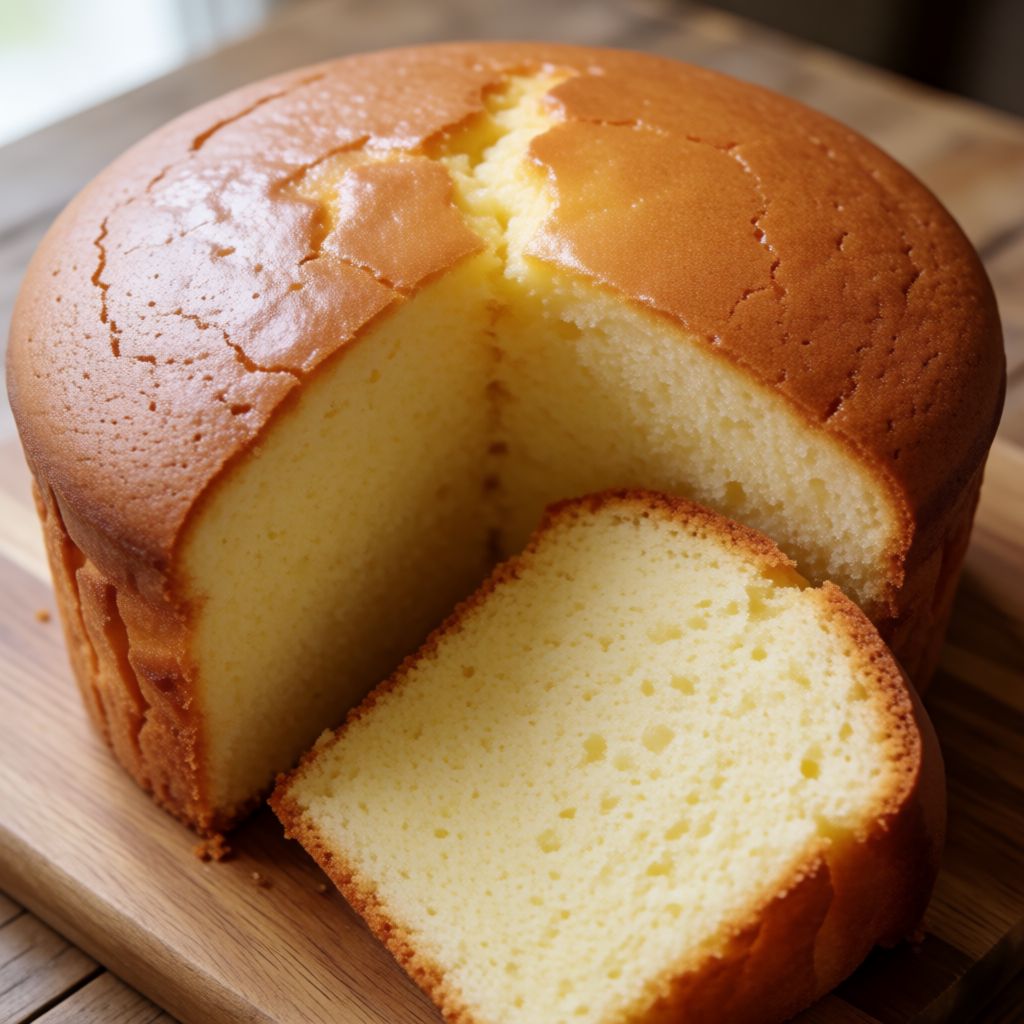
 AI photo
Yogurt Sponge Cake
A light, fluffy sponge cake made with yogurt, whipped eggs and vegetable oil.
Labels are worked out automatically from the ingredients and can be wrong. Check the packaging if it matters to you.
Ingredients
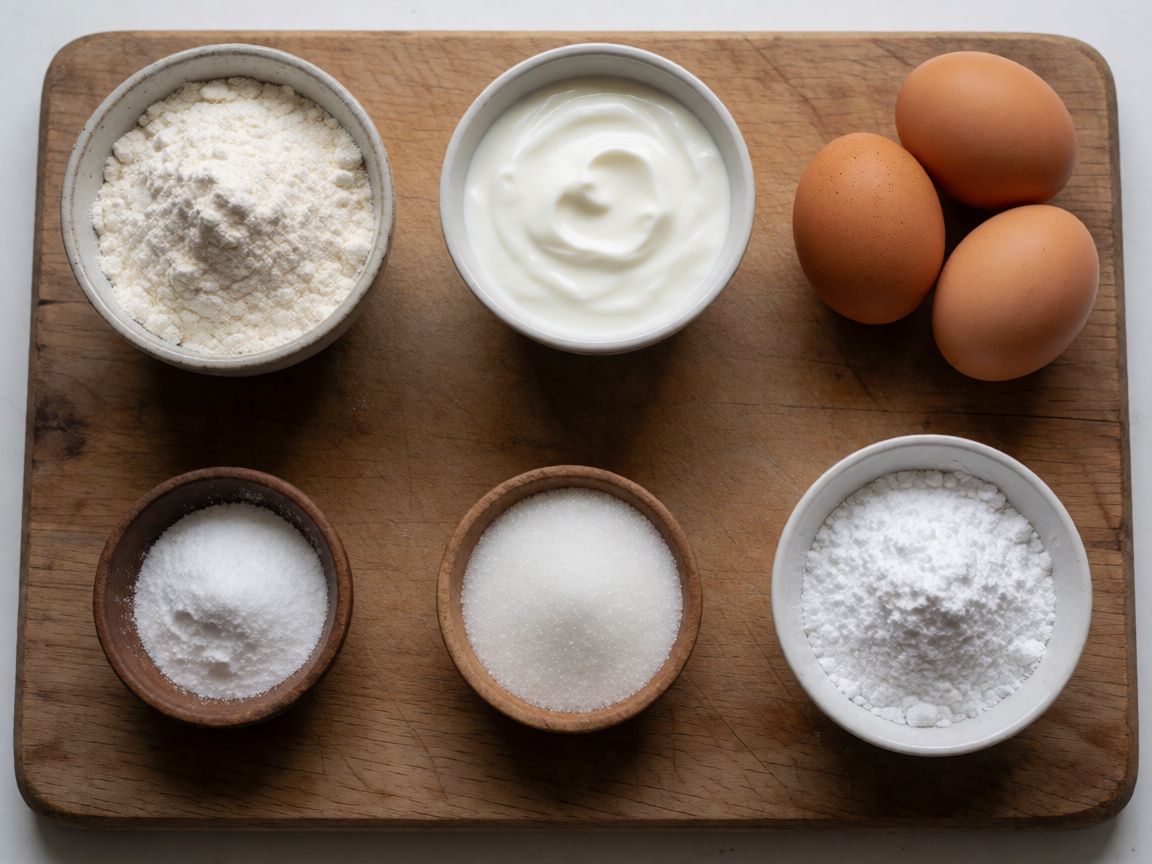
- 180 g Plain flour
- 125 g Yogurt
- 4 pcs Eggs
- 4 tbsp Vegetable oil
- 150 g Caster sugar
- 0.5 pcs Baking powder
- 1 pinch Salt
- 0 pcs Icing sugar to dust








Steps
Crack the eggs and separate the yolks from the whites, placing them in two separate bowls.
Set the whites aside, and whisk the yolks with the sugar using an electric mixer until soft and fluffy.
Wash the mixer whisks and beat the whites to stiff peaks.
Return to the yolk mixture and add the yogurt, mixing well.
Add the oil and mix, then carefully fold in the whipped whites with gentle bottom-to-top movements.
Sift the flour and mix it with the baking powder and salt.
Gradually add the flour mixture into the batter, folding gently.
Pour the batter into a tin greased with butter and dusted with flour.
Preheat the oven to 180°C (static/conventional mode) and bake for 25–30 minutes.
28 minCheck for doneness with a wooden skewer inserted into the centre of the sponge.
Let the sponge cool, then release it from the tin.
Transfer the sponge to a plate and serve, dusted with icing sugar or decorated as you wish.
This is a plain sponge that leans on yogurt and whipped egg whites instead of butter for its lift and moisture — closer to a genoise's cousin than a Victoria sandwich. No butter in the crumb at all, which is why it stays soft for days instead of going stale the way a butter sponge does once the fat sets hard in the fridge.
What decides whether it rises or sits flat as a biscuit is the egg whites, full stop. You whip them separately to stiff peaks, then fold them in — not stir, fold — because every stir you do after that is a chance to knock the air back out. The baking powder is backup, not the engine. Most of the lift here is mechanical: air trapped in protein, held just long enough by heat to set the structure before it collapses.
Some say a sponge needs weighing to the gram or it won't work. No — because sponges forgive small errors in flour or sugar. What they do not forgive is an egg white that's gone half-flat before it meets the batter, or a batter beaten to death once the whites go in. Precision matters in the folding, not in the scale.
The yogurt is doing two jobs: it souring the batter very slightly, which plain flour and baking powder like, and it's keeping the crumb damp without adding fat the way oil alone would. Oil, not butter, is the fat here — and that's deliberate, not a shortcut.
Eggs: four, separated. The yolks whisked with sugar until "soft and fluffy" means until the mixture pales and thickens enough to leave a ribbon when you lift the whisk — that's the sugar dissolving into the fat and water of the yolk, which is what gives the crumb its tenderness, not just sweetness. The whites are whipped on their own, in a clean, dry bowl — any trace of yolk fat on the whisk or in the bowl and the whites won't hold a peak, because fat deflates the protein foam before it starts. That's why the instructions have you wash the whisks between the two jobs: not fussiness, mechanics.
Yogurt: 125g, any plain, unsweetened yogurt with enough body to hold its shape on a spoon — Greek-style works, thin "drinking" yogurt doesn't, because you need the acidity and the moisture but not extra water that will loosen the batter and slow the set in the oven. If you've got none, soured cream or buttermilk in the same quantity does the same acid job, though buttermilk will give a slightly lighter, wetter crumb.
Oil: four tablespoons, and the only real rule is "an oil with no smell of its own" — sunflower, a light rapeseed, grapeseed. Olive oil will fight the yogurt and taste odd in a sweet sponge; keep it for things that want to taste of it.
Flour: 180g plain flour, sifted. Sifting isn't ceremony — it breaks up clumps that would otherwise sit in the batter as little dry pockets, undissolved, and show up as dense streaks once baked. The baking powder (half a sachet, so roughly a teaspoon) and the pinch of salt go in with the flour so they're evenly distributed before they ever meet the wet batter — add baking powder straight into a wet mix unmixed and you get it working unevenly, lifting one side of the tin more than the other.
Sugar: 150g caster, for the fine grain that dissolves quickly into the yolks rather than sitting gritty. Caster, not granulated, matters here for exactly that reason — granulated will dissolve eventually but slows down the whisking stage.
On the oven: 180°C conventional, not fan — fan ovens run drier and faster and will often catch the top before the centre sets, so if yours is fan-only, drop it by about 20°C and keep an eye on colour rather than the clock. The 25–30 minutes is a floor, not a verdict: the skewer test is the actual answer. In at the centre, out clean — no wet batter clinging to it — is doneness. A domestic oven's hot spots mean the centre can lag behind the edges, so test there, not near the rim where it looks done first but may not be.
Letting it cool fully before turning out isn't patience for its own sake, though patience is the real ingredient throughout this bake — it's structural. A warm sponge is still setting its internal crumb; turn it out hot and it can collapse under its own weight or tear at the base. Icing sugar at the end is cosmetic, nothing more — dust it just before serving, because sugar left sitting on a moist sponge slowly dissolves into it and disappears.