
 AI photo
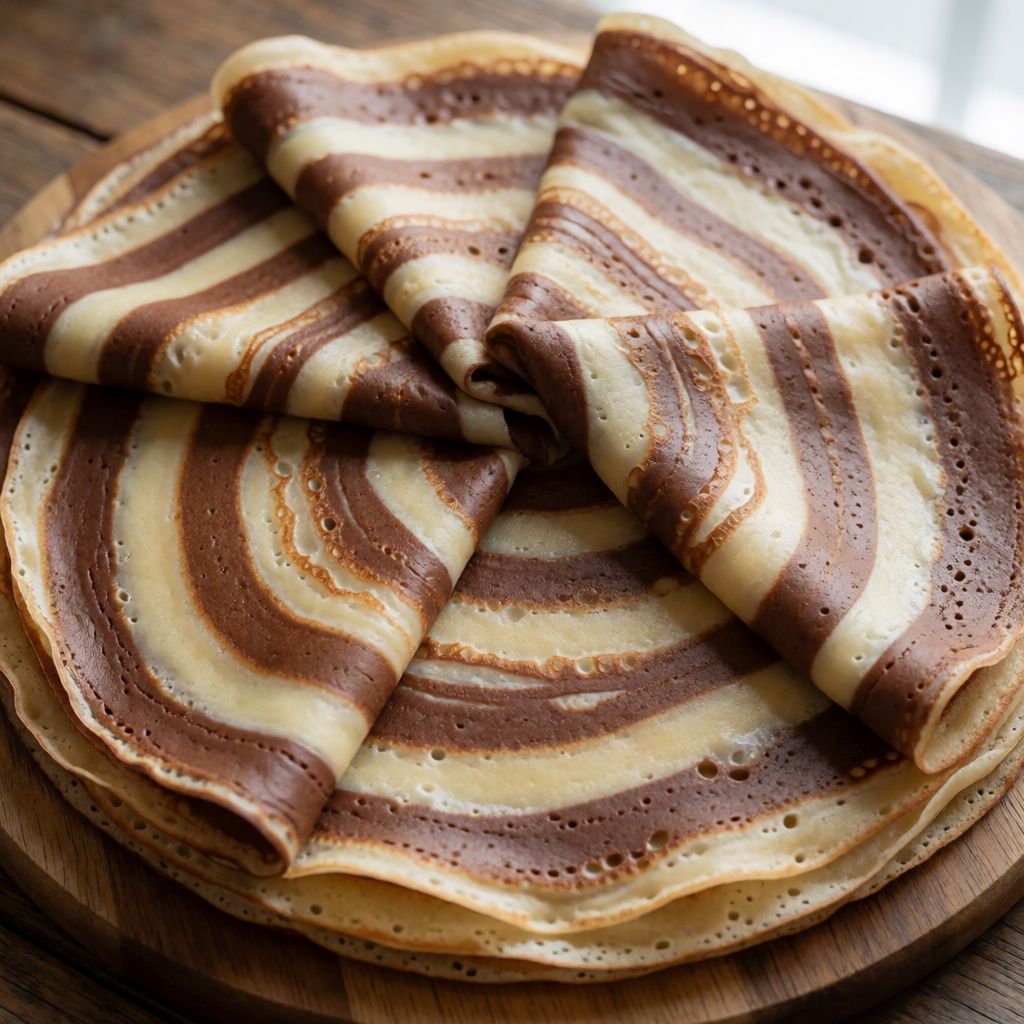
Zebra Crepes
A playful black-and-white crêpe made from plain and cocoa-tinted batter, swirled together in the pan.
Labels are worked out automatically from the ingredients and can be wrong. Check the packaging if it matters to you.
Ingredients
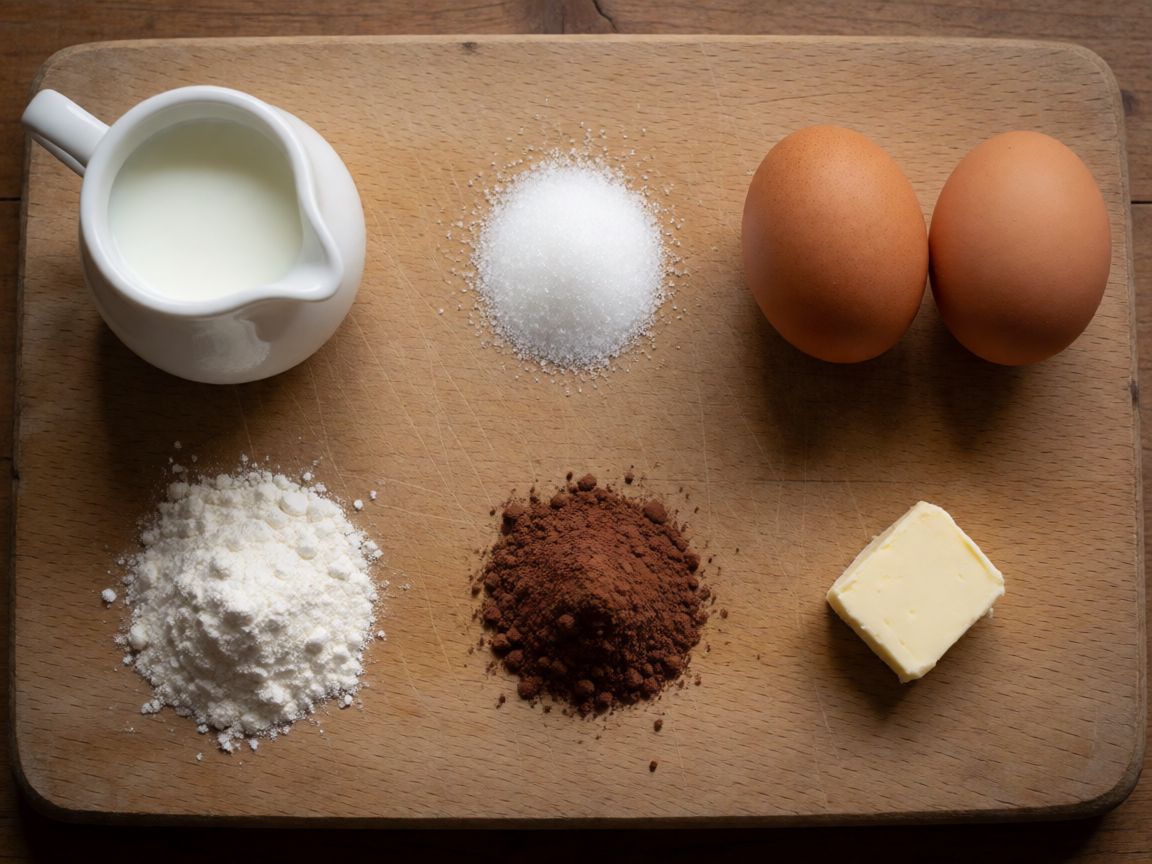
- 400 ml Milk
- 15 g Caster Sugar
- 2 pcs Eggs
- 120 g Plain Flour
- 10 g Cocoa Powder
- 40-50 g Butter for greasing the pan






Steps
Beat the eggs with the caster sugar, then gradually pour in the milk, alternating with the sifted plain flour.
3 minSet aside about a third of the batter and mix it with the sifted cocoa powder.
2 minPour the cocoa batter into a squeeze bottle fitted with a nozzle.
1 minHeat a frying pan or crêpe pan and grease it with a small knob of butter.
2 minDraw a spiral with the cocoa batter, starting from the centre and working out to the edge of the pan.
1 minWait a few seconds, then pour a scant ladleful of the plain batter over the spiral, immediately swirling the pan.
1 minCook for a few seconds, then flip the crêpe and cook the other side.
2 minRepeat until all the batter is used.
5 min
Zebra crêpes aren't about flavour tricks - cocoa and plain batter taste almost the same, sweetened milk and egg, really. What you're actually cooking is a pattern, and the whole thing hangs on one fact: hot metal sets batter almost the instant it touches it. Draw a thin spiral of dark batter on a pan hot enough to make it hiss, wait a breath, then flood it with the pale batter and swirl - the dark lines have already begun to firm, so the pale batter flows around them instead of swallowing them. That's the mechanism. Everything else is detail around it.
Get the timing wrong - pour the pale batter too soon, or dawdle while swirling - and you get a crêpe the colour of wet concrete, not stripes. Some people blame a bad pan for this, and there are "zebra pans" sold with a nozzle bottle built in - no, an ordinary crêpe pan does the job fine; what you need is a line thin enough to set fast, and a pan hot enough to set it. A domestic hob gives you this, though unevenly - if you feel one side of the pan running hotter than the rest, turn the pan, not the heat dial.
Feeds four at a modest two crêpes each, more with jam alongside. It sits better as a weekend-breakfast indulgence than as a pudding after a roast - something to make slowly on a morning with no particular urgency, with tea on the side.
Milk thins the batter to pouring consistency and carries enough fat to keep a crêpe pliable rather than crisp - it should run off a spoon in a continuous ribbon, closer to double cream than to the thicker batter you'd make for a British pancake. Semi-skimmed works, the crêpe's just slightly leaner, nobody will notice over tea.
Eggs are structure, not flavour. They're what lets a sheet this thin hold together off the pan without tearing - the proteins set with heat and knit it. Two eggs to 400ml milk is the working ratio here; drop one and the crêpe turns fragile, which matters because you're flipping lace repeatedly, not just once.
Flour: plain, because you don't want gluten developing - this isn't bread, you want something that pours and sets without springing back. Sift it in gradually against the egg and milk so it doesn't clump; a lump here is what later jams your nozzle and turns a spiral into a blob.
Cocoa powder: unsweetened, sifted for the same reason as the flour, and because cocoa drinks up liquid - the third of batter you set aside for it will thicken once it's mixed in. Check it still runs in a fine continuous thread; if it's gone too stiff to flow, loosen it with a spoon of milk rather than force it through, or your spiral comes out as dots.
Butter for greasing does two jobs: stops sticking, and its colour change is your actual thermometer, no gadget needed. Watch the knob of it: foam, then quiet, then the edge turning pale brown with a faint nutty smell - that's the pan ready, hot enough to set a thin cocoa line almost on contact. Any fat with no smell of its own works instead, a flavourless oil for instance, but then you lose that visual cue and have to judge by dropping a bead of batter onto the pan: it should firm at the edges within a second or two, not spread into a slow puddle.
The squeeze bottle is just precision, nothing more - it lets you draw a line instead of pouring a blob. No bottle, no problem: a piping bag with the tip snipped small, or a teaspoon worked slowly in a tight ring, does the same job, just slower, so move quicker once the pan's hot. And this is where patience cuts two ways in one recipe - wait those few seconds after drawing the spiral so the cocoa line has started to set, then don't wait at all once you pour the pale batter, swirl it immediately while it's still liquid enough to spread thin. Wait, then don't wait. That's the whole trick, and rushing either half is what turns stripes into mud.