
 AI photo
Zebra Muffins
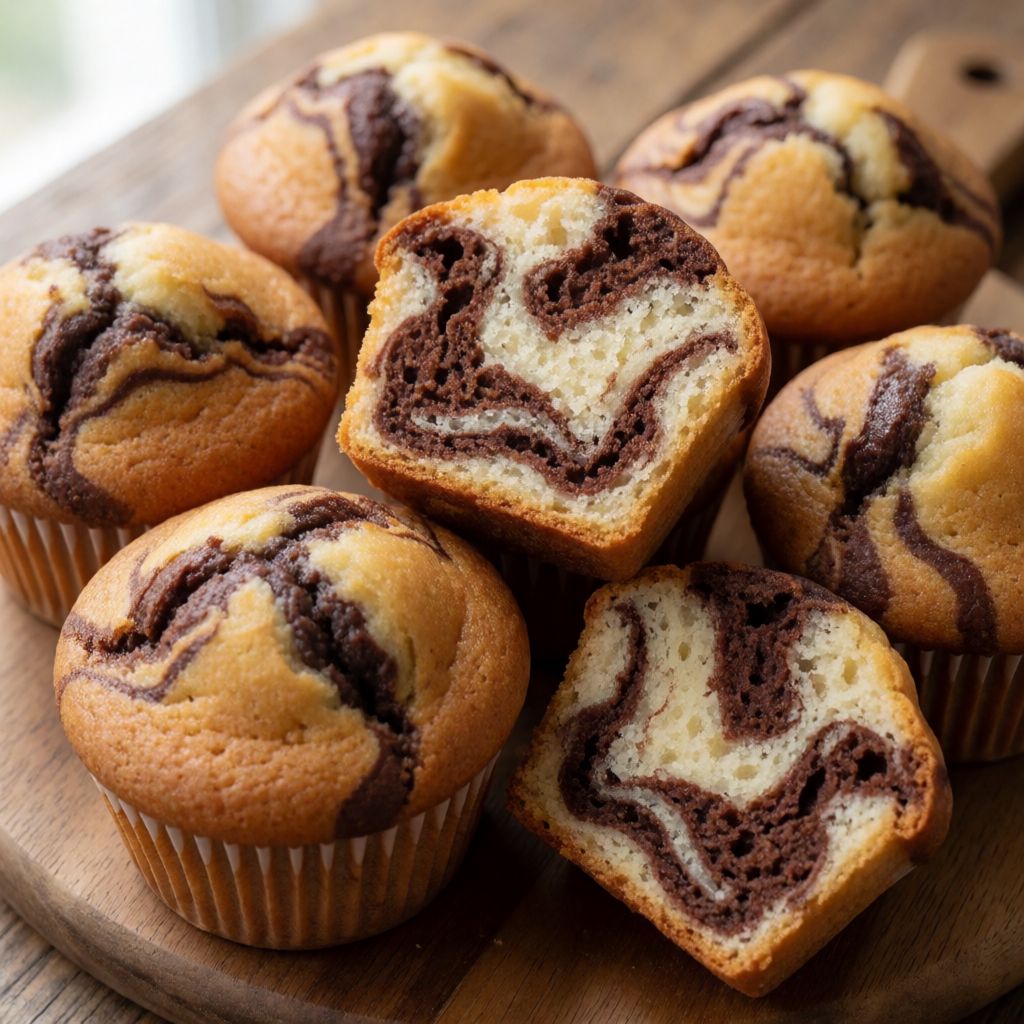
Light vanilla and cocoa muffins swirled together to create a striped zebra pattern inside.
Labels are worked out automatically from the ingredients and can be wrong. Check the packaging if it matters to you.
Ingredients
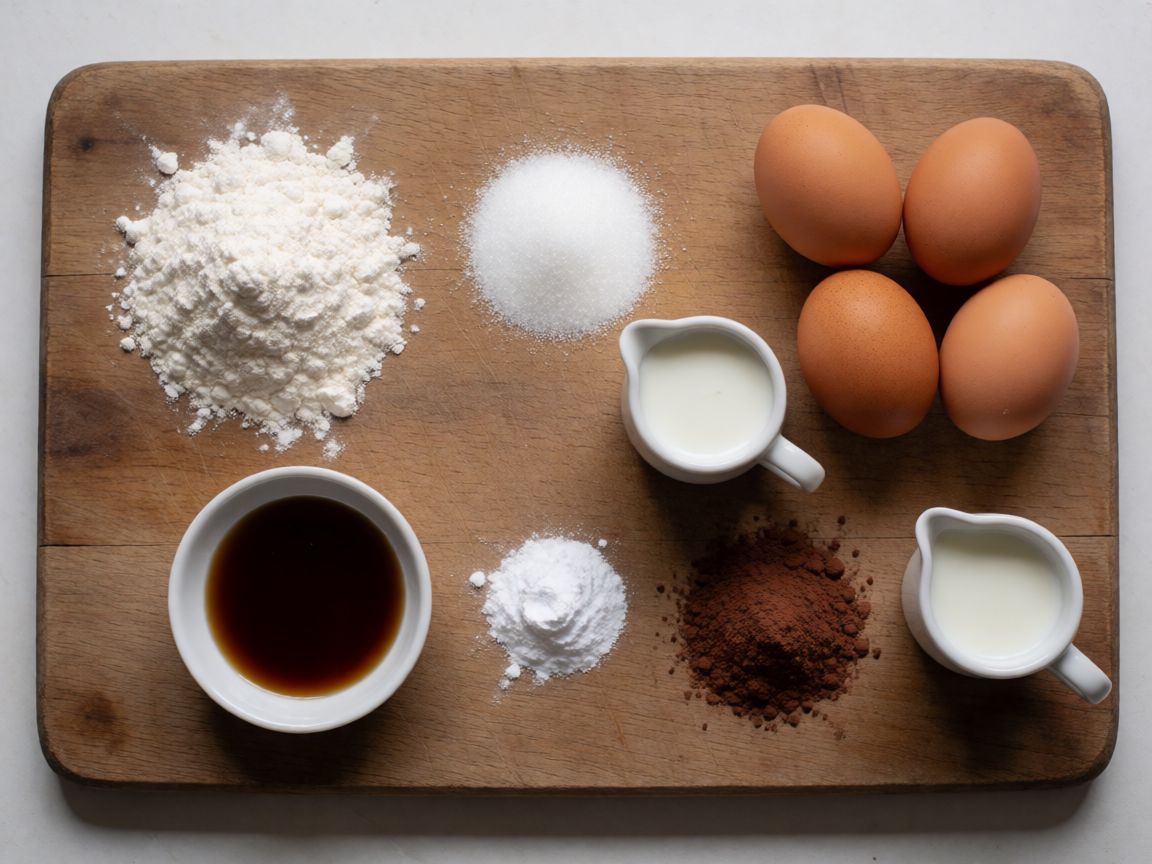
- 300 g Plain flour
- 200 g Caster sugar
- 4 pcs Eggs
- 130 g Vegetable oil
- 200 ml Milk
- 1 pinch Salt
- 16 g Baking powder
- 3 tsp Vanilla extract
- 30 g Cocoa powder sifted









Steps
In a large bowl, combine 4 egg yolks with the sugar and whisk with a mixer until smooth and fluffy.
10 minSeparately, whisk 4 egg whites until they form a thick, stiff foam.
Pour in the vegetable oil in a thin stream, continuing to whisk with the mixer.
Add the milk in a thin stream, then gradually mix in the flour.
Add a pinch of salt and the baking powder, and mix until a smooth, even batter forms.
Gently fold in the whisked egg whites with a spatula, using upward strokes.
Divide the batter equally into two parts. Add the vanilla extract to one part and mix.
Add the sifted cocoa powder to the other part and mix thoroughly.
If the cocoa batter is thicker, add a little milk to even out the consistency.
Line a muffin tin with paper cases and fill them, alternating spoonfuls of the light and dark batter.
Bake in an oven preheated to 180°C.
17 minLet the baked muffins cool before serving.
A zebra muffin isn't two flavours, it's one batter split in two and relying on a trick of viscosity to keep the stripes instead of blending into grey-brown mud. You make a single base — yolks beaten with sugar until pale and thick, oil and milk worked in, flour and raising agent folded through, then stiffly whisked whites lifted in for lightness. Only at the very end do you divide it and push one half toward cocoa, the other toward vanilla. Everything up to that split point is shared chemistry; everything after is just colour and a bit of stubbornness in the batter.
What decides whether you get stripes or sludge is thickness, not cleverness with a spoon. Cocoa powder drinks liquid — it's starch and fibre, no gluten to hold water the way flour does — so the chocolate half tightens up while the vanilla half stays looser. Drop one spoonful of thick batter onto another of thin, and the thick one sits where it lands instead of spreading sideways and merging. That's the entire mechanism behind the "zebra" pattern: not a special pouring technique, just a controlled mismatch in consistency, corrected if needed with a splash of milk so neither side runs away from the other.
Some say you need to swirl the spoon in circles to get stripes. No — swirling is how you get marble, which is pretty but random. Zebra wants discipline: spoon, centre, next colour, centre, repeat. The pattern comes from stacking, not stirring.
Start with the yolks and sugar: ten minutes of whisking isn't an arbitrary number, it's the time it takes sugar crystals to actually dissolve into the egg and trap air as they do. Rush it and you get a heavier crumb — not wrong, just denser, because the sugar hasn't finished doing the job of holding structure before the flour arrives. Oil goes in as a thin stream for the same reason mayonnaise does: dump it in fast and it sits as pools instead of emulsifying, and you lose the moist, almost pound-cake texture that oil-based muffins are known for. Any neutral oil with no smell of its own works here — sunflower, rapeseed, light vegetable oil. Olive oil is the wrong choice; it has an opinion, and that opinion doesn't belong in a vanilla muffin.
The whisked egg whites are your only leavening partner to the baking powder, and they're doing a different job. Baking powder gives you chemical lift — bubbles of gas released by heat and moisture. Whipped whites give you mechanical lift — air already trapped in a protein net before the oven even starts. Skip the whites and fold in whole eggs instead, and the muffins will still rise, just denser and closer to a quickbread than something with any spring to it. Some say beating egg whites separately is fuss for its own sake — no, it's the difference between a muffin that's merely cooked and one that's actually light.
Cocoa powder: sift it, because lumps of cocoa don't rehydrate once they're trapped in batter — they sit there as bitter dry pockets no amount of baking fixes. Dutch-processed or natural both work; natural cocoa is more acidic and reacts faintly with the baking powder for a touch more lift, Dutch-processed is milder and darker in colour. If you're out of cocoa, you don't have a zebra muffin anymore — you have a plain muffin, so this isn't really substitutable, it's the whole point of the second half.
Vanilla extract, not essence if you can help it — extract is alcohol that's actually sat with real vanilla pods, essence is usually a flavour compound built to taste similar. Three teaspoons sounds generous for six muffins, but vanilla's flavour fades hard under oven heat, so what tastes strong in the bowl goes gentle in the finished crumb.
On a domestic hob you don't have a kazan or a commercial deck oven with even heat from every side — you have one fan or conventional setting and a muffin tin that's closer to the top element than any professional baker would like. 180°C is the point where the raising agents are active and the surface sets without scorching before the inside catches up; checking with a skewer at the lower end of the 17 minutes, rather than trusting the clock alone, saves you from the dry, cracked-dome muffin that comes from an oven running hotter than its own dial admits — a very common fault in flats where the oven's thermostat lies by ten or fifteen degrees and nobody's ever calibrated it.
Let them cool before you eat one — not for ceremony, but because a hot muffin is still setting its crumb structure. Cut into it warm and you compress what should be airy; give it the quiet ten minutes, and the stripes you worked for actually hold their shape when you bite through them, rather than squashing into one colour under the fork.