
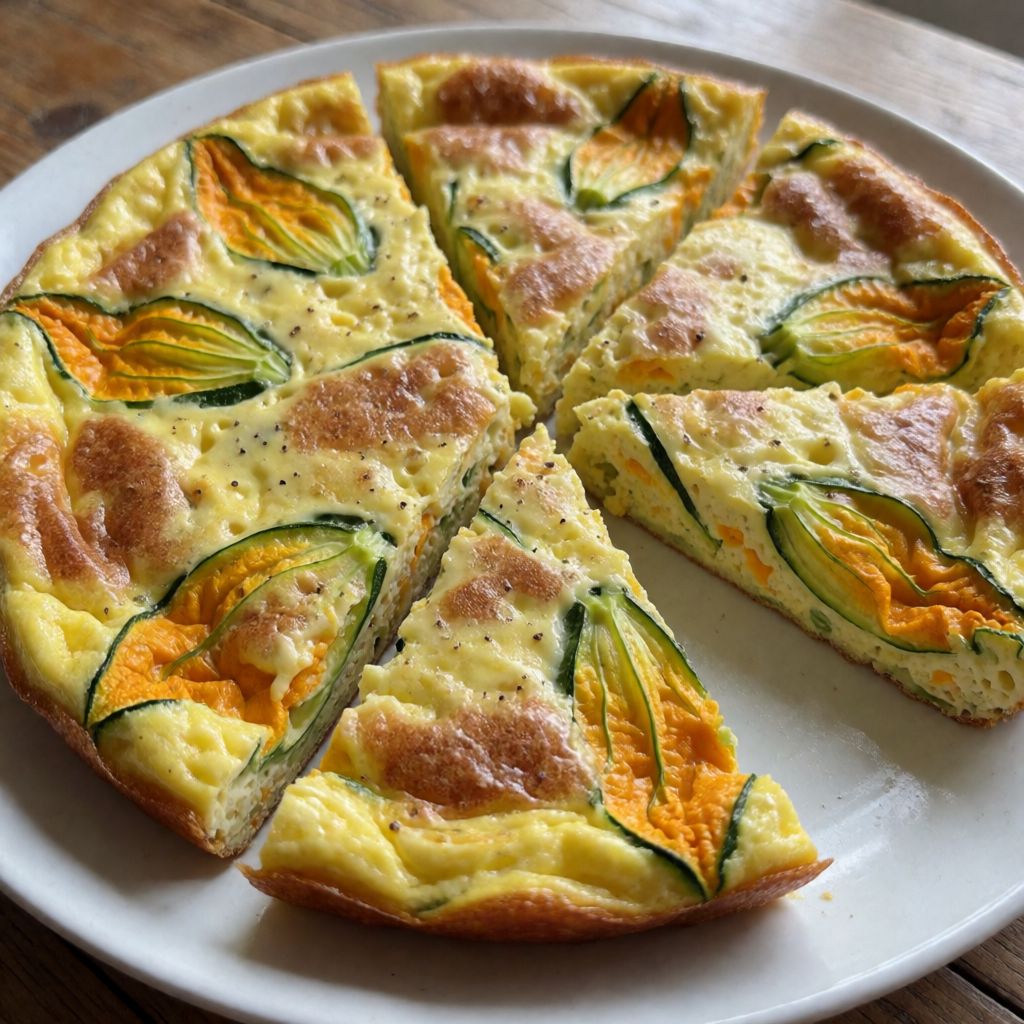
 AI photo
Courgette Flower Frittata
A quick pan-fried frittata made with courgette flowers, eggs and Parmesan.
Labels are worked out automatically from the ingredients and can be wrong. Check the packaging if it matters to you.
Ingredients








Steps
Clean the courgette flowers, removing the central pistil and stem.
Heat a generous amount of olive oil in a 22–24cm non-stick frying pan and add the courgette flowers.
Fry the flowers for 1-2 minutes, turning, until they wilt, then add a pinch of salt.
2 minIn a bowl, whisk the eggs with salt, black pepper, milk and Parmesan.
Pour the egg mixture over the courgette flowers, spreading it evenly across the pan.
Cook the frittata over low heat, covered.
8 minFlip the frittata using a lid or a plate, then fry the other side.
Serve, garnished with basil.
Forget the word "omelette" here — a frittata is a different animal. An omelette is egg cooked fast, folded, eaten before it's quite finished setting. A frittata is egg cooked slow, left flat, and the vegetable isn't a filling you fold in — it's cooked into the structure from the start, so every slice has flower running through it, not sitting on top. That's the whole point of frying the courgette flowers first: you're building the base layer before the egg ever touches the pan.
What decides if this works is heat, and specifically the lack of it. "Low heat, covered" isn't a vague instruction — it's the mechanism. With the lid on, the eggs don't just cook from the pan up; the trapped steam cooks the top down too, gently, without you ever having to touch a grill or flip early. Crank the heat and you get the opposite of what you want: a scorched, rubbery underside long before the top has set, because egg protein tightens and weeps water the moment it meets fierce heat — that's the sulphurous, spongy texture people complain about in a bad omelette. Low heat buys you time for the whole thing to set evenly. Patience is the actual ingredient in step 6, not the clock.
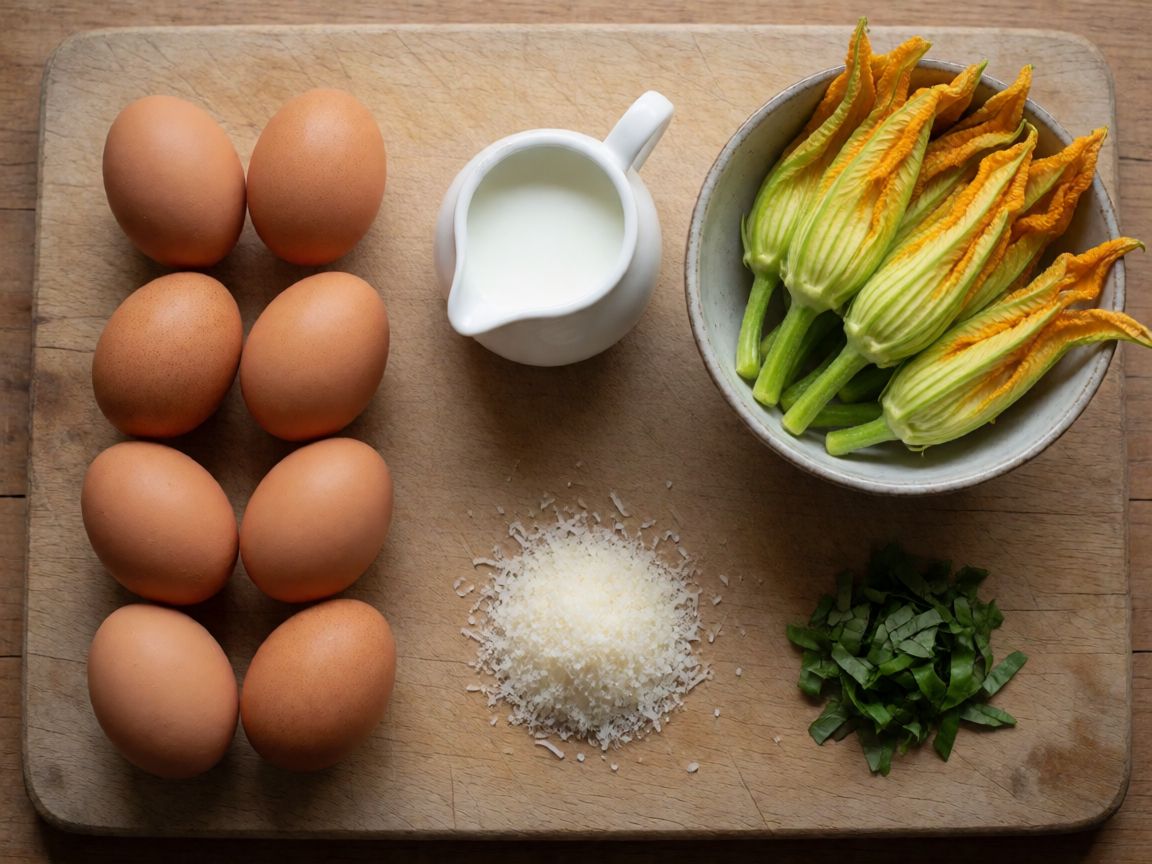
On the eggs: eight for four people is generous by frittata standards, but courgette flowers add almost no substance of their own, so the egg has to carry the dish. Fresher eggs hold together better when the flip happens — an older egg's white has thinned and runs more, which is a real risk at that moment of turning it in the pan. If you only have medium eggs instead of large, add one more; you're after enough volume to cover the pan at roughly a finger's depth.
The milk isn't there for flavour — it's there to interrupt the egg protein. Pure egg, cooked, wants to tighten into something dense and slightly rubbery; milk dilutes that protein network just enough that the set stays tender instead of squeaky. Whole milk works best because the fat in it also helps; if you've only got skimmed, it'll still set, just with less give. Cream does the same job more richly if you want to push it that way, but then you're edging toward a quiche filling, not a frittata.
Parmesan does two things at once: it salts from within, so the egg is seasoned through rather than just on the surface, and it brings the savoury depth — umami, if you want the word — that egg alone doesn't have. Any hard, aged, grating cheese does the same work: pecorino if you want more bite, grana padano if you want it milder. Pre-grated cheese in a tub won't melt into the mixture the same way; it's been through anti-caking treatment that stops it binding properly, so grate your own off a block.
Courgette flowers themselves are an economic curiosity more than a culinary one. Most of what you'll find, if you're growing courgettes on an allotment or buying from a farmers' market in season, are the male flowers — the ones that were never going to become a courgette anyway, so cutting them costs the plant nothing. That's why they turn up cheap, briefly, in high summer, and why you won't find them in a supermarket most of the year: they wilt within a day of picking and don't survive a supply chain. If you can't get them, don't force it — thinly sliced young courgette, fried the same way until it softens and turns translucent at the edges rather than browns, gives you the same vegetable character inside the egg, just without the flower's particular delicacy.
Olive oil here isn't for frying in the aggressive sense — it's a thin, even layer that lets the flowers wilt rather than scorch, since they have almost no structure to protect them from direct heat. Any oil with no smell of its own that can take gentle heat will do the job; a flavourless light olive oil or a plain vegetable oil both work, though a fragrant extra virgin will push its own taste into a dish that's meant to taste mostly of the flower and the egg.
Basil goes on at the very end, off the heat, for a reason that has nothing to do with garnish. Its aroma lives in oils that evaporate the moment they meet real heat — cook it in and you lose exactly what you added it for. Tear it, don't chop it with a knife, since a blade bruises the leaf and lets that same aroma escape into the air instead of onto your plate.