
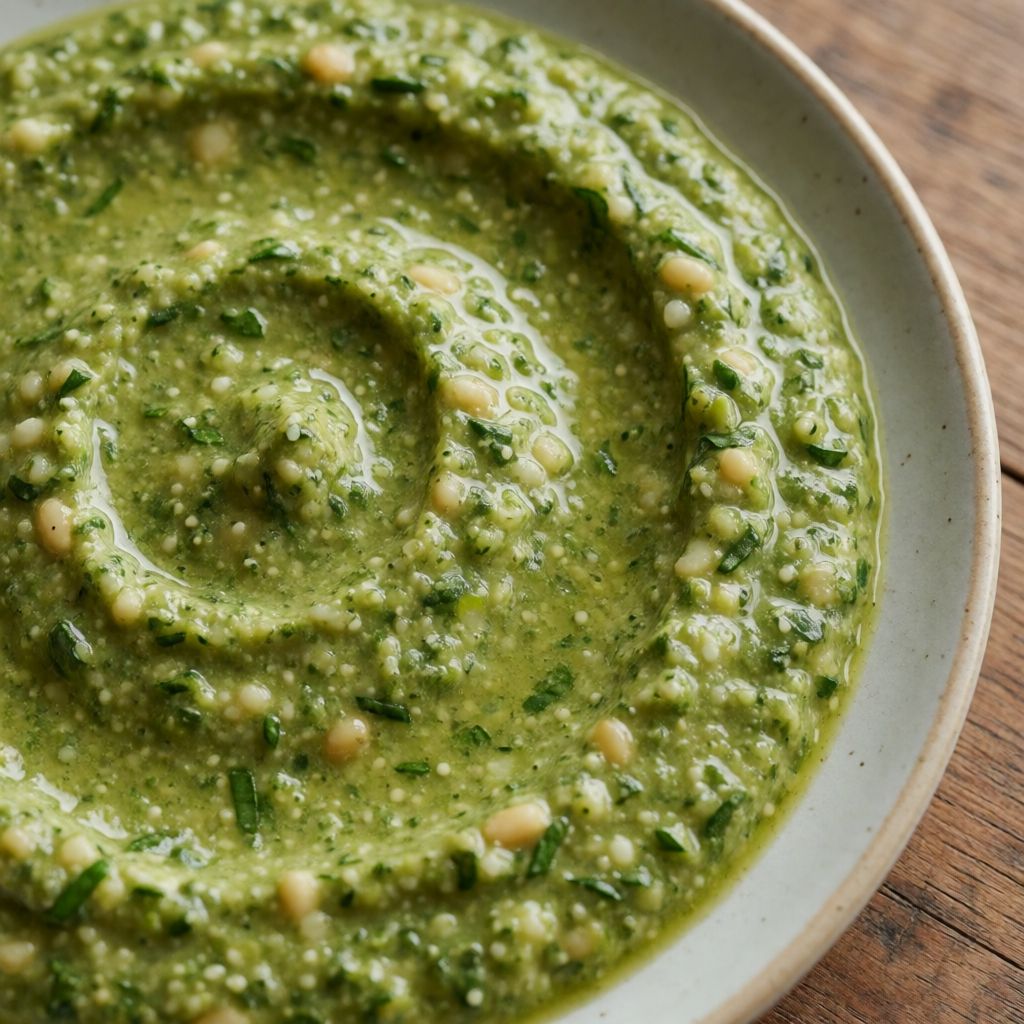
 AI photo
Courgette Pesto
A fresh courgette pesto blended with pine nuts, pecorino romano and parmesan.
Labels are worked out automatically from the ingredients and can be wrong. Check the packaging if it matters to you.
Ingredients






Steps
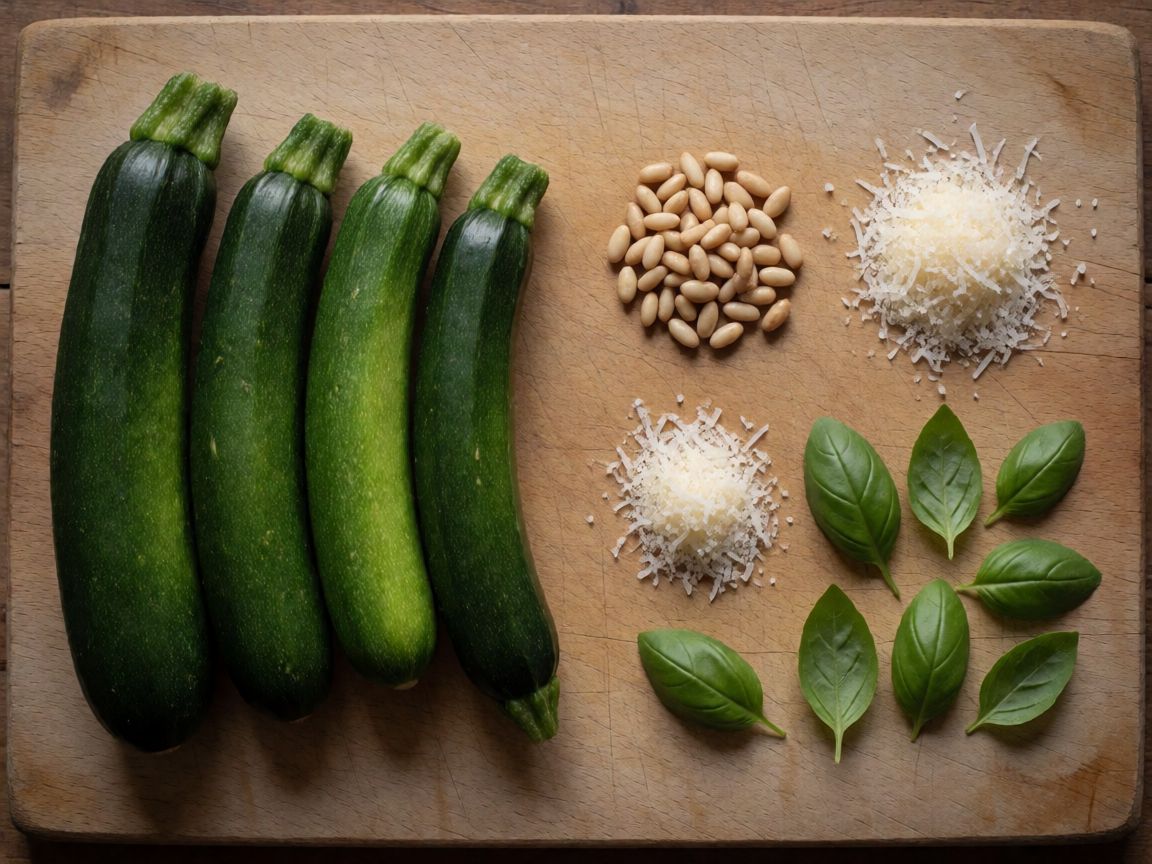
Wash the courgettes and trim the ends. Cut them into rounds and put them in a blender.
Add the basil, pine nuts, pecorino romano, parmesan and a pinch of salt.
Blend, gradually adding the olive oil, until you get a very creamy mixture.
Forget the Genovese rulebook for a second — this isn't basil pesto with courgette added for fun, it's the reverse: courgette is the body, basil is the perfume on top. Ten leaves of basil can't carry a sauce for two people on their own; four courgettes can. That swap isn't a shortcut, it's economics — fresh basil in a British supermarket is expensive, bruises in the bag, and goes brown in two days, while a courgette sits in the fridge for a week and costs a fraction. Someone worked out that if you want the green, cool, grassy character of pesto without paying basil prices every time, you borrow bulk from the vegetable that's always there.
What decides whether this works isn't the list of ingredients, it's the blender. A real mortar and pestle crushes leaves and nuts by pressure, cold, slow, no friction heat. A blender blade spins fast and gets hot, and heat is what turns basil bitter and pesto from bright green to a tired khaki. So pulse, don't run it continuously — stop, scrape, go again. Some say pesto 'isn't real' unless pounded by hand in a marble bowl. No — it's real if it stays cool and stays green; the tool is just a means, not a sacrament.
Courgette: pick ones that feel heavy and firm, skin taut, no give when you press — a soft courgette is mostly water that's started breaking down and will make the pesto thin and sad. Trim the ends mostly for texture and looks; the skin stays on, and that's deliberate, since the skin is where most of the colour and a fair bit of the flavour sits. If courgette isn't around, a pale marrow won't do — too watery and bland — but a young, firm cucumber, deseeded, gets you closer to the same role: bulk with high water content and almost no character of its own.
Pine nuts: they bring fat and a soft, resinous sweetness, and that fat is part of what makes the paste creamy rather than just wet. Leave them raw. Toasting pine nuts is common advice for other dishes, but here it fights you — toasting pushes them toward a heavier, roasted note that flattens the fresh green smell you're trying to keep. If pine nuts are too dear (they usually are), walnuts or blanched almonds do the fat job, though you'll lose that particular sweetness — that's a genuine trade, not a free substitute. Pecorino Romano and Parmesan together: this is the real reason you use two cheeses instead of one. Pecorino, being sheep's milk, is sharper and saltier — it hits fast. Parmesan is rounder, nuttier, slower. One alone gives you a single flat note; together they give the salt a front and a back. Buy a wedge and grate it yourself if you can — the pre-grated bags dry out and lose the aromatic oils that make the sharpness worth having. If you only have one cheese in the fridge, Parmesan alone is the safer single choice; Pecorino alone can tip the whole thing too salty, so go easy on the added salt if that's all you've got.
Basil: ten leaves is a seasoning amount, not a base amount — that's the whole point of this version. Bruised or wilted leaves will still work; what kills basil's flavour is heat and time, not a bit of damage, so there's no need to hunt for perfect leaves.
Olive oil: the criterion is any oil with no smell of its own that still carries fat well — a light, mild olive oil is the obvious choice because it won't compete with the basil, but a strong, peppery extra virgin will actually fight the green flavour here rather than support it, which is the opposite of what people assume about 'the better the oil, the better the result'. Sunflower or another neutral oil works if that's what's in the cupboard; you lose a little roundness, not the dish.
Salt: taste before you add any — two salted cheeses are already doing most of the work, and adding a 'pinch' on autopilot because the recipe says so is how pesto ends up inedibly salty. In a British kitchen, serve this the way you'd serve houmous or tzatziki: a bowl, good bread, maybe tossed through pasta for two, or spread thin under a Sunday roast's cold leftover chicken the next day — it keeps a day or two in the fridge under a film of oil, which also stops the surface going dark.