
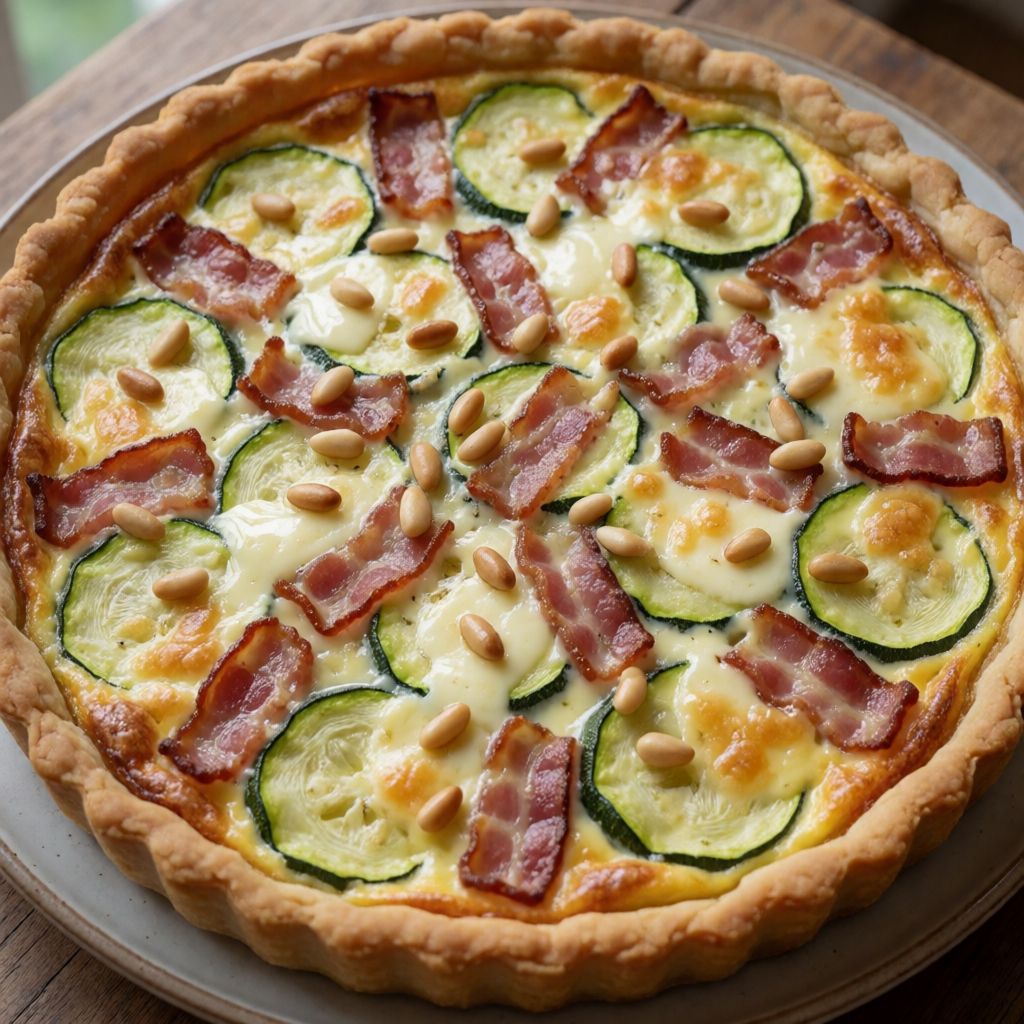
 AI photo
Courgette, Taleggio, Pancetta and Pine Nut Quiche
A savoury quiche with courgette, taleggio, pancetta, parmesan and pine nuts in a crisp puff pastry base.
Labels are worked out automatically from the ingredients and can be wrong. Check the packaging if it matters to you.
Ingredients
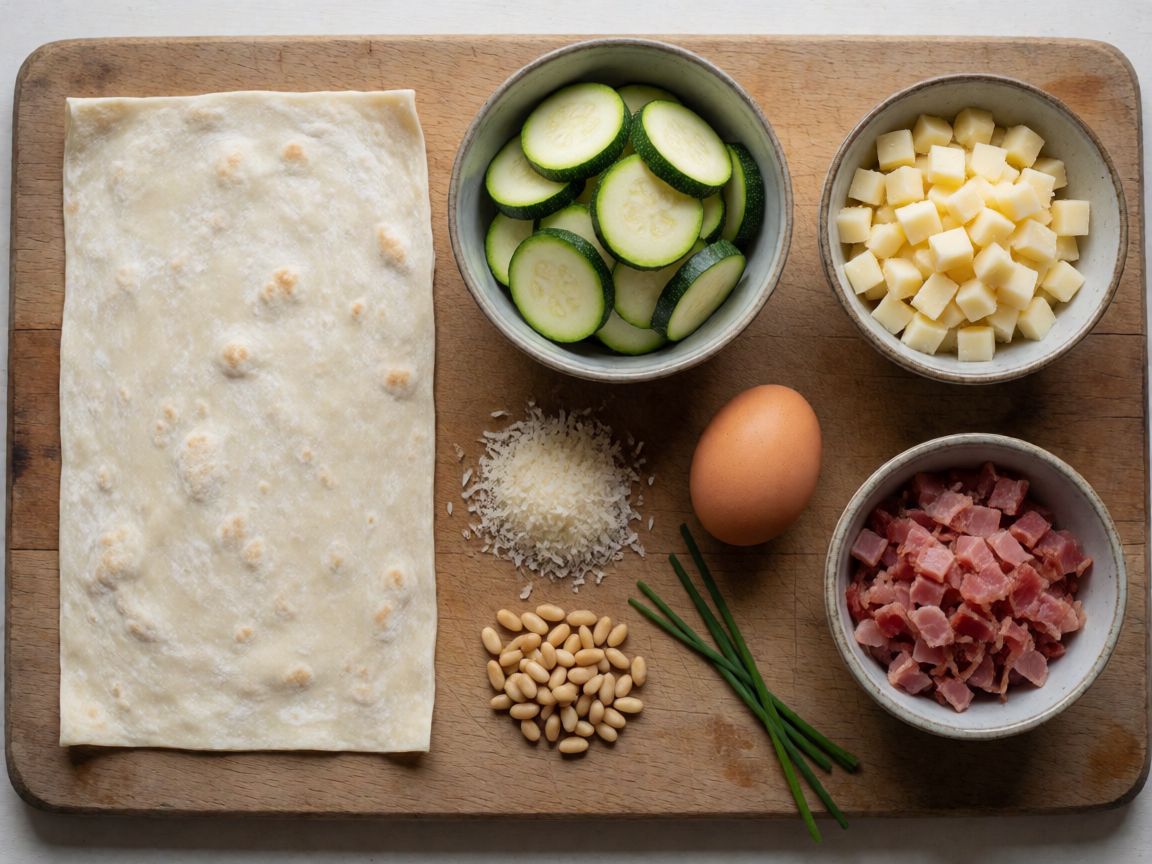








Steps
Heat a little olive oil in a frying pan and sauté the onion until soft.
Slice the courgette into rounds and fry until softened. Season lightly with salt, adding a splash of water if needed.
Let the filling cool, then mix it with the egg, pancetta, diced taleggio, pine nuts, chives and parmesan.
Spread the filling over the puff pastry, sprinkle with extra parmesan and bake for 25 minutes at 180°C.
25 min
What you're making here isn't really a quiche in the French sense — it's an open tart dressed in quiche's clothes. A proper quiche is egg and cream set into a custard; this one has a single egg for 800g of vegetable plus cheese and pork. That egg isn't there to set a custard, it's there to glue. The glue that does the real work is the taleggio, melting loose around the pancetta and pine nuts. So don't expect quiche texture — expect a tart filling, moist but not wobbly, held together by cheese more than by egg.
What decides whether this works is water, not flavour. Courgette is close to 95% water by weight, and if you put it into the pastry raw, it will cook its moisture straight out while baking, straight down, into the one layer that cannot survive it. That's why it gets fried first, with a splash of water added if it sticks — you're not steaming it for taste, you're pushing the water out of it in a pan where it can escape as steam, instead of in the oven where it has nowhere to go but through the base.
The same logic covers the onion. Sweated, not browned — soft and translucent is the target, not golden. Browning would add sweetness from caramelisation, which isn't what this filling wants; it wants savoury and quiet, so pancetta and taleggio carry the strong notes.
Some say a quiche needs cream to be a quiche — no, because this dish proves the opposite: cheese that melts and an egg that only binds can hold a filling together perfectly well, just with a different texture — looser, more rustic, closer to what a tart should be than to a custard pie.
Puff pastry here is doing a hard job: carrying a wet filling without turning gluey underneath. You're almost certainly using a ready-rolled sheet from the chiller, and that's fine — making your own butter puff is a day's work of folding and resting, and the whole reason bakeries and supermarkets took that job off home cooks is that laminating pastry properly needs patience most people don't have on a Tuesday. Buy the all-butter one if you can find it; margarine puff has structure but almost no taste of its own, and this filling isn't strong enough to cover for a flavourless base.
Courgette: choose firm, medium ones. The giant courgettes you sometimes see, grown long because weight sells by the kilo, are mostly water and seed cavity — more drainage work for less vegetable. Frying rounds in a bit of oil until they go from stiff to giving under the spatula is the whole trick; you're not browning them for flavour, you're shrinking them, and shrinking means losing water you don't want in the oven.
Taleggio is a washed-rind, semi-soft cheese from Lombardy — its whole purpose in this filling is to go loose and sticky when warm, binding pancetta and pine nuts into the courgette rather than leaving them loose in a watery mix. If you can't get it, look for any semi-soft cheese that melts into itself rather than splitting into oil and solids — a young fontina works, or a mix of something mild and meltable with a spoon of something sharper, like gorgonzola, if you want taleggio's faint tang back. A dry, hard cheese alone — cheddar on its own, say — won't give you that glue; it'll melt into separate puddles instead.
Pancetta goes in raw, diced, and relies on the 25 minutes in the oven to render what fat it has. In the UK, diced bacon lardons are the honest substitute — smoked if you want extra depth, unsmoked if you want the pancetta's own mild cure to come through instead of woodsmoke.
Parmesan does two jobs: salt inside the mix, and a dry, browning crust on top. Buy a block and grate it yourself — the pre-grated bags dry out in the fridge and won't melt the same way, they'll sit on top as sawdust instead of browning into a crust.
Pine nuts bring crunch against all that soft melted cheese and cooked vegetable — and they cost what they cost because they're still largely hand-harvested from pine cones, not because someone's marking them up for fun. If the price puts you off, flaked almonds do a similar job of crunch without pretending to taste the same. Chives go in raw at the end for a green, sharp note that survives the oven better than it would survive more cooking — spring onion tops do the same thing if chives aren't to hand.
On the oven: 180°C is your given number, but domestic ovens lie to you by five to fifteen degrees in either direction, and fan ovens run hotter at the edges than the middle. Go by the pastry, not the clock — the edge should be deep gold and dry-looking, not pale, and the filling should have stopped looking wet on top. Twenty-five minutes is where to start checking, not where to stop.