
 AI photo
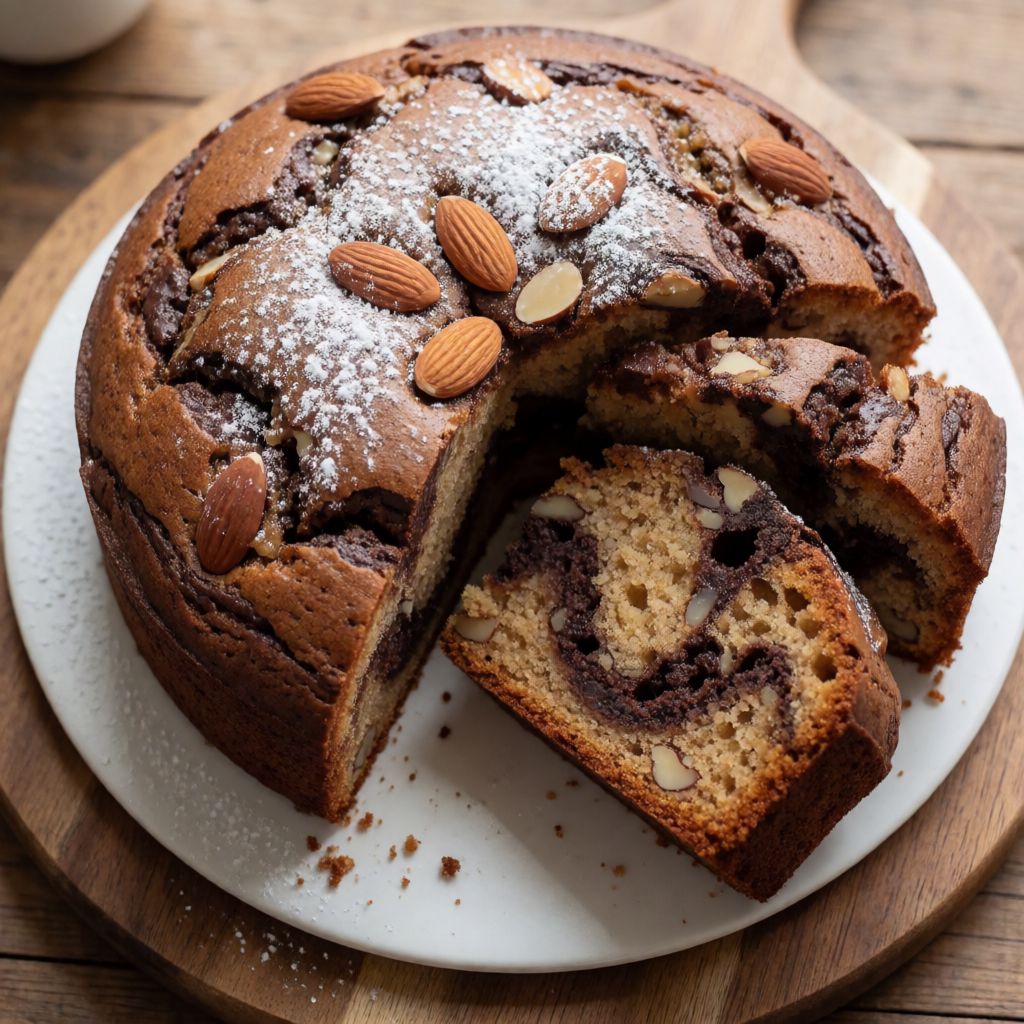
Almond and Chocolate Cake
A moist sponge cake with chopped dark chocolate and almonds folded in, baked in a round tin.
Labels are worked out automatically from the ingredients and can be wrong. Check the packaging if it matters to you.
Ingredients
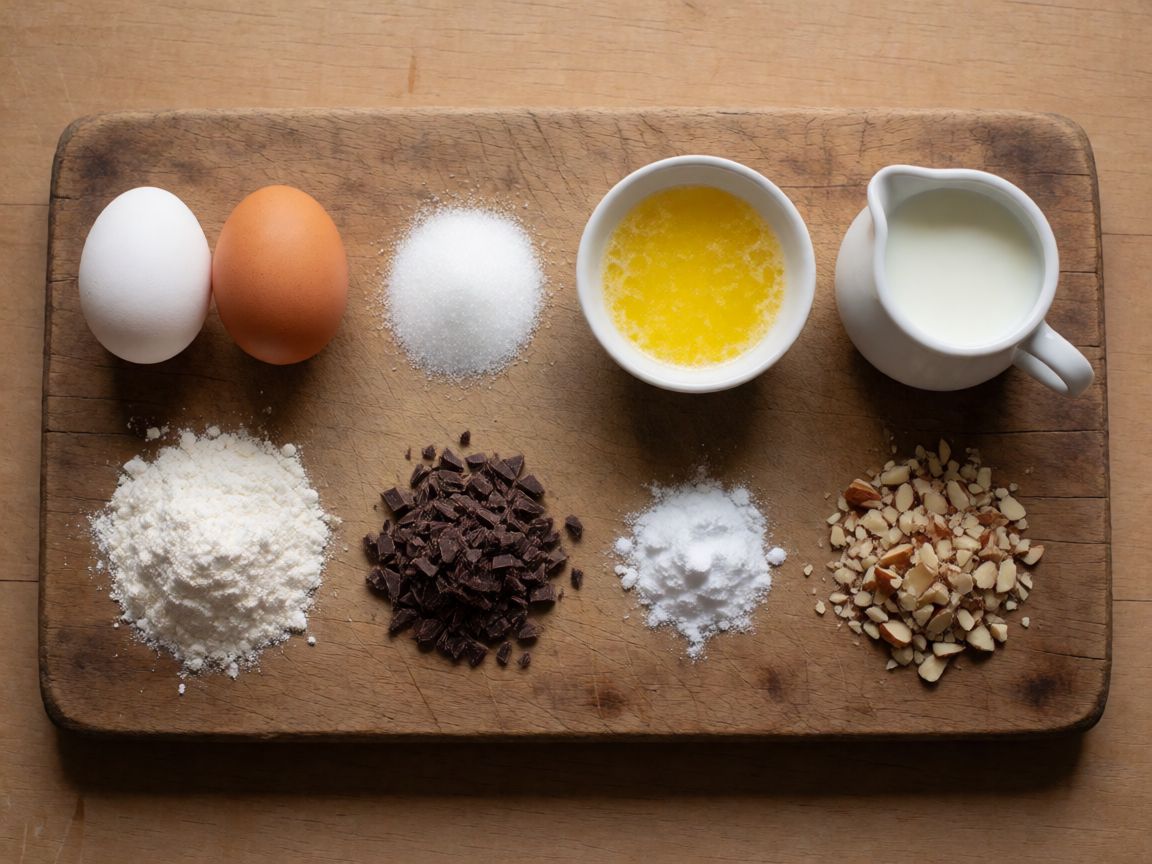
- 2 pcs Eggs
- 150 g Caster sugar
- 120 g Butter melted, slightly cooled
- 100 ml Milk
- 250 g Plain flour
- 8 g Baking powder
- 100 g Dark chocolate finely chopped
- 100 g Almonds finely chopped







Steps
In a bowl, crack the eggs and add the sugar; beat with a hand whisk or electric mixer until well combined.
Pour in the milk and add the melted butter, slightly cooled.
Sift in the flour in batches, then add the baking powder, stirring each time until you have a smooth batter.
Add the dark chocolate and almonds, finely chopped, to the batter and mix well.
Transfer the batter into a 20 cm round tin, greased with butter and dusted with flour.
Decorate the top with almond flakes and bake in a preheated oven at 170°C (fan) for about 50 minutes.
50 minLet the cake cool slightly, then transfer it to a plate and serve.
This is not a sponge in the ballet-slipper sense — light, foamy, falling apart if you look at it wrong. It's built on melted butter, so it ends up denser and moister, something between a pound cake and a chocolate tart filling. The chocolate goes in chopped, not melted into the batter on purpose — it holds its shape through the oven just long enough to turn into soft pockets, and the almonds give you something to bite against, so every slice has two textures instead of one.
What decides whether it works isn't the oven dial, it's three small choices before the batter even meets heat: how warm the butter is when it meets the eggs, how little you stir once the flour goes in, and how fine you chop the chocolate and almonds. Get those wrong and you get a cake that's either greasy and flat, tough and rubbery, or one where all the chocolate sinks to the bottom in a single slab instead of scattering through the crumb.
Some say a cake needs butter and sugar creamed together, pale and fluffy, or it isn't a "real" cake. No — that method traps air in solid fat, which is one way to rise a cake. This recipe rises a different way, with baking powder doing the lifting and melted butter doing the moistening. Different mechanism, different result — not a failure of the first method, just not using it.
Eggs and sugar, whisked together first, aren't just "mixed" — the whisking dissolves the sugar into the egg and beats in a little air, and that air is part of your rise, alongside the baking powder. You don't need stiff peaks, just the mixture going from gritty-yellow to smooth and slightly paler. Then the butter — melted, but cooled, not hot off the stove and not room temperature either. Pour it in straight from the pan and it half-cooks the eggs on contact, leaving tiny flecks of scrambled egg through your batter. Let it drop to roughly hand-warm and it blends in instead of fighting the eggs. Any fat that's solid at room temperature and melts without leaving water behind will do the same structural job — butter is the standard for flavour, not because the chemistry demands it.
Milk thins the batter and carries the sugar evenly through it rather than letting it sit in one wet corner. Use whatever milk you'd put in your tea — whole milk gives the richest crumb, semi-skimmed barely shows a difference in something this rich with butter and chocolate already. What it won't forgive is being left out: without it the batter's too stiff and the crumb too close.
Flour goes in sifted, in batches, with the baking powder alongside it. Sifting isn't ceremony — it breaks up the one lump of baking powder that would otherwise sit undissolved and leave a bitter, flat patch with no rise around it. The batches matter for a different reason: tip in all the flour at once and you end up overworking the edges while trying to wet the centre, and overworked flour means gluten you didn't want, and gluten in a cake means tough instead of tender. Stir each addition only until it disappears, then stop.
The chocolate and almonds are chopped fine on purpose. Fine pieces scatter through the batter instead of dropping as one mass to the bottom while it's still liquid, and they're small enough to half-melt in the oven's heat without fully dissolving — that half-melt is where the soft pockets come from. Use dark chocolate with real cocoa mass in it, not a sweet chocolate-flavoured bar, because a bar that's mostly sugar scorches and turns gritty instead of softening. The almonds add crunch and a background oil that keeps the edges from drying out — hazelnuts do the same job, walnuts a little less cleanly, their bitterness fights the chocolate instead of sitting alongside it.
The tin is 20cm for reasons of plain physics, not habit: wider, and the centre dries out before the edges finish setting; narrower, and the edges catch before the middle's cooked through. Butter and flour the tin because sugar at the cake's edge caramelises against hot metal and welds itself there — flour over the butter breaks that bond so the cake lets go cleanly. And don't take fifty minutes on faith: push a skewer into the centre, you want moist crumbs clinging, not wet batter, not bone dry. If the top's colouring before the inside's set, that's your particular oven running hot, fan or not — every oven has its own temper, and you learn it on the second cake, not the first.
Let it sit in the tin a few minutes before turning out. Straight from the oven the chocolate pockets are still liquid and the crumb around them hasn't quite set — flip it too soon and it cracks or sinks where the chocolate sat. That short wait is patience doing its actual job, not decoration. Good with tea, the way most things that don't shout for attention tend to be.