
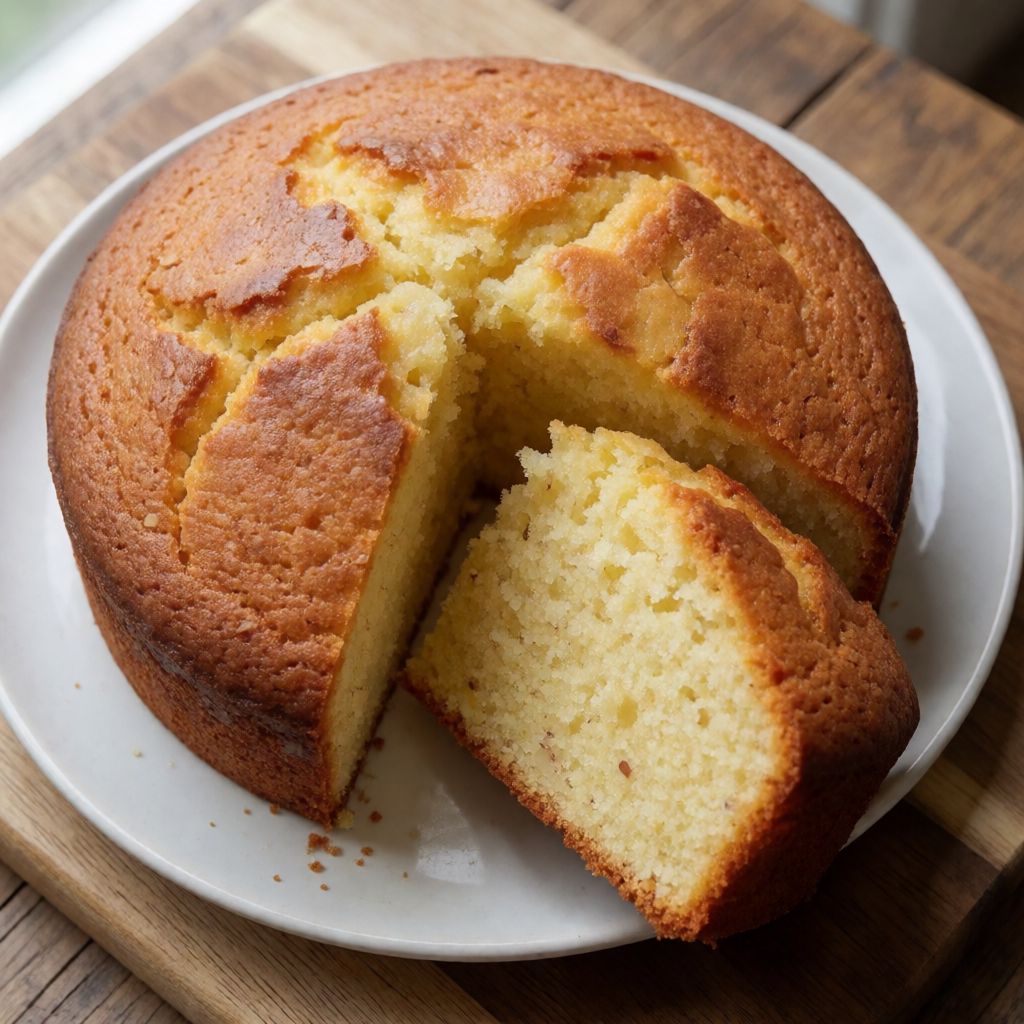
 AI photo
Almond and Lemon Cake
A moist almond and lemon cake, soaked in a warm orange syrup and topped with whole almonds.
Labels are worked out automatically from the ingredients and can be wrong. Check the packaging if it matters to you.
Ingredients
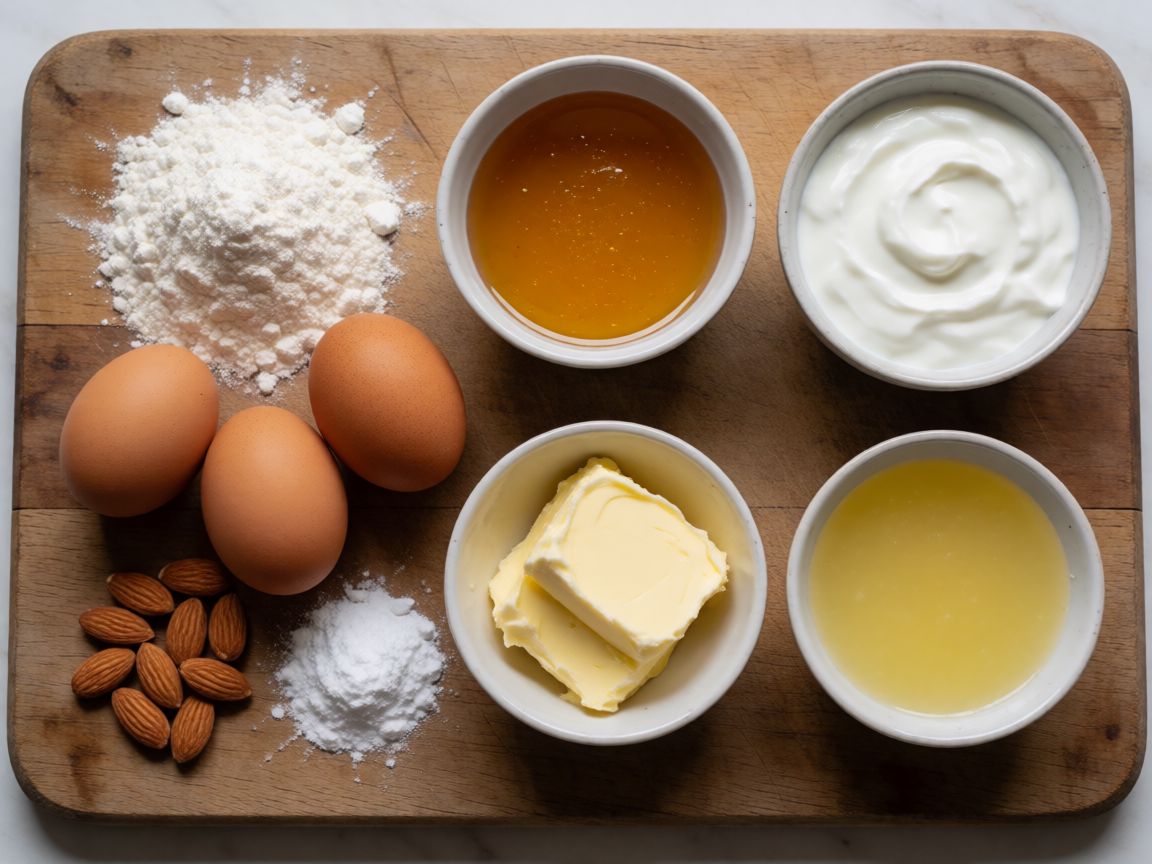
- 350 g Plain flour
- 3 pcs Eggs
- 90 ml Honey
- 200 g Greek yogurt
- 100 g Butter softened
- 1 pcs Lemon juice
- 150 g Almonds
- 16 g Baking powder
- 1 pinch Bicarbonate of soda
- 1 tsp Cinnamon
- 150 g Caster sugar
- 100 ml Orange juice
- 200 ml Water










Steps
In a bowl, mix the softened butter with the honey until smooth.
Add the eggs one at a time, then the flour, Greek yogurt, baking powder and a pinch of bicarbonate of soda, mixing well after each addition.
Stir in about half of the almonds, roughly chopped beforehand.
Pour in the lemon juice, add the lemon zest and cinnamon.
Mix until the batter is smooth and even.
Grease a 24 cm tin with butter and dust with flour, pour in the batter and level the surface.
Arrange the remaining whole almonds on top.
Preheat the oven to 180°C and bake for about 1 hour.
60 minLet the cake cool slightly, and meanwhile make the syrup: put sugar, orange juice and water into a saucepan.
Simmer over gentle heat until the syrup thickens and turns a golden colour.
While still warm, pour the syrup over the cake and leave to cool completely.
This is a syrup cake, and that one word tells you almost everything about how to treat it. The sponge itself — butter and honey beaten together, eggs worked in one at a time, flour and yogurt and almonds folded through — is deliberately built to be a bit dry, a bit dense, because it is not meant to be the finished texture. It is a sponge built as a vessel. The syrup poured over at the end is what actually finishes the cake, soaking down through the crumb and turning something plain into something moist and faintly perfumed. Skip the syrup, or skip the "still warm" part, and you have a decent, slightly heavy almond loaf — fine, but not this cake.
What decides whether it works is less the batter and more two separate heat events that have nothing to do with each other: the oven, which has to set the crumb and colour the almonds without drying the inside out, and the syrup pan, which has to reduce to a real syrup, not stay as sweetened juice. Get either one wrong and the whole point of the recipe — a dense sponge rescued by liquid gold poured over the top — collapses into either a dry cake with wet sugar water sitting on it, or a soggy one.
Some say you should pour the syrup once the cake is fully cool, to "keep it neat." No — a cold, set crumb resists liquid, so the syrup just sits on the surface and never gets past the first few millimetres. A warm cake is still loose at the cell level; the sugar solution can travel into it. That's the whole mechanical reason for step 11's timing — not tidiness, physics.
On the almonds: half go in chopped, through the batter, where they toast gently inside the crumb and give it backbone rather than crunch; half stay whole on top, where the dry oven heat can actually colour them. If you ground all the almonds to flour you'd lose that texture contrast entirely — a different cake again, softer, less interesting on the bite. Skin-on almonds are fine and slightly bitter in a good way; blanched are milder. Any raw almond works — this isn't a recipe where the nut has to be a particular variety, just raw and not pre-salted.
The honey and butter beaten together first is an emulsion step, not just mixing: it coats the sugar's role (honey here is both sweetener and moisture-holder — honey keeps baked goods damp for longer than sugar alone, because it holds onto water more stubbornly). That's partly why this cake can sit a day or two and still be moist rather than stale — the honey inside, the syrup on the outside, both working against dryness from different directions.
Greek yogurt isn't decorative. Its acidity activates the bicarbonate and its fat and water content keep the crumb from going tight and bready, the way an all-butter, all-flour sponge can. If you have none, a thick natural yogurt works at a pinch, though it brings less fat and slightly more water, so the batter may sit a touch looser — nothing to panic about, just watch it's not pourable-thin.
The lemon — zest and juice both — is there for brightness against the heavy honey-almond base; without it the cake would taste flat-sweet rather than lifted. Orange juice in the syrup is the same idea in a different register: it gives the syrup a rounder, less sharp sweetness than plain sugar water would, and some natural pectin and acid that help it set into a real syrup rather than staying syrupy-watery forever.
On the syrup pan itself: "golden colour" is your actual doneness marker, not a clock. Sugar syrup at the right concentration catches light differently once enough water has boiled off — it goes from thin and pale to visibly thicker, slower to run off a spoon, and takes on warmth in colour. Walk away and it can tip into caramel territory fast, because once concentrated, sugar solutions heat and darken quickly — so this is a stand-and-watch job, not a start-and-leave one. Gentle heat here isn't laziness; a hard boil reduces unevenly and risks catching before the middle of the pan has thickened.
A 24 cm tin on a domestic hob means this is an ordinary oven cake, not a kazan job — no special equipment needed, just make sure your oven actually holds 180°C evenly; many home ovens run hot or cold by 10-15 degrees, so judge the cake by colour and a skewer coming out clean rather than trusting the dial alone. And once the syrup goes on, give it the time it asks for — this is not a cake you rush to the table. Let it sit and properly absorb; that patience is what you're actually paying for with the hour in the oven and the watching of the pan.