
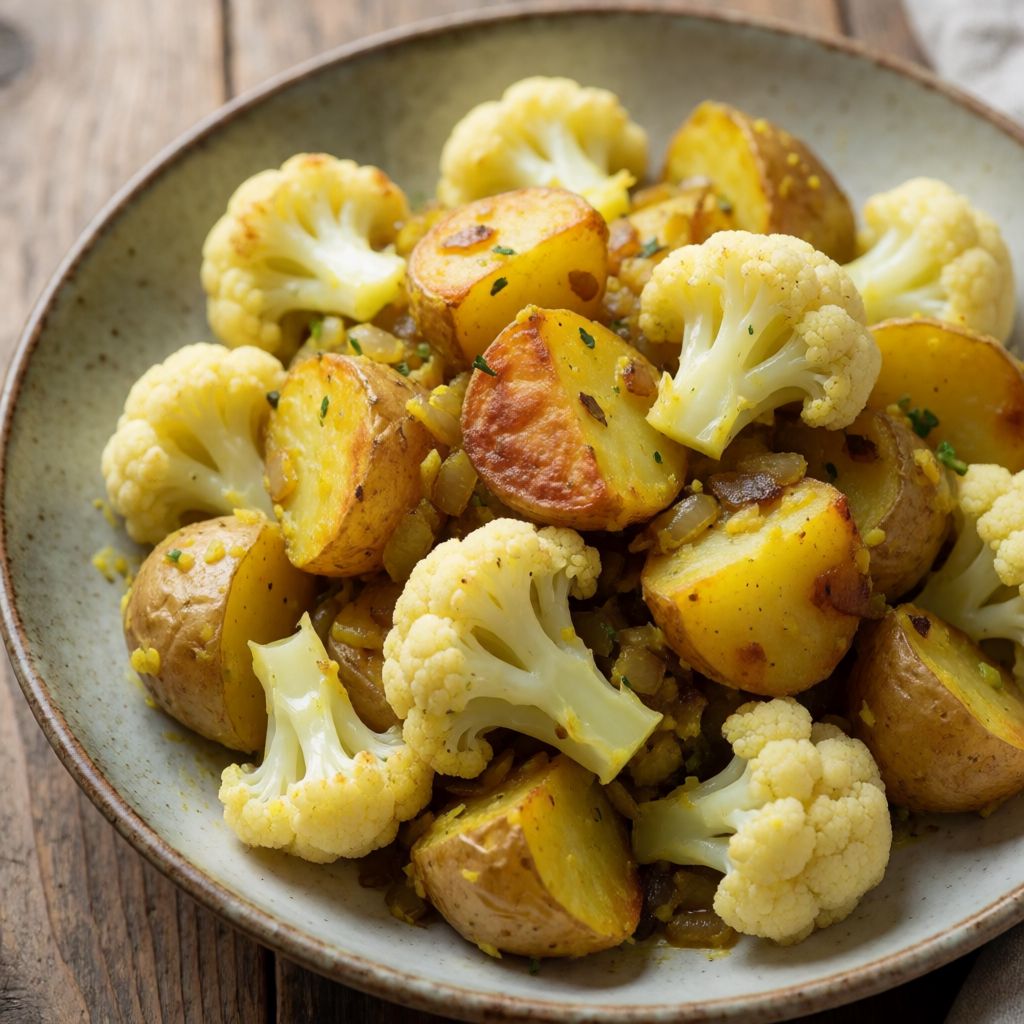
 AI photo
Indian-Style Potatoes with Cauliflower
A warming Indian-spiced potato and cauliflower curry, served with basmati rice.
Labels are worked out automatically from the ingredients and can be wrong. Check the packaging if it matters to you.
Ingredients
- 500 g Potatoes cut into cubes
- 1 pcs Cauliflower broken into florets
- 1 pcs Onion finely chopped
- 4 clove Garlic finely chopped
- 2 tbsp Ginger finely grated
- 2 tsp Cumin
- 1 tsp Ground coriander
- 1 tsp Turmeric
- 1 tsp Garam masala
- 400 g Chopped tinned tomatoes
- 0.5 pcs Lime juice and finely grated zest
- 1 tbsp Olive oil for frying
- Salt to taste
- Black pepper to taste
- 300 ml Basmati rice cooked according to packet instructions
- 1 bunch Coriander finely chopped
- 0.5 tsp Chilli flakes
















Steps
Boil the potatoes in lightly salted water for about 10 minutes – they should not be fully cooked. Add the cauliflower florets and cook for a further 2 minutes. Reserve 100ml of the cooking water and drain the rest.
Fry the onion, garlic, ginger, cumin, coriander, turmeric and garam masala in a little oil in a large pan until the onion is soft.
5 minAdd the chopped tomatoes, the almost-cooked potatoes and cauliflower, and simmer covered until the potatoes are soft. Add the reserved cooking water as needed.
9 minSeason with salt, freshly ground pepper, finely grated lime zest and lime juice. Serve with basmati rice, coriander and chilli flakes.
2 min
This is aloo gobi dressed up a bit for a plate with rice next to it — potatoes and cauliflower cooked down in a spiced tomato base until they're soft enough to take the sauce into themselves rather than just sit in it. It is not a curry in the sense of something simmered for two hours; it's a half-hour vegetable dish built on the oldest trick in Indian home cooking — bloom your spices in fat and oil before anything wet touches the pan, because that's the only way most ground spices actually release their flavour. Dry cumin on a plate smells of very little. Cumin dropped into warm oil for thirty seconds smells of the whole dish.
What decides whether this works is the first boil of the potatoes and the timing of the cauliflower. You want the potato at the edge of done, not past it — "about 10 minutes" is the clock's opinion, the fork is the real judge: it should go in with a little resistance, not slide through like butter. Cauliflower goes in two minutes after that because it cooks faster and turns to wet sand if you give it the same ten minutes as the potato. Both then finish their journey in the tomato sauce, where they absorb colour and spice instead of just boiling plain in water and tasting of nothing but themselves.
Onion, garlic and ginger are the backbone fried before the spices go in, and the order matters more than the ingredient list suggests. Onion first because it needs the longest — you're after it turning translucent and soft, not coloured, since this isn't a dish built on deep caramelisation like a roast gravy base. Garlic and ginger go in with it rather than before, because both burn bitter in seconds if they hit hot oil alone; frying them alongside the slower-cooking onion keeps the pan's temperature gentler around them.
The spice list — cumin, ground coriander, turmeric, garam masala — is a division of labour, not a pile of "Indian flavour". Cumin and coriander are the savoury backbone; turmeric is there mostly for colour and a faint earthiness, not heat — it won't save a bland dish, so don't over-rely on it; garam masala is a pre-mixed finishing blend (cinnamon, cardamom, clove, among others depending on the brand) added early here so it has time to cook into the sauce rather than sit raw on top. If you don't have garam masala, a pinch of ground cinnamon and a crack of black cardamom gets you partway there, but it's not a direct swap — garam masala blends vary by household in India the way "mixed herbs" varies by supermarket here, so don't hunt for the one true version.
The tinned tomatoes do two jobs: acid to balance the earthy spices, and the only real sauce-body in the dish — there's no stock, no cream, nothing else carrying liquid weight. Chopped tinned tomatoes are better than whole peeled here because you want them breaking down fast into the pan, not needing to be crushed by hand while everything else overcooks. If you only have passata, use less of it — it's already broken down and will loosen the sauce further than you want.
Olive oil for frying is fine but it's doing a job any neutral fat could do — the brief here is "any oil with no strong smell of its own that can take gentle frying heat", so a flavourless vegetable or sunflower oil works as well and some would say better, since olive oil's own flavour is competing faintly with cumin rather than supporting it. Save a good extra-virgin olive oil for salad, not this pan.
Lime at the end is not decoration — it's the dish's one acid-brightening move added after cooking, because heat cooks off citrus's sharpness fast. Add it too early and you've wasted it; add it at the very end, off the heat if you can, and it still tastes like lime rather than like memory of lime.
Patience here is short but real: ten minutes of potato boiling you cannot rush with higher heat, because a fierce boil cooks the outside of the cube before the inside catches up, leaving you with a potato that's mush on the surface and raw in the centre. A wide domestic pan rather than a deep kazan actually suits this — more surface area means the sauce reduces faster and the vegetables sit in shallower liquid, picking up flavour rather than swimming in it. Rice cooked to the side, coriander and chilli flakes scattered at the table, not stirred through the pan — that way whoever doesn't want chilli still gets dinner.