
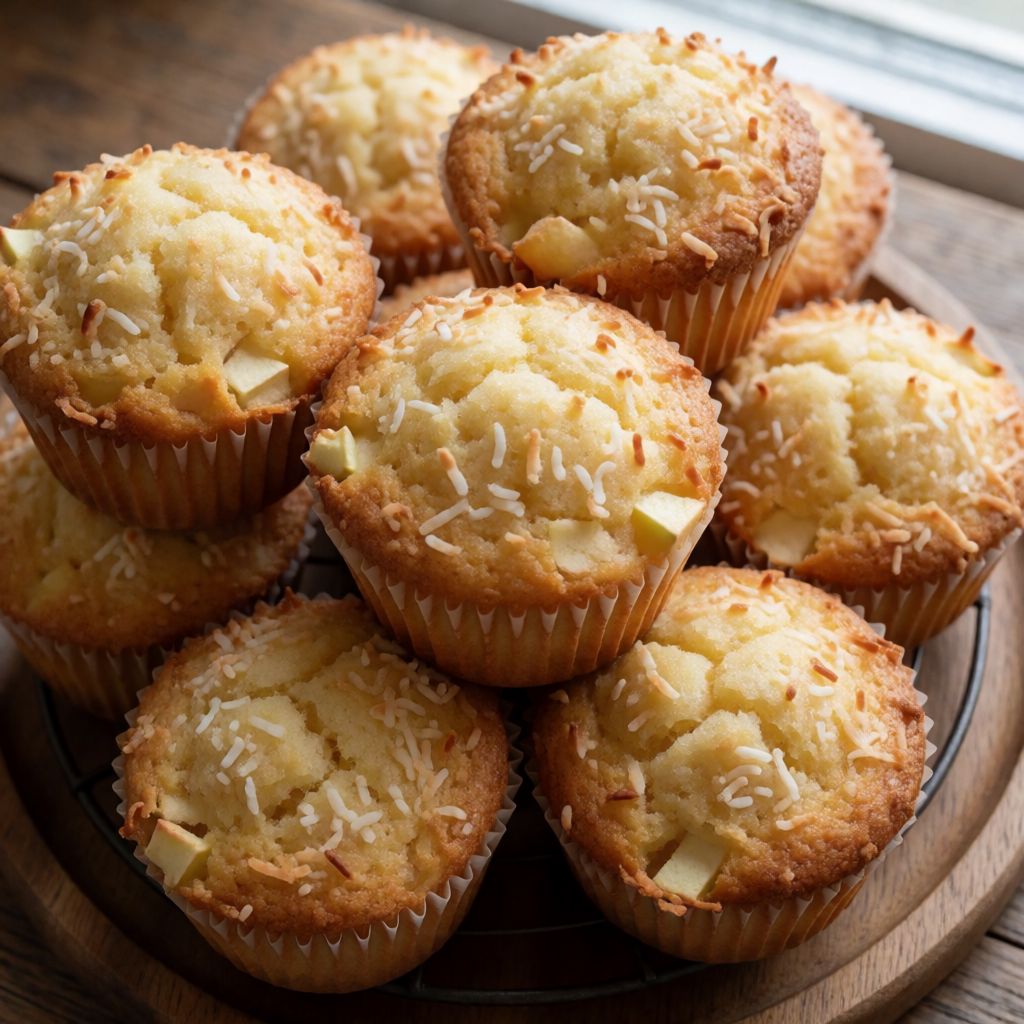
 AI photo
Apple and Coconut Muffins
Light apple and coconut muffins with a touch of lemon, perfect for a weekend bake.
Labels are worked out automatically from the ingredients and can be wrong. Check the packaging if it matters to you.
Ingredients
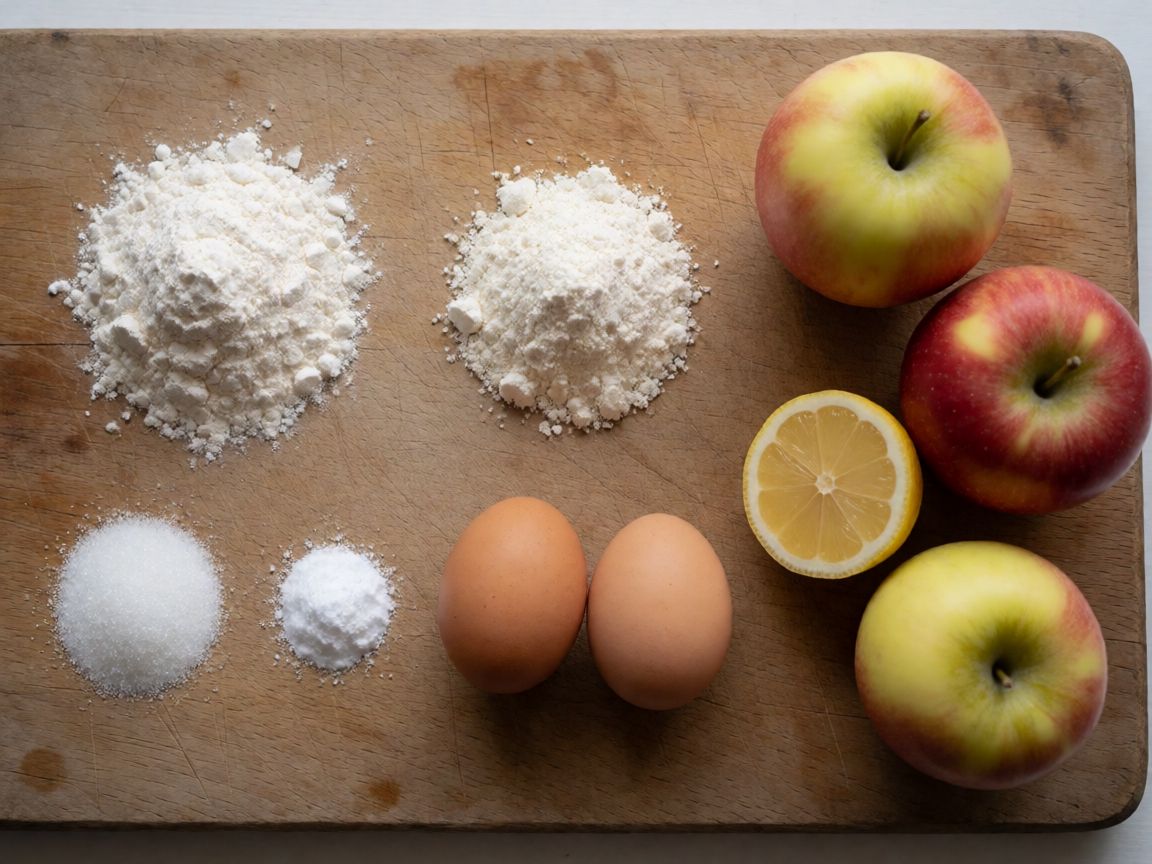
- 90 g Plain Flour
- 50 g Coconut Flour
- 50 ml Olive Oil
- 50 g Sugar
- 2 pcs Eggs
- 8 g Baking Powder
- 3 pcs Apple
- 1/2 pcs Lemon Juice juice of half a lemon







Steps
Peel two of the three apples, remove the core and cut into thin slices. Sprinkle with lemon juice and sugar.
Whisk the eggs with the remaining sugar until thick and fluffy.
Add the coconut flour, olive oil and flour. Gently fold together.
Add the baking powder.
Cut the last apple into small pieces and fold into the batter.
Pour the batter into muffin cases and decorate with apple slices.
Bake in an oven preheated to 180°C for 30 minutes.
30 min
This is not the branded, airy American muffin that rises into a tall dome and crumbles dry in your hand. It's closer to a dense little apple cake baked in paper — the coconut flour and the two apple textures see to that. One apple goes in chopped, hidden in the crumb, cooking down into pockets of soft sweetness. The other goes on top in thin fans, where it dries and browns in the heat instead of melting away. Two apples, two jobs.
What decides whether it works is not the oven, it's the egg. There's almost no gluten here — 90 g of plain flour against 50 g of coconut flour, which has none at all — so the lift you get doesn't come from stretched dough trapping gas, it comes from the air you beat into the eggs and sugar before anything else goes in. Whisk them thin and runny, and the muffin sits flat and heavy no matter how much baking powder you throw at it afterwards. Whisk them until they hold a ribbon, pale and thick, and that foam is your scaffolding — fold the flours in gently so you don't knock it flat again.
Some say coconut flour is just a healthier stand-in for wheat flour, spoon for spoon. No — because coconut flour isn't flour in the structural sense, it's dried, ground coconut fibre, and it drinks liquid the way a sponge drinks water, several times its own weight. That's exactly why this batter carries two eggs and 50 ml of oil against a modest amount of sugar: the liquid isn't there for richness alone, it's there to feed the coconut flour so it doesn't pull all the moisture out of the apple and leave you with something dry and sandy at the edges.
Plain flour here is doing a small, specific job: giving just enough gluten that the crumb holds together when you cut it, rather than falling apart into damp crumble the way a pure coconut-flour bake can. If you ever want to push the balance the other way — less wheat, more coconut — know that every extra spoon of coconut flour needs its own extra spoon of liquid, or you'll end up chewing something closer to desiccated coconut than cake. Swap plain flour for self-raising if that's what's in your cupboard and you simply cut the baking powder a little, since self-raising already carries its own.
The oil is olive, and that's a choice, not a neutral default — olive oil has a flavour of its own and it sits here deliberately, playing against the apple rather than hiding behind it. If you'd rather the oil said nothing, use any oil with no smell of its own — a light sunflower or vegetable oil does the job silently. Melted butter works too, but remember butter sets solid again once the cake cools, so the crumb firms up more than with oil; it's a different texture, not a mistake, just not this one.
The eggs and sugar are the real leavening agents here, more than the baking powder, which is why they're whisked together first and on their own, before anything heavy goes near them. Sugar dissolving into the egg as you whip it isn't just sweetness — the sugar crystals cut through the egg white's surface tension and help trap smaller, more even air bubbles, which is why thick and pale and ribboning matters more than any stopwatch. The baking powder is folded in last, after the flours, kept dry as long as possible — it starts reacting the moment it meets batter, and the later it goes in, the less of its lift you lose standing around on the worktop before the tray goes in the oven.
On the apples: which variety you use changes what happens to them, and that's worth knowing rather than guessing. A soft eating apple breaks down fast in the heat and the slices on top will slump rather than hold their fan shape. A firmer, sharper apple — a Bramley cooking apple, or a Granny Smith if you want sharp without the English cooking-apple's tendency to collapse into fluff — holds its slice and browns at the edge instead of dissolving. For the chopped apple folded into the batter, it matters less, since it's cooking inside the crumb either way and softness there is no bad thing. The lemon juice on the raw slices isn't decoration either — apple flesh browns the moment it meets air, an enzyme reaction, and the acid in the lemon slows it down, so your topping goes into the oven pale rather than already grey at the edges. In a pinch, any sharp, clean acid — a splash of cider vinegar, even — will do the same job, just without the citrus smell.
You're working in a domestic oven, not a commercial one, so trust what you see over what the dial says: fan ovens run hotter for a given number than conventional ones, and most home ovens have a warmer side. If your muffins brown unevenly, turn the tray round partway through rather than trusting the dial to be honest with you. And once they're out, leave them a few minutes in the cases before you try to lift them — the egg foam that's holding the structure is still soft and warm, and pulling a muffin out too soon tears it rather than releasing it. Patience here isn't virtue for its own sake, it's the difference between a clean muffin and a crumbled one on the plate, next to your tea.