
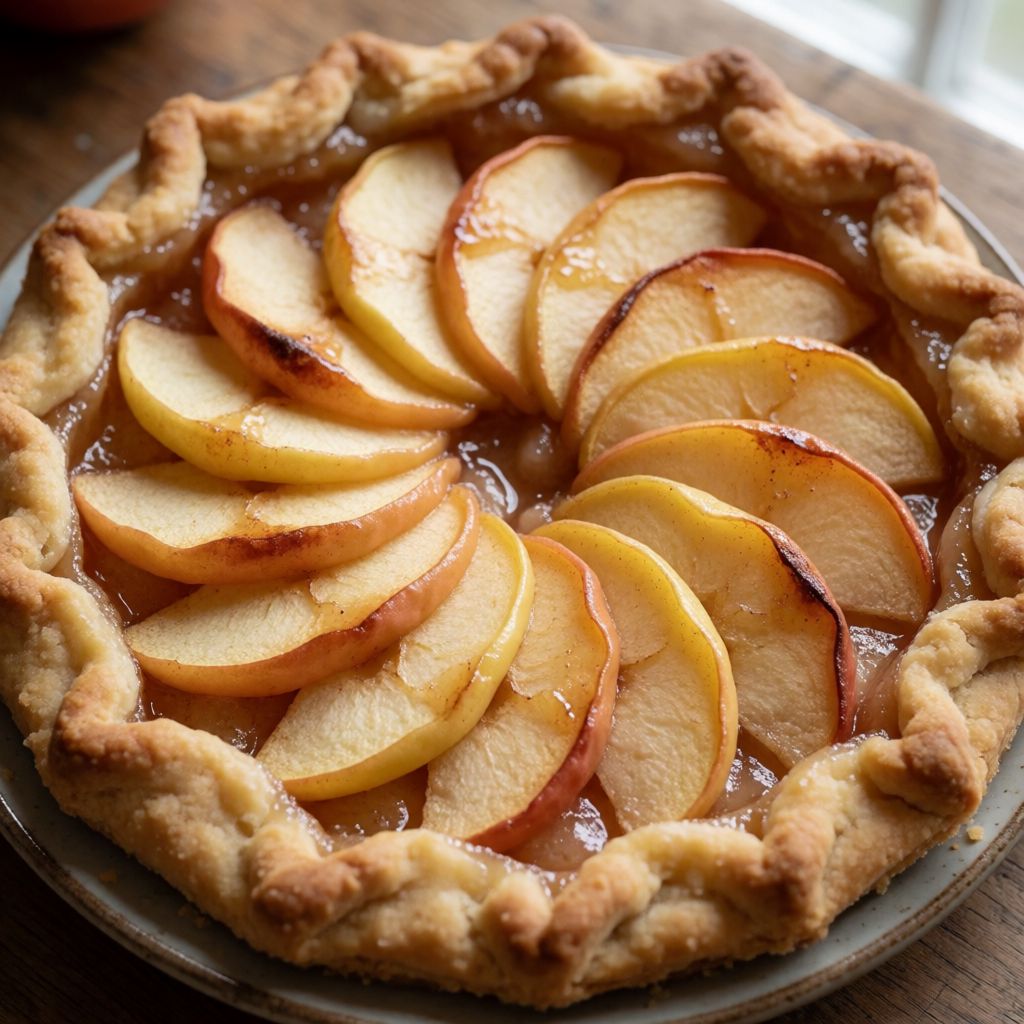
 AI photo
Apple Crostata
A classic apple crostata with a buttery pastry base, almond cream filling and thin apple slices on top.
Labels are worked out automatically from the ingredients and can be wrong. Check the packaging if it matters to you.
Ingredients
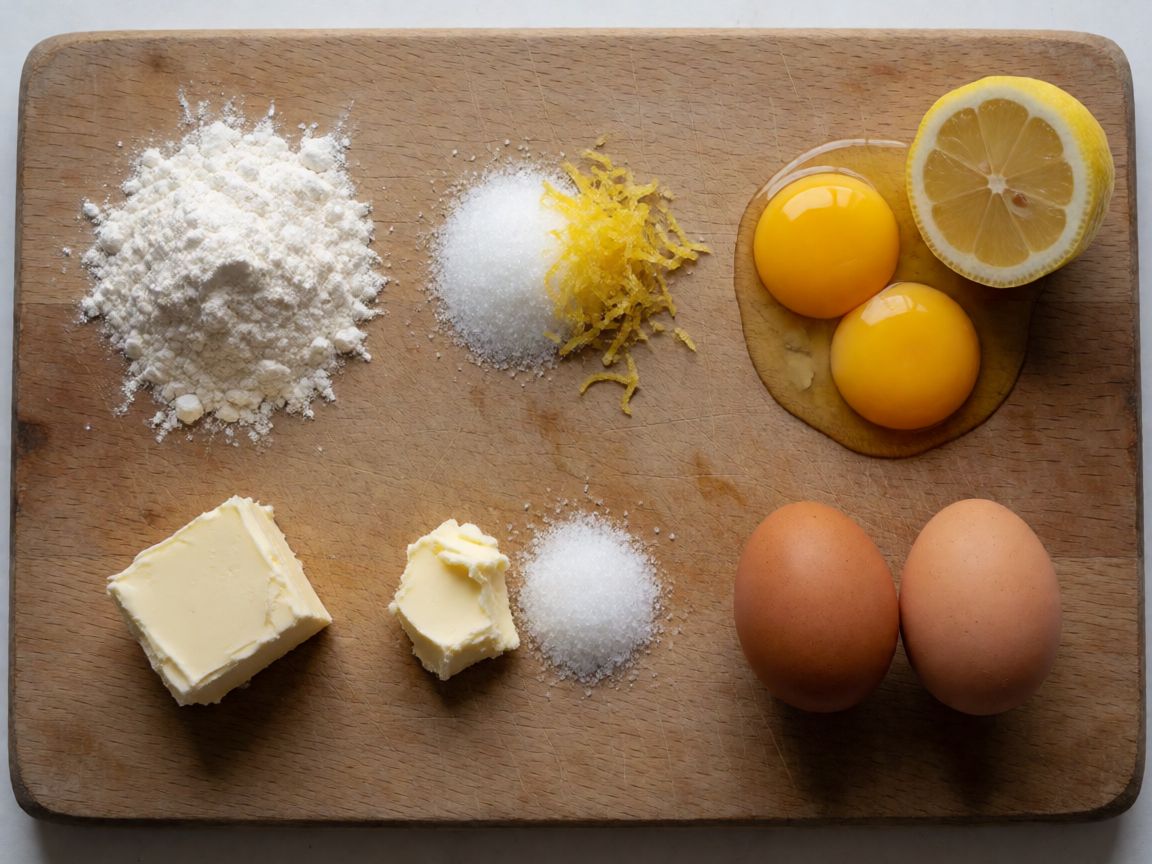
- 150 g Plain flour
- 75 g Caster sugar
- 1 pcs Lemon zest half a lemon's zest
- 1 pinch Salt
- 2 pcs Egg yolk
- 90 g Butter cold
- 150 g Butter
- 130 g Caster sugar
- 2 pcs Eggs
- 110 g Almond flour
- 50 g Plain flour
- 450 g Apple
- Icing sugar to taste







Steps
On a work surface, mound the flour and make a well in the centre; add the sugar, lemon zest, a pinch of salt and the egg yolks, and quickly rub together.
Add the cold butter and knead briskly until the dough forms a smooth ball.
Wrap the dough in cling film and leave to rest in the fridge.
40 minRoll out the dough with a rolling pin to a thickness of 4-5 mm and transfer it to a buttered tin, pressing it up the sides.
Prick the surface of the dough with a fork and place in the fridge.
In a bowl combine the butter and sugar, beat with a mixer, then add the eggs one at a time.
Add the almond flour and sifted flour, mixing thoroughly.
Transfer the cream to a piping bag and spread it over the base.
Peel the apples, cut into thin slices and arrange over the cream.
Dust with icing sugar and bake in an oven preheated to 170°C with fan on.
45 min
A crostata is two doughs doing two different jobs. The bottom is pasta frolla — a short, cold, almost biscuit-like crust, built the way you'd build pastry for a British shortbread tart, except here the egg yolks and lemon zest are doing the binding instead of just water. The filling is frangipane, a baked almond cream that's really a loose, rich cake batter that sets around the apple slices as it cooks. Get those two right and the crostata holds its shape when you cut into it: a firm shell, a soft custardy middle, and apple that still has a bit of bite.
What decides whether it works is temperature discipline on the pastry, not the oven. Pasta frolla has no water in it to speak of — it's flour, sugar, butter, yolk. The only thing stopping the butter from melting into the flour and turning your crust into a biscuit-flavoured puddle is cold: cold butter, cold hands, a cold rest in the fridge. Some say you need marble worktops and ice water for this dough — no, you don't, a British kitchen counter and a fridge do the job fine, you're just buying yourself more time before the butter softens, which matters more in a warm kitchen than a cool one.
Start with the flour in the pastry. Plain flour, nothing stronger — a bread flour's extra gluten would make the crust chewy and tough instead of short and sandy, which is the opposite of what pasta frolla is for. Weighing it in grams, as this recipe already does, matters more here than in bread, because there's no water to forgive a slightly-off ratio.
The cold butter in the pastry (90 g) and the butter in the cream (150 g) are doing opposite jobs, which is why one goes in cold and the other goes in soft. In the pastry, cold butter stays in little undissolved lumps that melt only in the oven, leaving tiny steam pockets — that's what gives short pastry its crumble instead of a dense biscuit texture. In the cream, you want the butter soft enough to beat air into with the sugar, because that trapped air is what keeps the frangipane from baking into something dense and gluey. If your butter's too cold for the cream, leave it out until a fingertip leaves a dent, don't force it in a microwave or you'll melt it and lose the aeration before you've started.
Almond flour is the actual structure of the filling, not a flavouring. It has fat and protein but very little gluten, so the cream sets softly rather than rising and holding air like a sponge — which is exactly why it doesn't puff up around your apple slices and push them out. If you're out of it, ground almonds you've blitzed finer yourself will do; a coarser grind just gives you a grainier set, not a failure.
The eggs — two yolks in the pastry, two whole eggs in the cream — are mostly binding, but they're also why you don't need any water in either mix. Water would activate more gluten in the flour and toughen both layers; egg does the same binding job without that side effect. This is the actual reason pasta frolla and frangipane use eggs rather than water, not tradition for tradition's sake — it's a dough and a cream built to stay tender.
The lemon zest is there to cut the richness of two separate fat-heavy layers — butter in the crust, butter and almond in the cream — stacked on top of each other. Without it the tart tastes flat and a bit greasy by the third bite; with it, the apple and the citrus keep pulling your palate back up. Any citrus zest with a clean, sharp smell does the same work — orange zest is the common substitute, and it shifts the tart toward something closer to a Sunday-roast dessert than a sharp afternoon one.
On the oven: 170°C with the fan on is a drying, even heat, not a browning one — the fan's job is to stop the top of the frangipane from catching colour long before the centre sets, which matters because the centre of this tart is a loose batter, not a thin layer, and needs steady heat all the way through, not just from above. Forty-five minutes is where to start checking, not where to stop: the cream should look set and faintly golden at the edges, with a slight wobble like a baked custard rather than a liquid shimmer, before it comes out. Icing sugar on top at the end is only for looking the part on the plate — it's not doing anything to the bake, so don't worry if you forget it.