
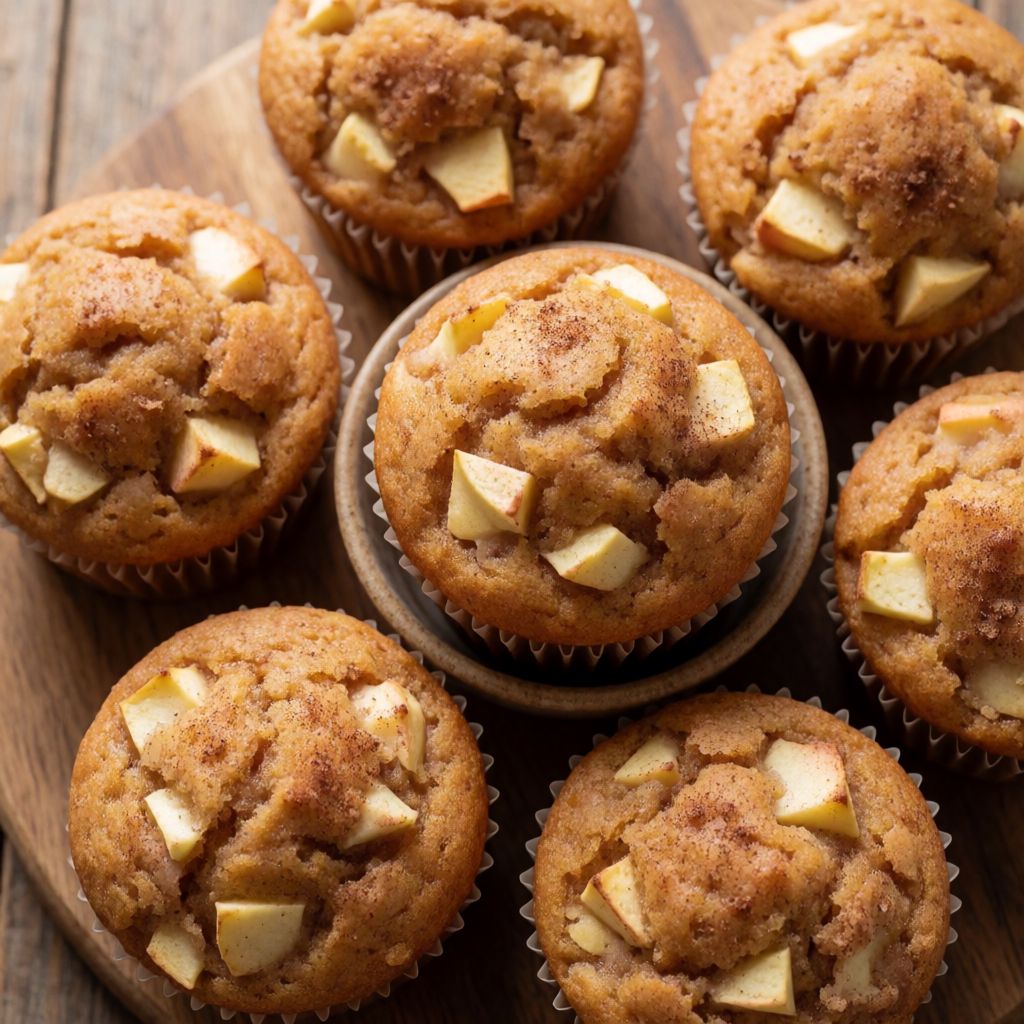
 AI photo
Apple and Honey Muffins
Soft apple muffins sweetened with honey and warmed with cinnamon — a cosy bake for breakfast or tea.
Labels are worked out automatically from the ingredients and can be wrong. Check the packaging if it matters to you.
Ingredients
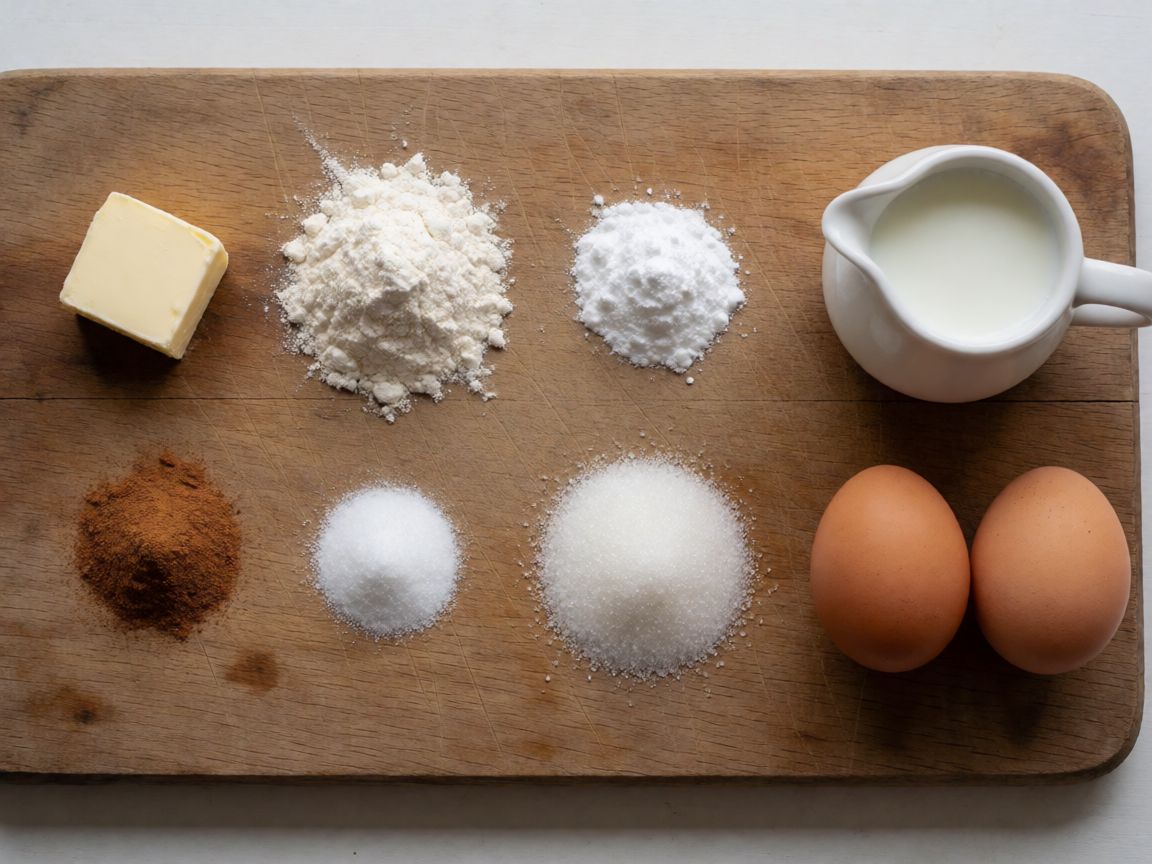
- 75 g Butter
- 250 g Plain flour
- 16 g Baking powder
- 1 tsp Bicarbonate of soda
- 0.75 tsp Cinnamon
- 1 pinch Salt
- 100 g Caster sugar
- 2 pcs Eggs
- 125 ml Milk
- 1 tsp Vanilla extract
- 2 pcs Apple
- 30 g Honey












Steps
Melt the butter in a small saucepan and leave to cool.
Sift the flour and baking powder, then add the cinnamon, bicarbonate of soda, salt and sugar.
Add the eggs, milk and vanilla extract to the cooled butter and mix together.
Peel the apples and grate them, then mix with the honey.
Combine the dry ingredients with the wet ingredients and the grated apple and honey, stirring with a fork.
Line a muffin tin with paper cases and fill about two-thirds full with the batter.
Bake in an oven preheated to 190°C for 20 minutes.
20 minRemove the tin with the finished muffins from the oven and transfer to a wire rack to cool.
A muffin is not a small cake, whatever the tin suggests. A cake wants a long, gentle creaming of butter and sugar to trap air; a muffin wants exactly the opposite — speed, and a willingness to leave the batter looking slightly wrong. That's the whole mechanism here: melt the butter instead of beating it soft, mix the wet and dry sides separately, then marry them with a fork, not a whisk, for as few strokes as it takes. Every lump you leave in is a muffin that rises properly. Every lump you chase out is a muffin that turns dense and tight, because overworking batter builds gluten strands, and gluten strands want bread, not a tender crumb full of air pockets.
Some say a muffin that looks slightly curdled or streaky going into the oven is a failed one. No — a muffin batter is meant to look a bit rough. Smooth batter means you've beaten air out and gluten in, which is the one thing you're trying to avoid.
The apple and honey do two jobs at once: sweetness that isn't just sugar, and moisture that bakes into steam, which is what actually lifts the crumb along with the raising agents. Grating the apple rather than chopping it matters — grated apple collapses into the batter and gives up its juice evenly; chopped apple sits as wet pockets that can leave a muffin gluey around the fruit.
Butter here is melted, not creamed, because muffins don't rely on whipped-in air to rise — they rely on baking powder and bicarbonate of soda doing chemical work, plus the steam from milk, egg and apple juice. Melting it just makes it easy to pour into the wet mixture once it's cooled enough not to scramble the egg. Any neutral fat that's solid at room temperature and melts cleanly will do the same job — a flavourless vegetable oil even skips the cooling step, though you lose a little of butter's richness in the crumb.
Flour is the structure, but only 250 g of it carrying 16 g of baking powder and a teaspoon of bicarbonate — that's two leaveners doing different jobs. Baking powder is slower and self-contained; bicarbonate needs an acid to react with, and here that acid is the apple and, to a lesser extent, the honey. This is why the apple isn't just a flavour — take it out and the bicarbonate has nothing to react against, and the rise falls partly to baking powder alone.
Two apples, grated with the skin left off, give you both moisture and a mild tartness that balances the honey. Use a firm, not-too-sweet apple — something like a Bramley or Granny Smith works for sharpness; a soft dessert apple like a Gala will still work but makes the batter sweeter and slightly wetter, so don't be surprised if it needs a minute or two longer in the oven. Honey at 30 g is there for its particular depth of flavour and for its hygroscopic pull — it holds onto moisture in the crumb for longer than sugar alone would, which is why these muffins don't dry out as fast as a plain sponge-based one. If you've no honey, golden syrup is the nearest substitute in texture, though you'll lose the floral note.
Cinnamon, a pinch of salt, and vanilla extract aren't filler — salt sharpens sweetness so the honey doesn't read as flat, and cinnamon's warmth is what makes apple taste like "apple baked" rather than "apple raw." Vanilla rounds the dairy notes from the milk and butter. None of these need precision to the gram; by feel and nose is fine.
Eggs bind the batter and add their own structure through protein that sets in the heat, alongside flour's gluten — but only the thin amount of gluten you get from brief mixing, which is the whole point of stirring "just until combined."
On lining and filling: paper cases two-thirds full isn't a decoration choice, it's a rise-management one. Fuller than that and the batter overflows and scorches on the tin rim before the centre sets; much less and you lose the characteristic domed top, because there isn't enough batter mass to push upward as it sets around the edges first. A standard UK muffin tin with cases is exactly suited to this — no need for a kazan-sized leap of imagination here, this is straightforward Sunday-afternoon baking before the roast goes in, or alongside a pot of tea with milk, which these were clearly built to sit next to.