
 AI photo
Apple Cake in an Air Fryer
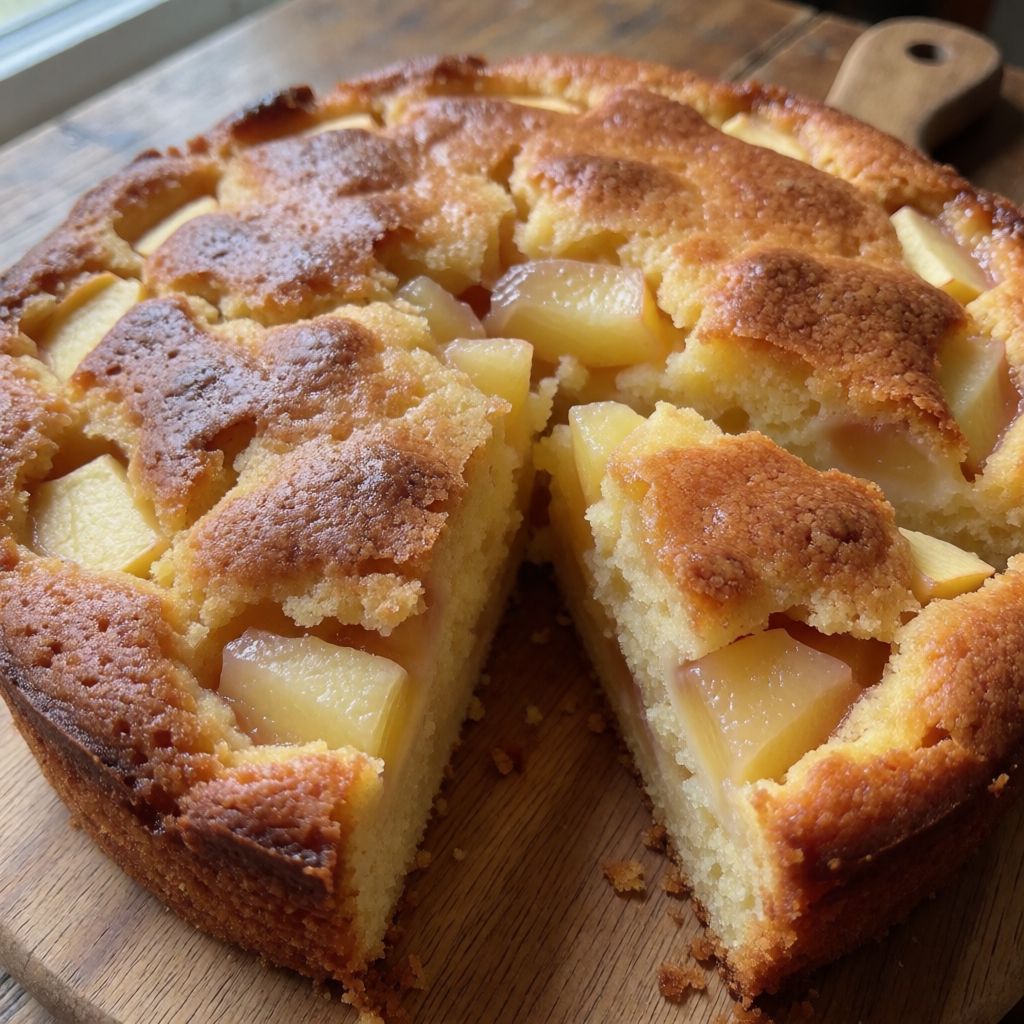
A quick apple cake baked in the air fryer, with a soft sponge-like batter and fresh apple slices on top.
Labels are worked out automatically from the ingredients and can be wrong. Check the packaging if it matters to you.
Ingredients
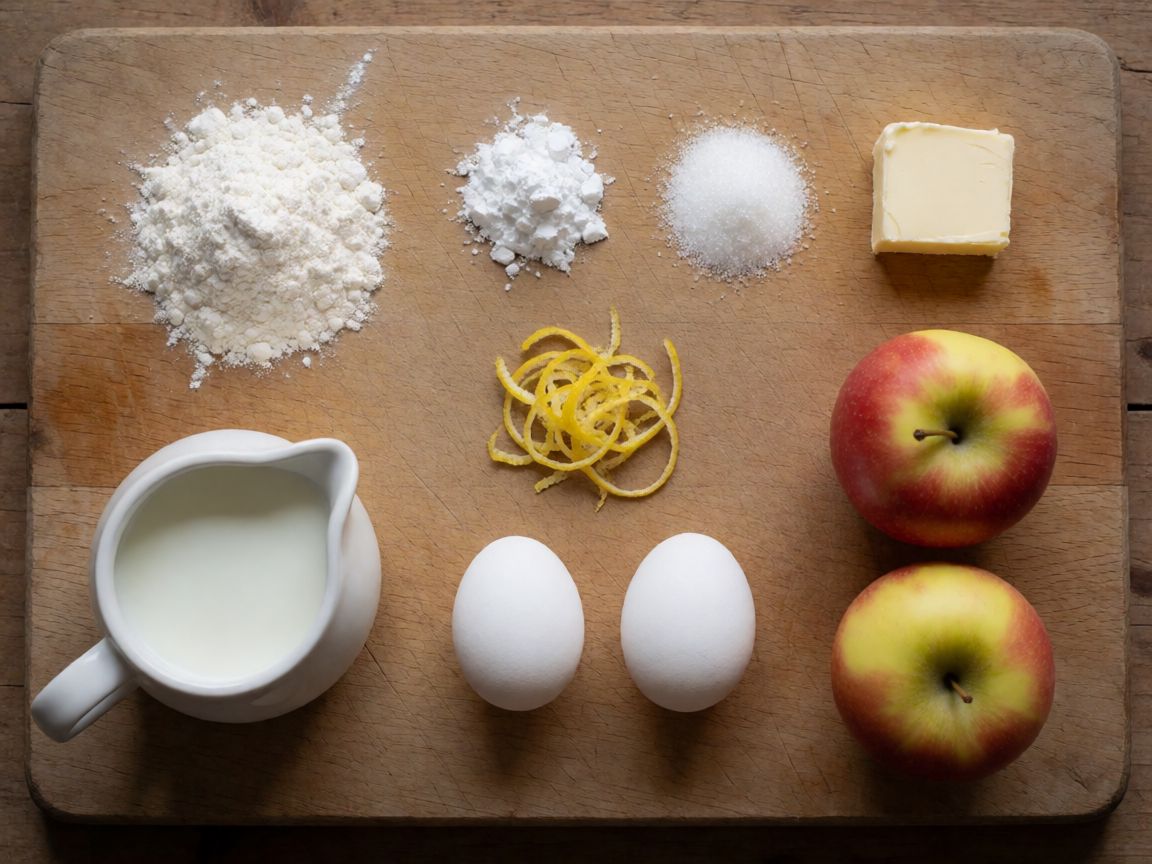
- 200 g Plain flour
- 50 g Potato starch
- 100 g Caster sugar
- 100 g Butter
- 100 ml Milk
- 1 pcs Lemon zest
- 2 pcs Eggs
- 2 pcs Apple
- 10 g Baking powder








Steps
In a large bowl, whisk the eggs with the caster sugar for a few minutes until the mixture is smooth and fluffy.
Add the melted and slightly cooled butter and keep whisking until smooth.
Pour in the room-temperature milk in a thin stream, add the lemon zest and whisk further.
Add the sifted plain flour, potato starch and baking powder, mixing so there are no lumps in the batter.
Cut one apple into small cubes and fold it into the batter gently with a spatula.
Cut the second apple into thin slices for decorating the top of the cake.
Pour the batter into a 20 cm springform tin and arrange the apple slices on top.
If you like, sprinkle a little sugar over the top and place the tin in the air fryer basket.
Cook in the air fryer at 160°C for 45 minutes.
45 minCheck if it's done with a wooden skewer after 30 minutes of baking.
Once the cake is ready, let it cool slightly before removing it from the tin.
This is a sponge cake that happens to be baked in an air fryer rather than an oven, and the whole point of the recipe is managing what that machine does differently: it's small, it's fierce, and the fan never stops moving hot air across the surface. Whether it works comes down to two things — getting air through the batter before it goes in, and not trusting the clock once it's in there.
Potato starch alongside plain flour is doing real work, not padding the ingredient list. Starch has no gluten, so a quarter of the flour weight swapped out means a quarter less of the structure that makes cakes tough if overmixed. That's why you can fold the batter without fear and still get something tender rather than bready.
The apples do two separate jobs and you should not confuse them. The cubed one goes inside, where it steams gently in batter and turns soft, almost jammy, giving pockets of moisture through the crumb. The sliced one sits on top exposed to that moving hot air, so it dries at the edges and colours — that's decoration and a bit of textural contrast, not the same apple experience twice.
Some say an air fryer "can't do cakes" because it's a glorified deep fryer with a fan. No — it's a small, efficient convection oven, and a convection oven is exactly what a sponge wants. The problem isn't capability, it's scale: a domestic air fryer basket is tiny and close to the element, so a cake browns on top long before the centre sets.
Start with the eggs and sugar. Whisking them "until fluffy" isn't a texture note for its own sake — you're beating air into the mixture mechanically, because this cake has no other way to rise much beyond what the baking powder gives it. That trapped air is what keeps a flour-and-starch batter from baking into something dense and flat. Skip this and the baking powder is working alone, and 10 g of it can't carry a cake this size by itself.
Melted butter rather than softened and creamed is a shortcut, and an honest one: you're not after the aerated butter-sugar structure of a traditional Victoria sponge, you're after a moist, close crumb closer to a loaf cake. That's also why the butter has to be "slightly cooled" before it meets egg — pour it in hot and you'll cook the egg at the edges of the bowl, little flecks of scrambled egg sitting in your batter. Any neutral butter works; if you want a substitute, use something with no strong flavour of its own and a similar fat content — a mild oil will do it, though you lose the faint dairy note butter gives on cooling.
Milk "in a thin stream" is about emulsion, not ceremony. Add it all at once to a butter-egg mixture and it can split rather than blend smoothly; a thin stream gives the fat time to take on the liquid gradually. Lemon zest here isn't decoration either — it's cutting through the sweetness of cooked apple and sugar, which otherwise sits a bit flat and one-note.
Sift the flour, starch and baking powder together before they meet the wet mixture. This isn't fussiness — baking powder clumps if it's damp or if it's been sitting at the bottom of a tin, and an unevenly distributed clump means one bite that tastes of bicarbonate and the rest of the cake getting none of the lift. Sifting breaks that up and spreads it evenly through the flour so every spoonful rises the same amount.
On the apples: pick something that holds its shape under heat rather than collapsing into mush — a firm eating apple like a Braeburn or Cox does better here than a soft Bramley, which is bred for collapsing and is lovely in a pie, wrong in a cake where you want cubes you can still feel.
On the machine itself: 160°C in an air fryer is not 160°C in your oven — the fan means heat reaches the surface faster and harder, which is exactly why the skewer check comes at 30 minutes rather than waiting blind for 45. A kitchen oven can often bluff its way to doneness on time alone; a domestic air fryer basket, small and close to the heating element, won't give you that margin — the top can set and colour well before the centre has cooked through. Treat the stated time as where you start checking, not where you stop.
Letting it cool "slightly" before unclipping the tin isn't patience for its own sake dressed up as a step — a warm sponge is structurally soft, and a cake that's still steam-soft in the middle will crack or sink at the sides if you release the springform the moment it's out of the basket. Give it the few minutes; the cake sets as it cools, and that's the only way you get a clean release rather than a wedge missing from one side.