
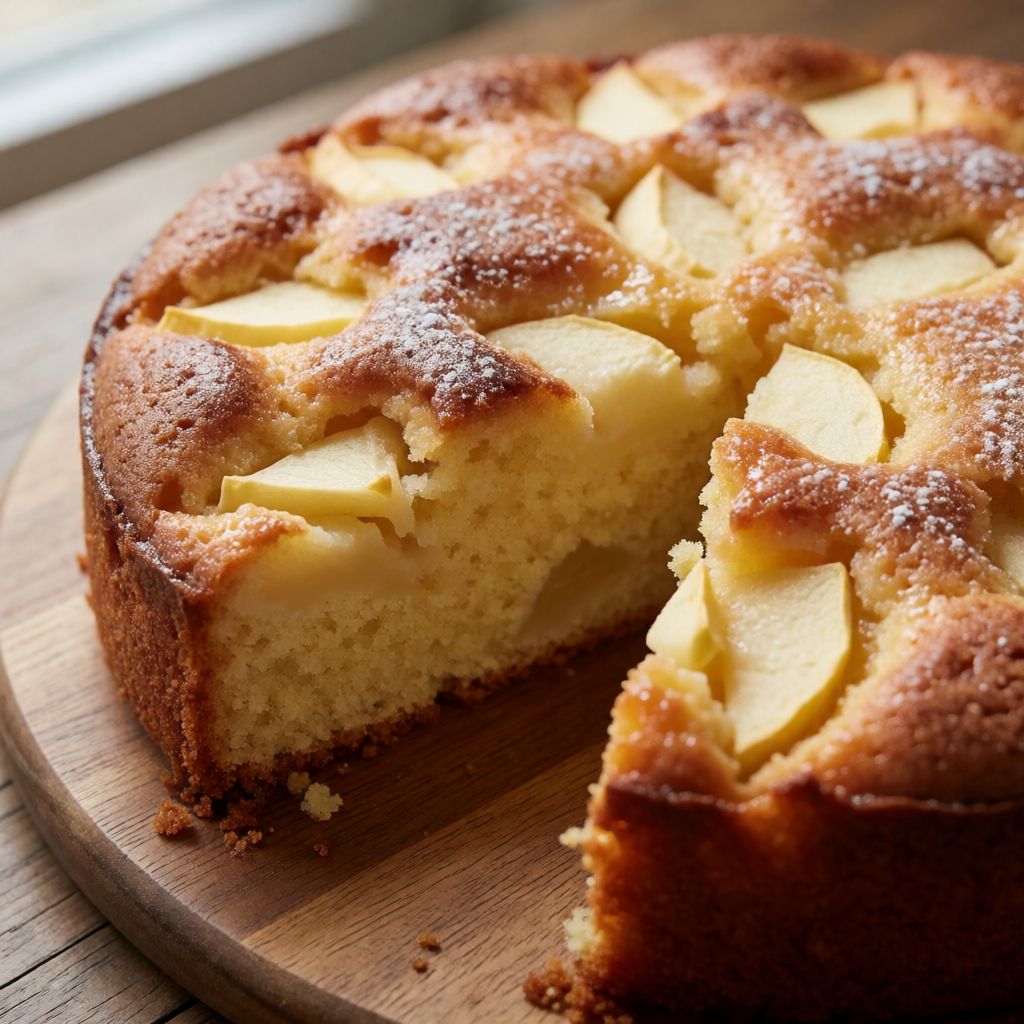
 AI photo
Easy Apple Cake
A simple apple cake made with ricotta and yogurt, lightly spiced with cinnamon.
Labels are worked out automatically from the ingredients and can be wrong. Check the packaging if it matters to you.
Ingredients
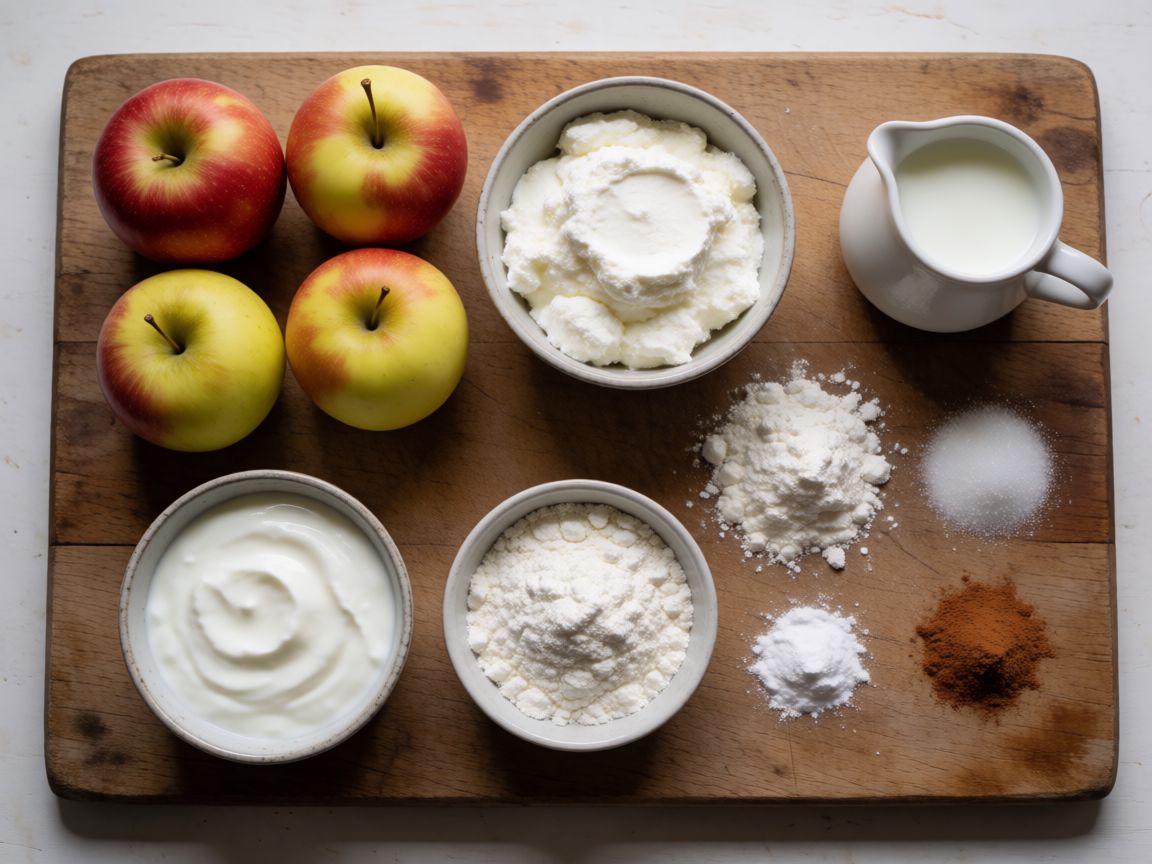
- 3 pcs Apples
- 250 g Ricotta
- 200 g Plain flour
- 150 g Caster sugar
- 125 g Yogurt
- 50 ml Milk
- 16 g Baking powder
- 1 pinch Cinnamon to taste







Steps
Whisk the ricotta and sugar by hand until smooth.
Add the milk.
Add the cinnamon, yogurt, sifted flour and sifted baking powder.
Mix the batter until it is smooth and well combined.
Add the apples, cut into chunks or slices, and mix through.
Pour the batter into a buttered and floured baking tin and bake at 170°C.
40 min
This isn't a sponge. There's no butter creamed with sugar, no eggs beaten to ribbons — the lift here comes entirely from baking powder fighting against a dense, wet mass of ricotta and yogurt. That's the whole character of the cake: heavy batter, aggressive rise, raw apple chunks sitting inside it like stones in a riverbed, cooking in their own steam as the crumb sets around them.
What decides whether it works is a tug of war between three things: how much baking powder you've got lifting the batter, how much water the ricotta-yogurt-milk mixture is carrying, and how much extra moisture the apples dump in once the oven gets to them. Sixteen grams of baking powder on two hundred grams of flour is a lot — double what you'd use in an ordinary cake — and that's not a typo, that's the dough needing extra push because cheese and yogurt sit heavy and don't want to rise on their own the way a creamed butter-and-egg mix does.
170°C is the number that keeps this balance from tipping over. At that heat the outside firms up slowly enough that the steam coming off the apples has time to escape through the crumb instead of getting trapped under a crust that's sealed too early. Some say turn the oven up, it'll bake faster — no, because a hotter oven sets the surface before the centre has cooked through, and you'll cut into something that looks done and is wet and gluey in the middle, apple juice pooling at the bottom of the tin.
Ricotta is the backbone of this, not a flavour note. It's a fresh curd cheese, mild, slightly grainy, and low enough in fat that whisking it with sugar by hand actually smooths it out instead of just mixing sugar through it — you're breaking down the curd structure, not aerating anything, which is why you don't need a mixer here the way you would for butter. If you've no ricotta, well-drained cottage cheese blitzed smooth does the same job because it has the same loose curd and low fat. Don't reach for cream cheese instead — it's denser, tangier, and will sit in the batter like a brick rather than loosening into it.
Yogurt does two jobs: it adds moisture the ricotta doesn't have enough of on its own, and its acidity gives the baking powder something to react against a little harder, which matters when you're asking that much baking powder to lift that much weight. Any plain yogurt works, or buttermilk if that's what's open in the fridge. The milk is there only to take the batter from stiff to pourable — fifty millilitres is a small adjustment, not a main liquid, so don't feel you need to match it with cream for richness; the fat's already coming from the ricotta.
Flour and baking powder get sifted together for the same reason you'd sift flour on its own — lumps of baking powder sitting undissolved in the batter give you bitter little pockets once they hit heat, instead of an even rise. The ratio here, sixteen grams to two hundred of flour, is heavier than almost any cake recipe you'll have used before, and that's deliberate: it's compensating for how dense ricotta and yogurt are compared with the air a creamed butter-sugar mix would normally carry in.
Apples want to hold their shape, not collapse. You're folding raw chunks into batter and letting the oven finish them, which means a mealy apple, or a cooking apple bred to break down — Bramley, the classic British choice for an apple pie, is exactly wrong here — will dissolve into mush and flood the crumb around it with liquid the batter can't absorb in time. Go for something firm that keeps a bit of bite through baking: Braeburn, Granny Smith, Cox if you can get one that's still crisp. Cut them into even chunks so they cook at the same rate; a mix of slivers and thick pieces means some turn to jam while others stay hard.
Cinnamon is a pinch, not a seasoning in its own right — it's there to round off the apple, not compete with it. Butter and flour for the tin matter more than usual here, because unlike a sponge, there's no butter in the batter itself to help the cake release — nothing self-lubricating about a ricotta mix. Skip that step and you'll leave half the bottom behind in the tin.
There's no great mystery to why cakes like this exist across half of southern Europe in one form or another — ricotta left over from making pasta fillings, or just gone slightly past its best for eating on its own, got folded into whatever flour and sugar were in the cupboard instead of being thrown out. No butter to buy, no eggs to spare, no mixer needed. It's a thrifty cake dressed up as a simple one, and that's not a complaint.