
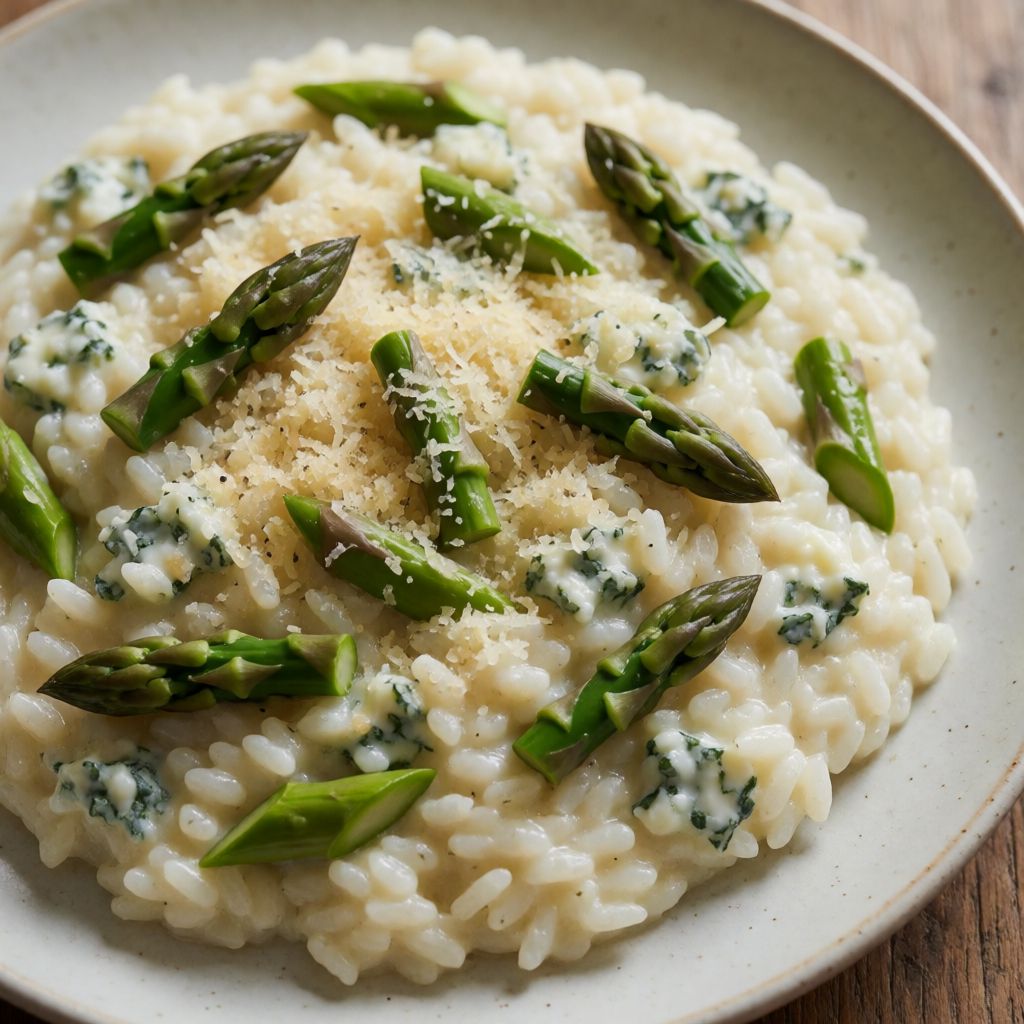
 AI photo
Asparagus and Gorgonzola Risotto
A creamy Italian risotto with tender asparagus and tangy Gorgonzola Dolce, finished with Parmesan.
Labels are worked out automatically from the ingredients and can be wrong. Check the packaging if it matters to you.
Ingredients
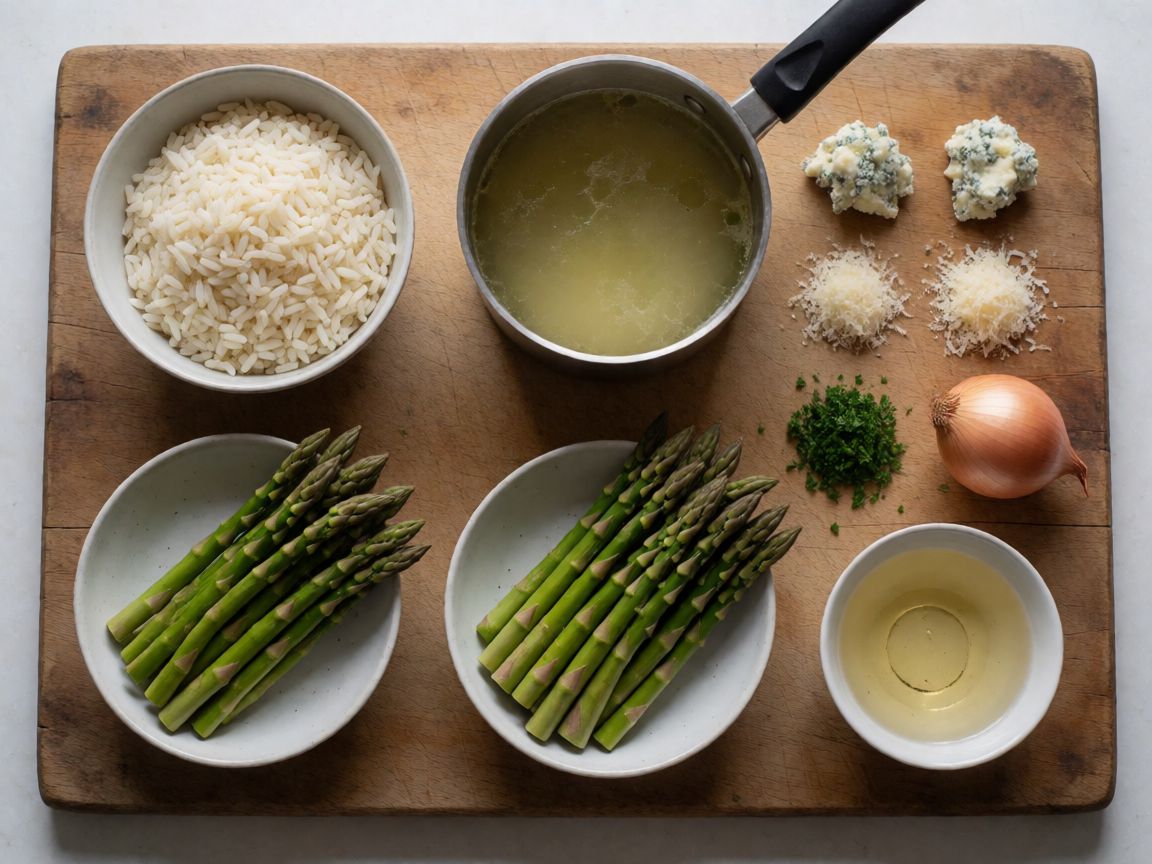
- 350 g Carnaroli rice
- 1 l Vegetable stock
- 100 g Gorgonzola Dolce
- 1 tbsp Parmesan
- 2 tbsp Olive oil to taste
- 300 g Asparagus
- 1 pcs Onion
- 1 tsp Parsley
- 125 ml White wine
- 1 pinch Salt to taste
- 1 pinch Black pepper to taste











Steps
Trim the woody ends from the asparagus, cut into pieces, and boil in salted water until tender.
Heat 2 tbsp of olive oil in a pan and sauté the finely chopped onion.
Add the rice and toast briefly, then pour in the wine and let it evaporate completely.
Cook the risotto, gradually adding the stock a ladleful at a time.
5 minutes before the risotto is ready, add the asparagus pieces and tips.
5 minSeason with salt and pepper, then stir in the parsley.
Stir in the Gorgonzola Dolce and Parmesan, mixing well until creamy, and serve.
This is a spring risotto built on two cheeses doing different jobs — gorgonzola for a sharp, creamy backbone, parmesan for salt and glue — wrapped around asparagus that's cooked twice, once in water for the stalks, once in the rice itself for the tips. What decides whether it works isn't the cheese, though. It's whether the rice releases its starch at the right pace while staying whole inside.
Carnaroli does this because it's high in amylose — the starch on the outside of the grain breaks down and goes into the liquid around it, while the inside holds its structure. That's the whole trick of risotto: a creamy sauce made of nothing but rice water and fat, wrapped around grains that still have a bit of resistance in the centre. Some say you need to stir constantly or it'll catch — no, because the stirring isn't about fire, it's about friction: you're rubbing starch off the grain's surface into the broth. Stir too hard or too long and you break the grains instead, and you get porridge, not risotto.
The ladle-at-a-time method is the other half of it. You're not boiling rice in a lot of liquid like pasta — you're feeding it just enough hot stock to keep it moving, letting it nearly dry out before the next ladle. That control is what builds the sauce gradually instead of drowning it. Cold stock straight from the fridge will do the opposite: it shocks the pan, stalls the cooking, and you end up with rice cooked unevenly, some grains soft, some still hard in the middle.
On rice: Carnaroli is the right choice because of that starch balance, not because of any romance about Italian paddies — though the romance has a real economic root. Northern Italy's rice belt around the Po valley grew short-grain rice because the land was flooded and wheat wouldn't take; risotto is what you cook when rice, not pasta, is the cheap local staple. If you can't get Carnaroli, look for any short-grain, high-starch rice sold for risotto — Arborio works, though it goes soft a touch faster, so watch it closer near the end. Don't reach for basmati or jasmine: that's long-grain, low-amylose rice built to stay separate and fluffy, the opposite job.
On stock: keep it hot in a second pot, at a bare simmer, the whole time you're cooking the rice. This is the one place a domestic hob actually limits you — most flats don't have a ring low enough to hold stock at a whisper without a lid, so a plate over the pot, tilted slightly, does the job of keeping it hot without boiling it away. Vegetable stock here is doing a quiet job: carrying salt and a bit of sweetness into every grain, ladle by ladle, so by the end the rice doesn't need much seasoning beyond pepper and the cheese.
On the cheeses: gorgonzola dolce is the creamier, milder of the two gorgonzolas — more butterfat, less of the sharp tang of the piccante — which is why it melts into the rice instead of fighting it. Any soft, rindless blue cheese that's happy to melt will do the same work; dolcelatte is close enough that nobody will notice. If blue cheese genuinely isn't your thing, a mild taleggio gives you the creaminess without the tang, but you've changed the dish, not substituted in it. Parmesan goes in small — one tablespoon — because its job isn't bulk, it's backbone: salt, a little nuttiness, and body. Grate it fine; a clump of parmesan sitting in hot starch just turns stringy.
On the wine: it needs to be dry, and you let it cook off properly, not just steam for a few seconds. The reason is simple chemistry, not ritual — raw alcohol tastes sharp and bitter, and it needs real heat and time to drive off, leaving behind the acid that will later cut through the fat of the gorgonzola. If you skip the wine, add a squeeze of lemon near the end instead; you need that acid somewhere or the dish sits heavy.
On the onion: chopped fine and cooked gently in the oil until soft and translucent, not browned. Colour here means burnt sugars and a different, harsher flavour taking over the dish before the rice has even gone in — the onion's job is a quiet sweetness underneath everything else, not a flavour of its own standing out.
On patience: this isn't a dish you can rush by turning the heat up and dumping all the stock in at once. The slow, repeated addition is what builds the texture — there's no shortcut that gets you the same creaminess faster. Forty minutes of standing at the pan, half-attention, ladle in hand, is simply part of the ingredient list.