
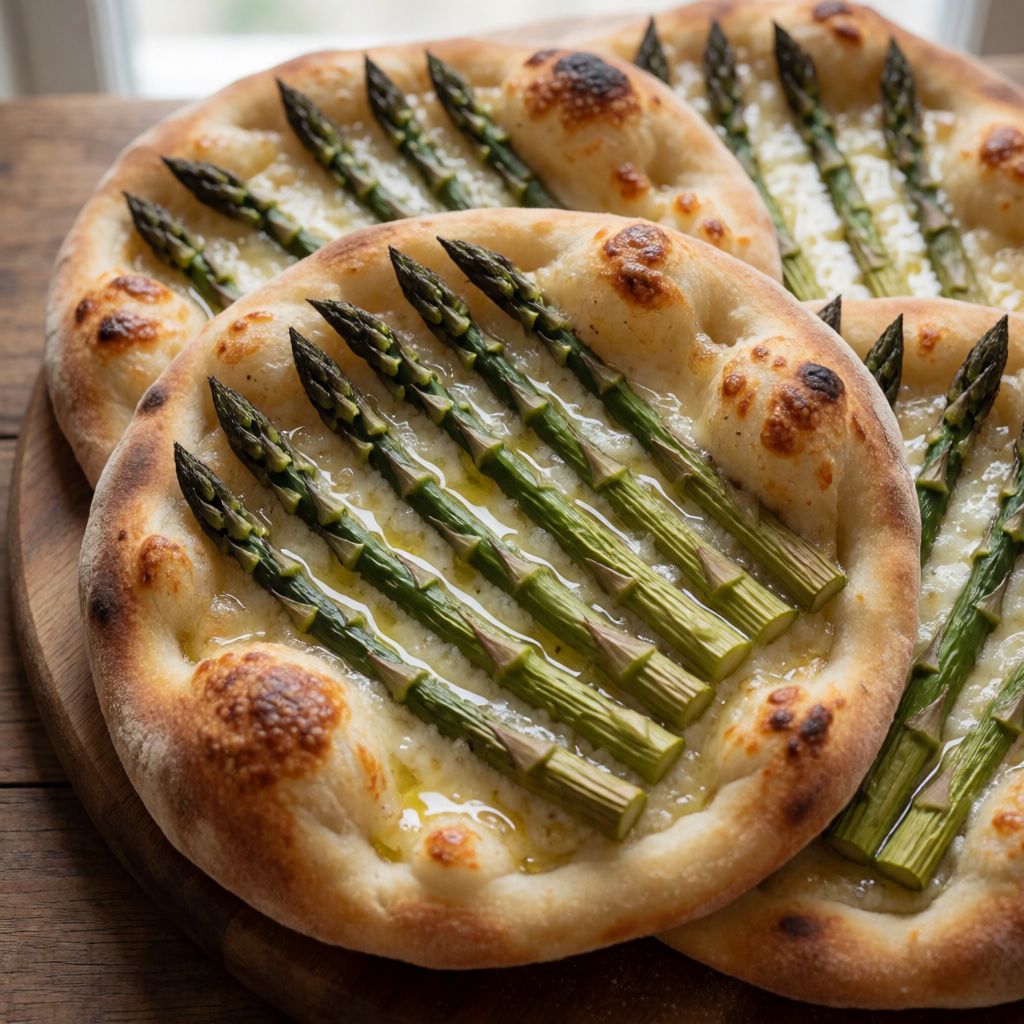
 AI photo
Mini Pizzas with Asparagus
Little homemade pizzas topped with asparagus and goat's cheese, finished with fresh thyme.
Labels are worked out automatically from the ingredients and can be wrong. Check the packaging if it matters to you.
Ingredients
- 25 g Yeast
- 300 ml Water
- 1 tsp Salt
- 300 g Plain flour
- 250 g Durum flour
- 2 tbsp Olive oil for the bowl and kneading
- 12 pcs Asparagus
- 100 g Goat's cheese
- 1 bunch Thyme fresh
- 1 pinch Salt
- 1 tsp Olive oil a drizzle





Steps
Pour the water into a bowl, add the yeast and stir until dissolved.
Add the oil, salt and plain flour, mix well, then gradually add the durum flour until the dough is smooth and elastic.
Coat the dough in olive oil, place in a bowl and leave to rise for 1 hour.
60 minDivide the dough into equal pieces and shape into mini pizzas. Place on baking parchment.
Snap off the woody base of the asparagus and discard, then cut the rest into smaller pieces. Scatter the asparagus and goat's cheese over the pizzas.
Drizzle with olive oil and sprinkle with salt flakes.
Transfer the parchment with the pizzas onto a hot baking tray and bake in an oven preheated to 250°C for 10–12 minutes.
12 minOnce the pizzas are ready, sprinkle with fresh thyme.
Twelve small pizzas, not one big one — and that's not a whim, it's arithmetic. A home oven can't hold the heat a kazan-style pizza oven does, so you shrink the disc until the middle cooks before the edge burns. Twelve pieces of dough, shaped thin and small, give you a crust that crisps right through in the time it takes the cheese to soften and the asparagus to go from raw-green to just-tender-green.
What decides whether it works is the base, and the base is decided an hour before you touch the asparagus. Yeast dissolved in water, enriched with a mix of plain and durum flour — the durum isn't there for flavour theatre, it's there because its gluten is tougher and holds shape under a hot blast without turning leathery. You knead until the dough stops fighting you and starts stretching: that's the "smooth and elastic" moment, not a stopwatch reading.
Some say pizza dough needs hours of slow rise to taste of anything. No — because this isn't bread, it's a vehicle for a hot oven and six minutes of contact with cheese. One hour, covered, somewhere not cold, is enough to double it. The oil you coat it in isn't for flavour either; it stops the surface drying into a skin that would crack instead of stretch.
The asparagus goes on raw, in small pieces, because the oven does the cooking — twelve minutes at a temperature most British ovens will call their maximum. That's the whole engineering of the dish: thin dough, hard flour, brutal heat, short time.
Yeast first, dissolved in water that should feel like a warm bath, not hot — scald it and you kill it, and then no amount of time will make the dough rise, because yeast doesn't come back from being cooked. Fresh yeast like this is sold in small blocks in some shops but is getting rarer; if you've only got dried yeast, use about a third of the weight and you're fine.
The two flours do different jobs, and this is where people shortcut and lose the texture. Plain flour gives you softness and a dough that's easy to work early on. Durum flour — the hard wheat used for pasta — is stiffer, less elastic alone, but it's what keeps a thin disc from going soggy or papery under a quick hot bake. If you can't get durum, a strong bread flour is the nearer substitute; plain flour alone will give you a softer, more bread-like base, which isn't wrong, just a different animal.
Olive oil appears twice and means two different things. The oil worked into the dough and coating the rising bowl is structural — it keeps the surface supple so it doesn't tear when you shape twelve small rounds instead of one. The drizzle on top, right before baking, is for flavour and for helping the salt flakes cling rather than roll off. Any oil with no smell of its own would do the structural job; for the top drizzle, you want one with actual character, since it's tasted, not just worked.
Asparagus: snap, don't cut, the woody base off — that bit has set lignin in it, the same thing that makes old celery stringy, and no oven time softens it, it just stays fibrous while everything round it cooks. Snapping finds the natural break point where the stalk turns tender; a knife can't find that by eye as reliably. Cut what's left into pieces small enough to cook through in the pizza's short time in the oven — twelve minutes isn't enough to steam a thick raw spear tender, so thin is the compensation.
Goat's cheese is chosen for how it behaves at heat, not just taste: it softens and slumps rather than melting into a sheet the way mozzarella does, so it stays in little islands among the asparagus instead of gluing the topping down. A soft sheep's cheese would behave similarly; a hard cheese would just toughen.
The thyme goes on after baking, not before — heat for twelve minutes at this temperature would scorch the leaves to bitterness rather than release their oil gently. It's a finishing herb here, not a cooking one. And the "hot baking tray" step — sliding the parchment onto one already in the oven — is doing the job a pizza stone would do in a proper oven: giving the base a jolt of direct heat from underneath so it crisps rather than just bakes through limp. Without that step, on a cold tray, you'd get a paler, softer underside — not ruined, just less of the contrast that makes this worth making small instead of one large tray-bake.
Patience here is short but real: the hour's rise isn't optional padding, it's the only time in the whole recipe the yeast gets to work before the oven stops it dead. Rush that hour in a cold kitchen and you'll be baking a heavier, denser base and wondering why — not the oven's fault, the dough never caught up.