
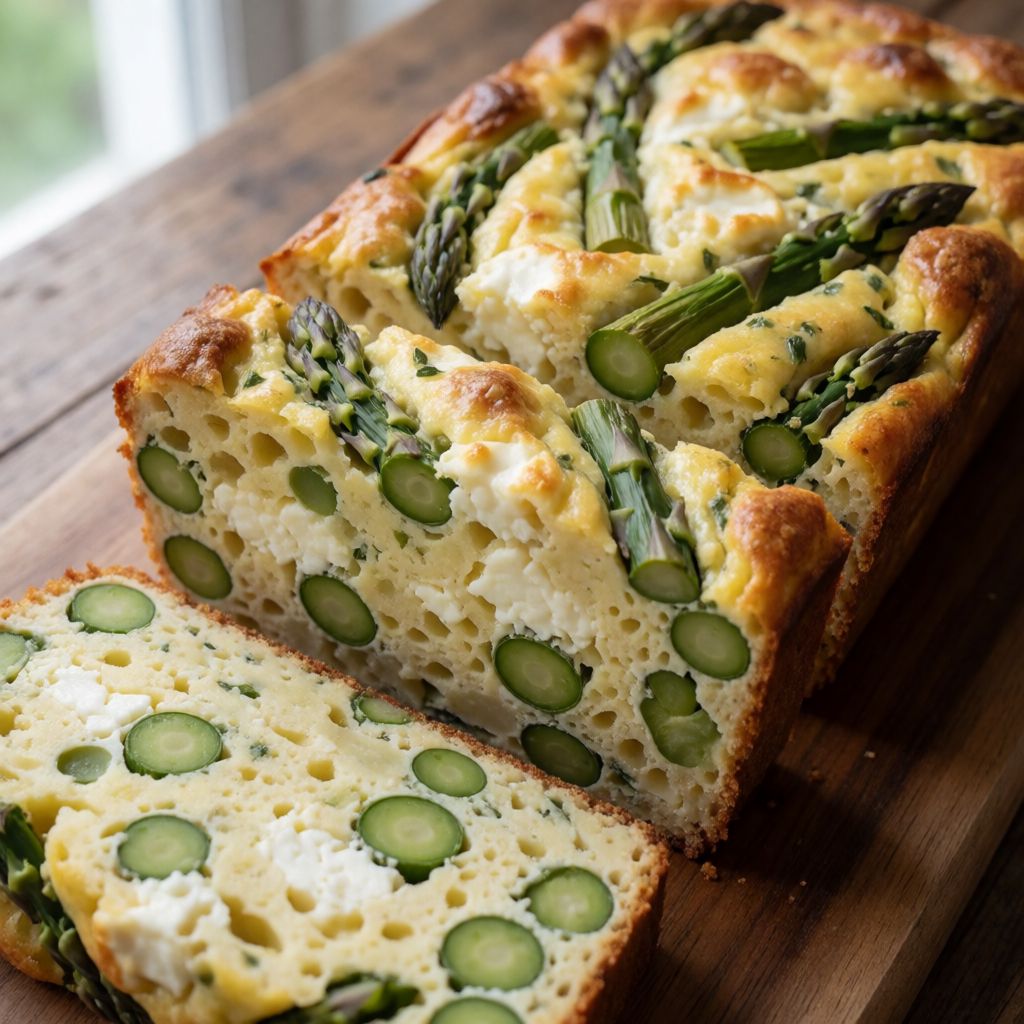
 AI photo
Asparagus and Goat's Cheese Savoury Loaf
A savoury loaf cake with tender asparagus and soft goat's cheese, baked until golden.
Labels are worked out automatically from the ingredients and can be wrong. Check the packaging if it matters to you.
Ingredients
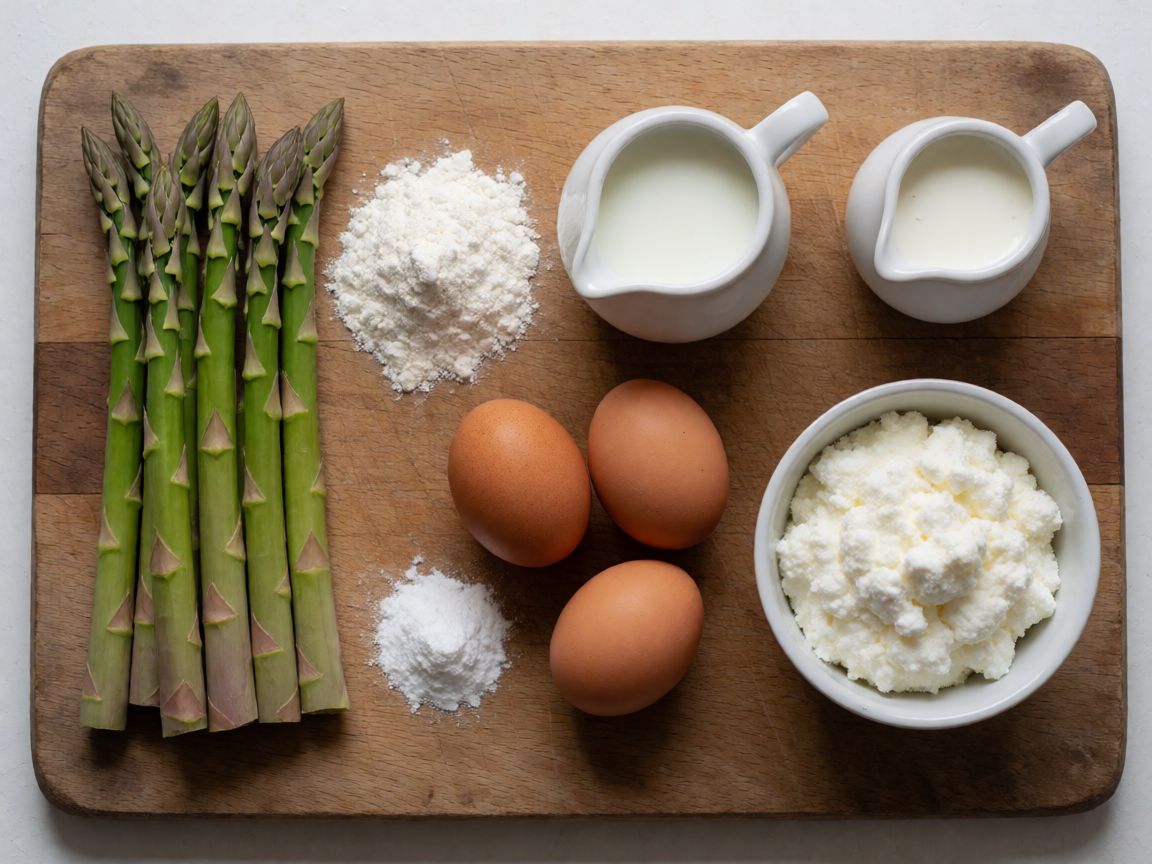
- 6 pcs Asparagus
- 200 g Plain flour
- 100 ml Milk
- 3 pcs Eggs
- 100 g Goat's cheese
- 35 g Double cream
- 40 g Olive oil
- 16 g Baking powder
- Salt to taste
- Black pepper to taste






Steps
Preheat the oven to 180°C using the top and bottom heat setting
Wash the asparagus, trim off the woody ends and boil the whole stalks in salted water
Wait until the asparagus is tender, drain and leave to cool
10 minWhisk the eggs with a mixer until the mixture is pale and foamy
Add the milk, a pinch of salt and black pepper
Gradually fold in the sifted flour so no lumps form
Keep whisking the batter with the mixer until smooth
Add the double cream and olive oil
Add the sifted baking powder and mix through
Chop the asparagus into small pieces and fold into the batter together with the diced goat's cheese
Line the tin with baking paper or grease it with butter
Pour the batter into the tin and place it in the oven preheated to 180°C
Bake the loaf for about 45 minutes, checking it is done with a wooden skewer
45 minRemove from the oven and let it cool slightly before turning out of the tin
This is a cake tin doing the work of a loaf tin, and a savoury batter borrowing the logic of a sweet one. Eggs, flour, milk, a lifting agent — the same bones as a Victoria sponge, except here the sugar is swapped for cheese and the fruit for asparagus. It rises the same way too: baking powder releases gas when it meets the wet batter and again when it meets heat, and that gas needs a structure already set by egg protein and flour gluten to push against. Too wet a batter and the bubbles just escape through it; too stiff and they can't expand it at all. That 100ml of milk against 200g of flour is the line between the two.
What decides whether it works isn't the asparagus or the cheese — it's whether you treat the vegetable as a wet ingredient or a dry one. Boiled asparagus holds water in its cells. Chop it in while still warm and wet, and it bleeds into the crumb around it as the loaf bakes, giving you a soggy seam. Let it cool properly first — the ten minutes isn't padding, it's the water redistributing and the surface drying slightly — and it folds through as its own distinct texture instead of leaking.
Some say you can skip boiling asparagus and go straight in raw, since it's going in the oven anyway. No — because 45 minutes at 180°C is nowhere near long enough to break down a woody stalk's fibre. The oven will set the loaf around it before the asparagus itself goes tender, and you'll get crunch where you wanted bite. Boiling first does in ten minutes what the bake would never manage in an hour.
The flour is the scaffolding, and plain flour is correct here, not strong bread flour. You want gluten to form just enough to hold the structure once the eggs set it, not so much that it turns chewy and bread-like — this is a loaf that should give under a knife, not need pulling apart.
Baking powder is listed separately from flour and sifted in late, on purpose. Baking powder is a two-stage chemical: part of it reacts the moment it touches the wet batter, part waits for the heat of the oven. If you mix it in too early and let the batter sit, you waste the first stage before it ever goes near the oven, and the loaf won't rise as much as it should. Sifting it removes lumps that would otherwise sit as a bitter, soapy pocket in one bite.
Eggs are whisked to pale and foamy before anything else goes in — that's air being mechanically beaten into the protein, and that air is your insurance against relying on baking powder alone for lift. Skip this and the loaf still rises, just denser, closer to a dense cheese bread than a cake.
Goat's cheese is diced, not grated, and that matters. Grated cheese melts into the batter and disappears, leaving flavour but no texture. Diced, it holds its shape, softens at the edges, and gives you pockets of tang through the slice instead of a uniform cheesy taste. If goat's cheese isn't to hand, the criterion is a cheese that holds its shape under heat and carries acidity — a firm feta or a young, crumbly sheep's cheese does the same job. A soft, high-moisture cheese like mozzarella will just vanish into milk and water.
Double cream and olive oil go in after the flour is already incorporated, and that order is deliberate: fat coats flour particles and can block gluten forming if it goes in too early, giving you a batter that won't bind properly around the eggs. Add it once the structure is already underway and it just adds richness without undoing the scaffolding. The olive oil should have no strong flavour of its own fighting the asparagus and cheese — any neutral vegetable oil does the same mechanical job if that's what's in the cupboard, you just lose the slight grassiness olive oil adds.
On a British hob and oven, top-and-bottom heat at 180°C means even heat from both sides, not a fan blasting air that dries the crust before the centre's cooked — if your oven only does fan, drop it 10 degrees or so to compensate, since fan ovens run hotter in practice than the dial suggests. The skewer test matters more than the clock: 45 minutes is where to start checking, not where to stop baking. Pull a skewer out wet with batter and it needs longer regardless of what the timer says; pull it out clean and dry, and every extra minute after that is just drying out a loaf that was already done.