
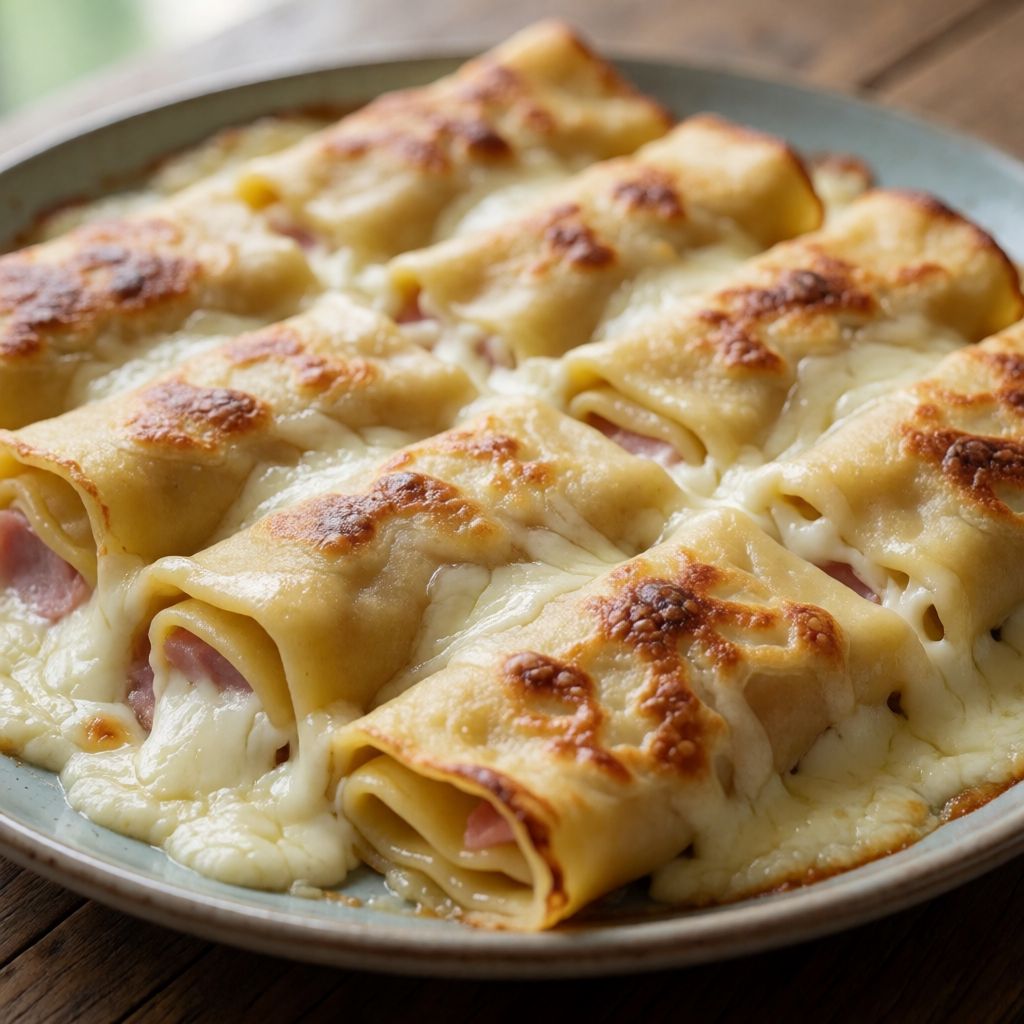
 AI photo
Baked Crespelle with Ham and Mozzarella
Baked savoury crepes layered with ham, mozzarella and béchamel sauce.
Labels are worked out automatically from the ingredients and can be wrong. Check the packaging if it matters to you.
Ingredients
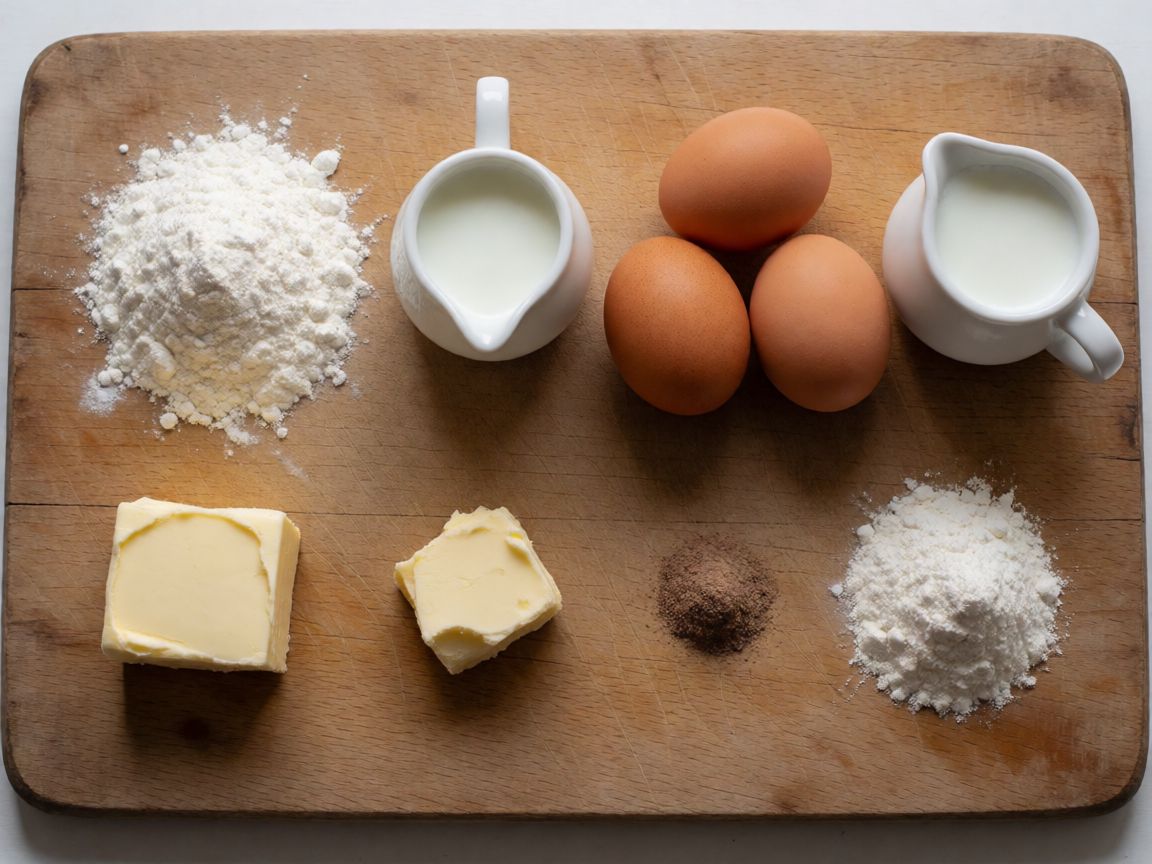
- 250 g Plain flour
- 500 ml Milk
- 3 pcs Eggs
- Salt to taste
- Butter to taste
- 500 ml Milk
- 50 g Butter
- 50 g Plain flour
- Salt 1 pinch
- Black pepper 1 pinch
- Nutmeg 1 pinch
- 300 g Mozzarella
- 300 g Ham
- 50 g Parmesan
- 3 tbsp Béchamel sauce
- Butter to taste
- Salt to taste
- Black pepper to taste











Steps
Crack the eggs into a bowl and whisk with a fork. Add the flour, a pinch of salt and the milk in small portions, stirring constantly.
Heat a frying pan, melt the butter and pour in a ladleful of batter. Cook for a few seconds, flip, and cook the other side. Repeat until the batter is used up.
Melt the butter in a saucepan, add the flour and stir. Pour in the milk, stir, then add the black pepper and nutmeg.
Cook the béchamel until the sauce thickens slightly. Adjust the consistency with milk or flour.
Finely chop the ham, add the parmesan, mozzarella and three tablespoons of béchamel. Mix well.
Fill the crespelle with the filling and arrange in a baking dish over a layer of béchamel. Cover with the remaining béchamel and sprinkle with parmesan.
Bake at 200°C.
15 minBake under the grill setting until the top is golden.
5 min
Crespelle are Italy's answer to "what do we do with leftover crepe batter and a bit of ham" — thin pancakes, not cooked for breakfast but for stuffing and baking, so really this is a lasagne that swapped its sheets for crepes. The dish stands or falls on two things: how thin your crepes are, and whether your béchamel actually coats a spoon before it goes anywhere near the oven.
Some say a crespella is just a thick crepe folded over cheese. No — the batter here has to be thin enough that it cooks in seconds and stays pliable, because you're going to roll it round a filling without it cracking like a taco shell. Thin batter, hot pan, quick in-and-out: that's the whole skill of step one, and it's a hand skill, not a recipe detail. You'll ruin two before you get the third right. That's normal.
The béchamel is doing a job most people underestimate: it's not a flavour, it's glue and moisture insurance. Baked pasta dries out in an oven — that's just physics, a dry heat pulling water out of everything exposed to it. The sauce under and over the rolls is there so the ones on top don't turn to leather and the ones on the bottom don't catch on the dish. Get the béchamel too thin and it runs off and pools, too thick and it won't coat the crespelle at all — you want it the texture of double cream, holding a track when you drag a spoon through it.
Flour, milk, eggs — three parts to one simple ratio, and the only variable that matters is how loose the batter is. Too thick and your crepes come out like deflated blinis, tearing when you fill them. Add milk a little at a time precisely so you can stop the moment it runs off a spoon in a thin, steady ribbon rather than dropping off in a clump. If you've only got self-raising flour in the cupboard, it'll work, but the crespelle puff slightly and go a touch spongier — fine, just know it's not quite the same animal.
Butter in the pan isn't just for flavour — it's there so the first crepe doesn't weld itself to the metal while you're still learning the pan's hot spots. After two or three, most pans season themselves enough that you can go lighter. A domestic hob runs hotter and less evenly than a kazan or a proper gas burner under a flat crepe pan, so don't chase a number — chase the look: batter goes from glassy wet to matte and set at the edges in the time it takes to say "flip now," and that's your cue, not a stopwatch.
The béchamel's second life — butter and flour cooked together first — exists to get rid of the raw-flour taste before the milk goes anywhere near it; that's the only reason for that pause. Nutmeg isn't tradition for tradition's sake, it's because milk sauces are flat without a top note, and nutmeg is the one spice that doesn't fight dairy. No nutmeg in the cupboard? A pinch of white pepper does similar work, though it's a different kind of warmth.
For the filling: mozzarella melts and binds, parmesan salts and sharpens, ham gives you savoury bulk without needing to cook anything further since it's already cured. Any semi-hard ham works — the leftover from a Sunday roast's gammon joint is honestly better here than supermarket slices, because it's thicker-cut and won't turn stringy in the oven. If mozzarella's not to hand, any mild melting cheese with no strong character of its own does the job — a cheap mozzarella substitute, or even a mild cheddar in a pinch, though cheddar will push the dish toward sharper and greasier, which isn't wrong, just different.
Patience lives in two places here: letting the crespelle batter rest a few minutes before the pan (it relaxes the gluten so the pancakes don't shrink and toughen), and not rushing the béchamel over high heat, which just gives you scrambled flour-milk lumps and scorched sugars at the bottom of the pan. Neither step takes long. Both go wrong exactly when you're impatient with them.
Four people from this amount is a fair guess if it's a main course with a salad alongside — treat it as a filling plate, not a light starter, because béchamel and cheese carry real weight. A flat baking dish, wide rather than deep, lets the heat reach every roll evenly — in an ordinary kitchen without a proper gratin dish, any oven-proof tray with a bit of a lip will do; you're not firing this at kazan-level radiant heat, just need even contact with the oven's air.