
 AI photo
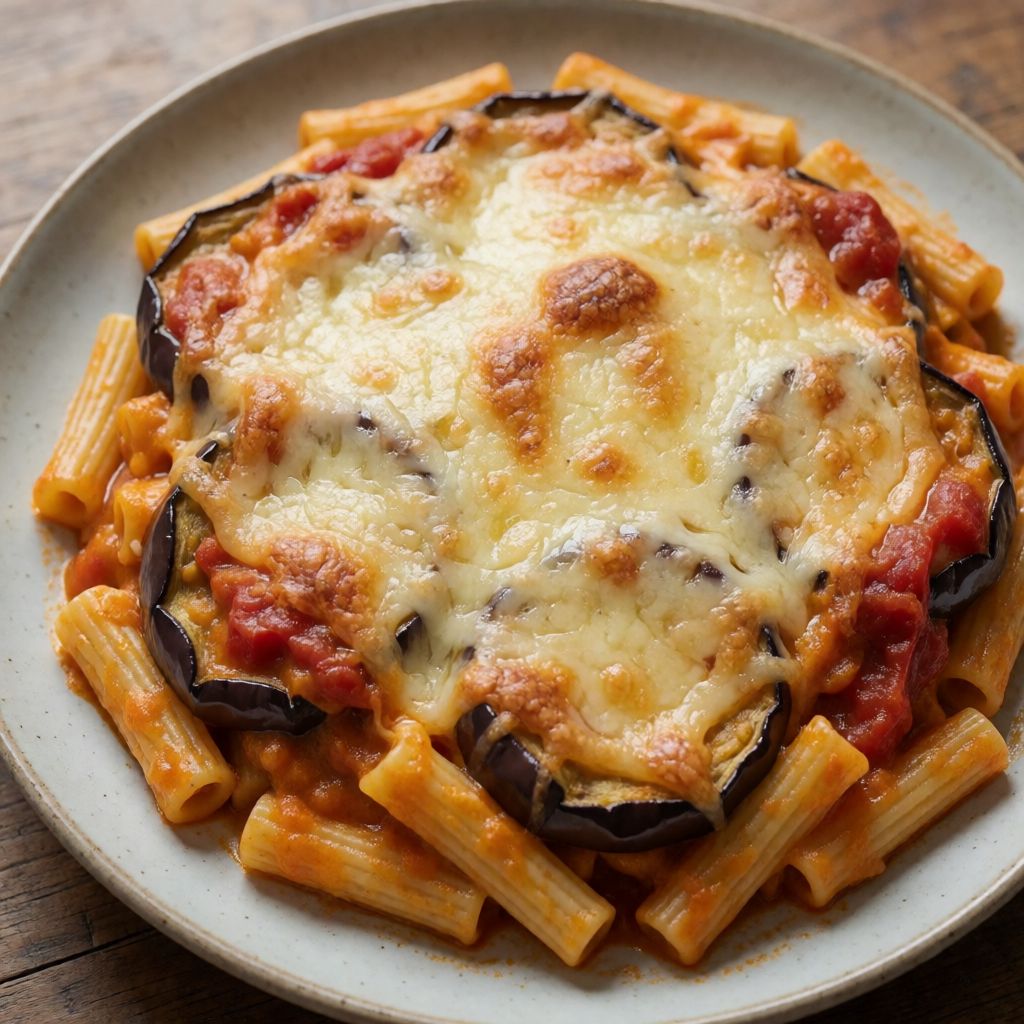
Baked Pasta with Aubergine
A comforting baked pasta with aubergine, tomato sauce and melted cheese, finished with a crisp Parmesan crust.
Labels are worked out automatically from the ingredients and can be wrong. Check the packaging if it matters to you.
Ingredients
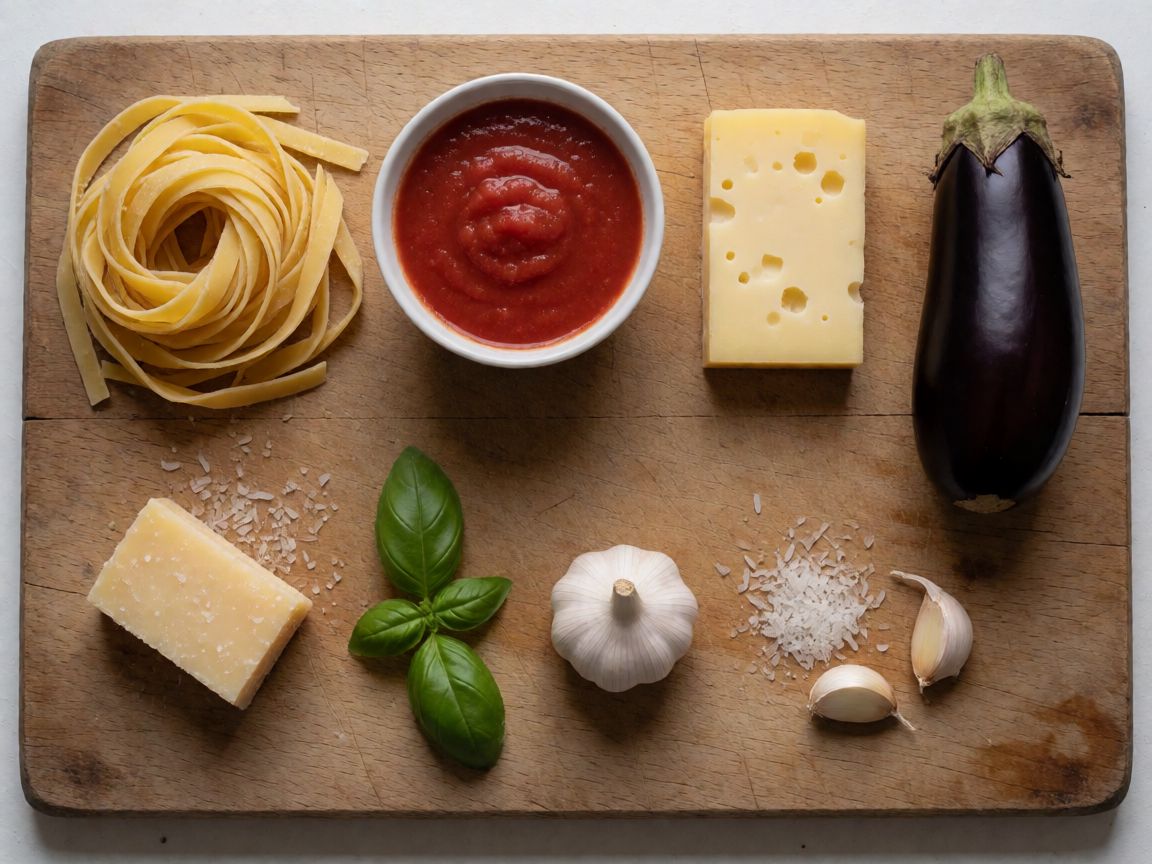
- 500 g Pasta
- 750 ml Tomato passata
- 150 g Emmental
- 2 clove Garlic
- 2 pcs Aubergine
- Parmesan grated
- Basil a few leaves
- Vegetable oil for frying
- Salt
- Black pepper









Steps
Cook the pasta in plenty of salted water until al dente, then drain.
In a frying pan, sauté the garlic gently in a few tablespoons of oil over low heat until golden.
Add the tomato passata and basil leaves, season with salt, and simmer gently until the sauce thickens nicely.
Wash the aubergines, slice them, and fry in well-heated oil. Drain on paper towels.
Add the fried aubergines to the tomato sauce along with the Emmental, sliced.
In a baking dish, layer the sauce with aubergines and cheese, then the pasta, then more sauce — repeat until all ingredients are used.
Sprinkle grated Parmesan on top and bake at 180°C for about 20 minutes.
20 min
What you're building here isn't one cooked dish — it's two finished dishes stacked and melted into each other. The sauce is done, the aubergine is done, the pasta is done (nearly), before anything goes near the oven. Twenty minutes at 180°C doesn't cook raw food — it fuses layers, melts cheese into glue, and lets the top turn into a skin. Understand that and you understand why the recipe is forgiving in places and strict in others.
The strict part is the aubergine. Fry it in oil that isn't hot enough and the flesh — which is mostly air pockets, like a soft sponge — does exactly what a sponge does: it drinks. You end up with slices heavy and greasy instead of slices with a sealed, faintly crisp edge holding a soft centre. The oil has to be hot enough that a slice sizzles the second it lands, so a crust forms before the inside has time to absorb anything. Some cooks salt aubergine slices for an hour first, swearing it's to "draw out the bitterness." Modern aubergines, the ones sold in any UK greengrocer or supermarket, were bred away from that bitterness decades ago — you're not fighting bitterness, you'd be collapsing the sponge structure in advance so it drinks less oil later. This recipe skips that step and solves the same problem with heat instead. Both work. Choose the one that fits your evening.
Pasta: anything short and sturdy enough to hold its shape through a second cooking and to grab sauce rather than let it slide off — penne, rigatoni, fusilli. The criterion is surface and structure, not brand. Thin, delicate shapes like spaghetti have no business here; they'll collapse under a bake.
Tomato passata: tomato pushed through a sieve, no skin, no seed, already smooth, which is exactly what you want for a sauce that has to thicken evenly without separating into watery pools and solid bits. If you can't get passata, blend tinned whole or chopped tomatoes and push them through a sieve yourself — five minutes, and you've made the same thing the tin saves you from doing. Fresh tomatoes stewed down and sieved work too, when they're actually ripe, which in this country is a short window and usually not winter.
Garlic: two cloves, gently coloured in oil until pale gold, never brown. Gold means the sugars in the garlic are just starting to caramelise and perfume the oil. Brown means burnt, and burnt garlic doesn't mellow in the sauce afterwards — it stays bitter and announces itself in every bite. Low, patient heat here is not a suggestion, it's the only way to get flavour without the bitterness.
Emmental and Parmesan do two different jobs and that's why the recipe uses both rather than doubling one. Emmental is a mild alpine cheese that melts stringy and holds moisture — it's the glue between layers, the thing that makes a slice hold together instead of sliding apart when you serve it. Any cheese that melts the same way without weeping oil or turning grainy will do — mozzarella, a mild Gruyère, even a mild cheddar at a pinch, though cheddar brings a sharper edge the original doesn't have. Parmesan is the opposite kind of cheese: low moisture, high in fat and protein, it doesn't melt into a puddle, it dries and browns, which is exactly what you want on top where the oven's dry heat hits it directly. Swap it for Pecorino or Grana Padano if that's what's in the fridge — the criterion is a hard, aged, grating cheese, not a specific name on a wheel.
Oil for frying the aubergine: anything with no flavour of its own and a smoke point high enough to sit hot without smoking — sunflower, groundnut, a light (not extra virgin) olive oil. Extra virgin burns and turns bitter at frying heat; its flavour is wasted there anyway, since you want the aubergine's own taste, not the oil's. Save the good olive oil for drizzling on something raw.
On kitchen reality: you don't need a clay dish or anything specialist for the bake — any ovenproof dish with sides deep enough for two or three layers, the same one that does your Sunday roast potatoes, is fine. The oven here isn't cooking, remember, just fusing and browning, so there's no risk you're under-equipped. Watch the top by eye rather than the clock once you're near the end — bubbling at the edges and gold, not pale, on the surface is the cue, and twenty minutes is where to start looking, not where to stop. This dish, at its root, is cheap food made to stretch — pasta, tomato, and an aubergine, bulked with a modest amount of cheese, feeding six. That's the whole economics of it: nothing exotic, just patience applied in the right two places.