
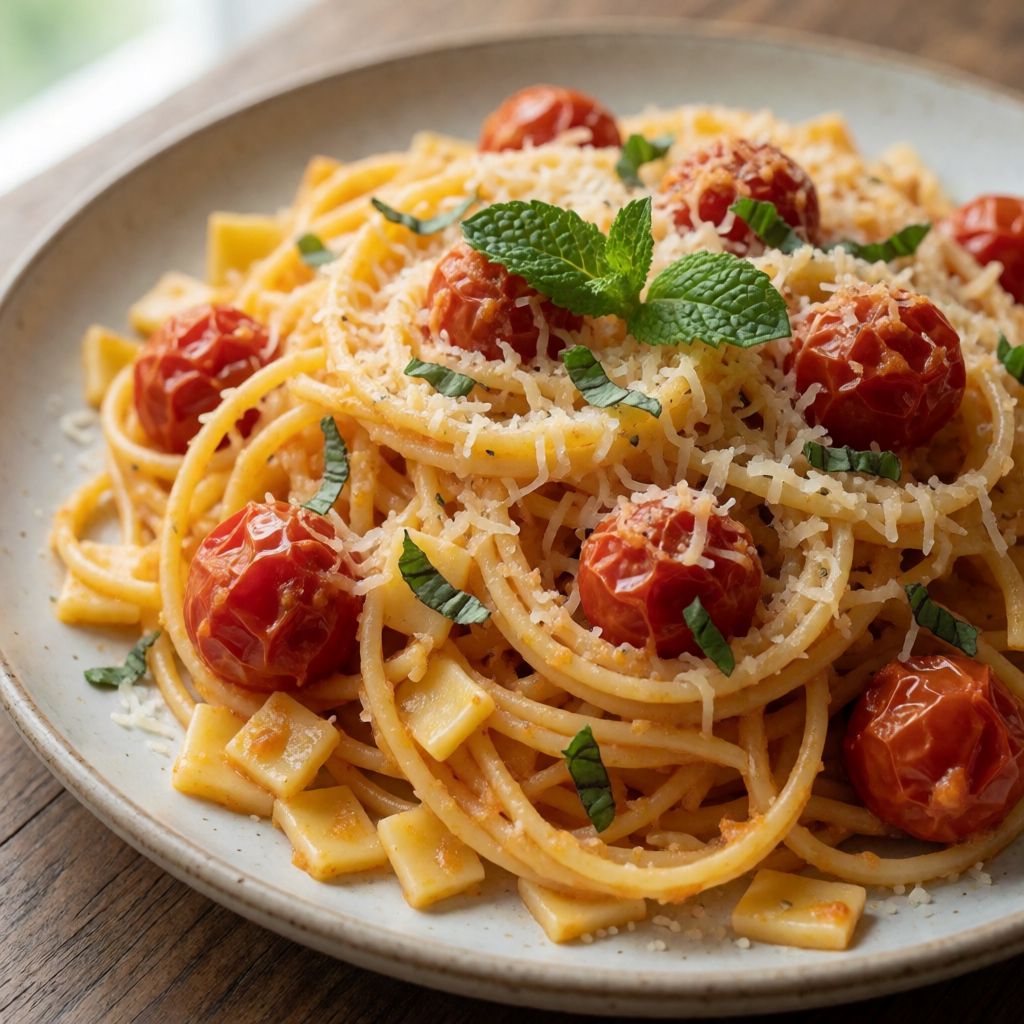
 AI photo
Baked Spaghetti alla Chitarra with Cherry Tomatoes
A comforting baked pasta dish with cherry tomatoes, raisins, mint and pecorino, finished in the oven.
Labels are worked out automatically from the ingredients and can be wrong. Check the packaging if it matters to you.
Ingredients
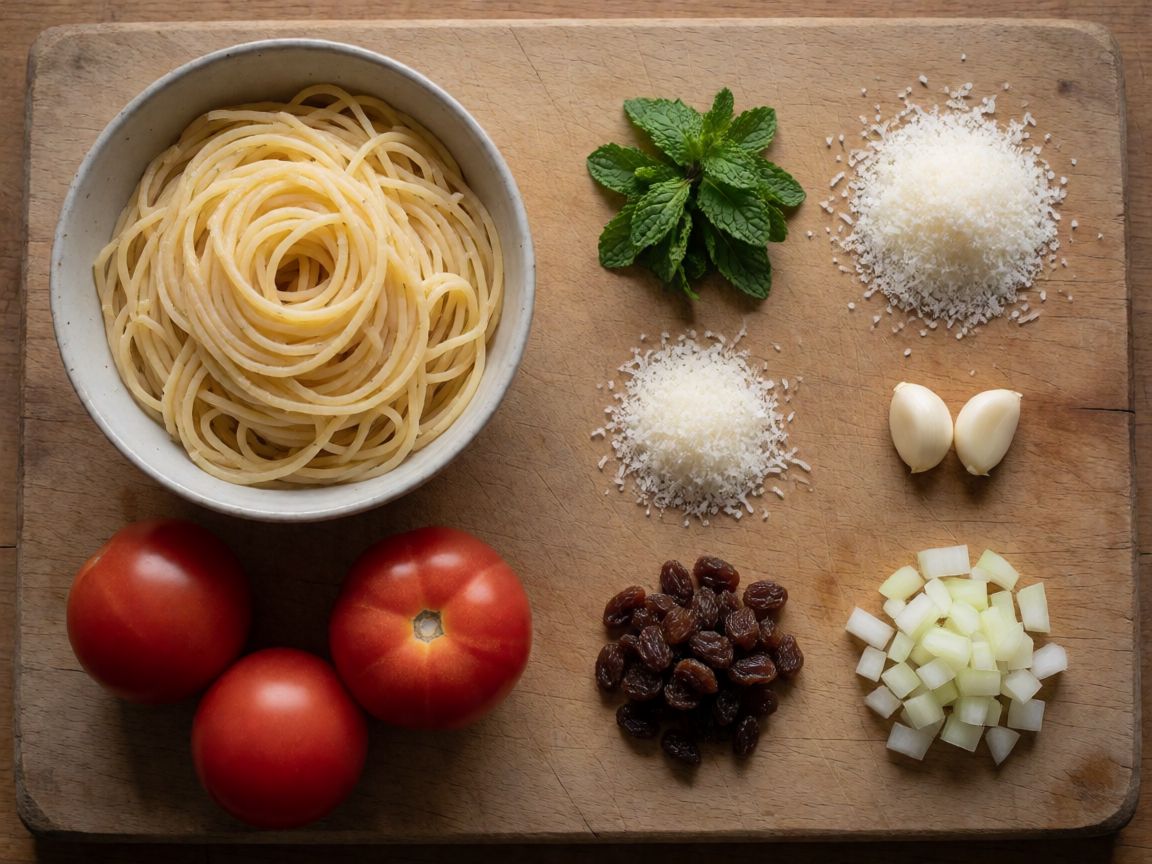









Steps
Halve the cherry tomatoes.
Fry the tomatoes with the garlic, onion, mint and raisins in olive oil.
Cook until the ingredients combine into a sauce.
Boil the spaghetti until just al dente, then drain.
Transfer the spaghetti to a large bowl, add the sauce and mix well.
Sprinkle with grated pecorino.
Transfer everything to a baking dish, adding more parmesan and pecorino.
Bake at 150°C for 20 minutes.
20 min
This is not baked pasta in the heavy, Sunday-dinner sense of lasagne under a thick white blanket. It's dressed pasta given a short visit to a mild oven, just long enough for the cheese on top to melt into the sauce below and knit the whole thing together. What decides whether it works has nothing to do with the oven at all — it's what happens in the pan before the pasta ever meets the tray.
The sauce has to actually become a sauce. Cherry tomatoes are mostly flesh and skin with almost no watery core, so they collapse fast — but "fast" still means you wait until the juice they throw off has boiled back down and clings to the tomato flesh rather than pooling at the edge of the pan. If the mixture still looks wet and separate when you tip the pasta in, it will stay wet and separate in the oven too; 150°C melts cheese, it does not reduce liquid.
Spaghetti alla chitarra is cut on a wooden frame strung with wires — a kitchen tool from Abruzzo, named because it looks like a small guitar, used by hand long before pasta machines made round extruded spaghetti the default. The wires cut the dough into strands with square, slightly rough edges instead of smooth round ones, and that roughness is the whole point: it holds sauce on its surface instead of letting it slide off. If you can't find it, don't hunt for a substitute shaped the same — look for any pasta cut with a rough, matte surface rather than a glossy one (bronze-die cut dried pasta does this too), because that's the property you actually need, not the shape.
Boil it just short of done, because it finishes its journey in the oven dressed in sauce, not in water — pull it too late from the pot and the oven will push it past al dente into mush, and there's no fixing that afterward.
Cherry tomatoes, not big ones, because their low water-to-flesh ratio means they break down into sauce in the time you've actually got on a weeknight hob. If all you have are large tomatoes, quarter them, scoop out more of the watery seed cavity, and expect to stand over the pan longer before they stop looking like stewed chunks and start looking like sauce.
Onion and garlic go in chopped fine and cook briefly, not slow and golden — the tomatoes' acid and juice hit the pan soon after and stop the garlic from catching, so you can run the heat a little bolder here than you would frying garlic alone in oil, where it burns in seconds and turns bitter for good.
Mint rather than basil is what marks this as Abruzzese rather than Neapolitan — cool and sharp instead of sweet and peppery, it cuts the raisins' sugar instead of adding to it. Swap in basil if that's what's in the pot on the windowsill, but know you're nudging the dish toward a different region's habits, not ruining it.
Pecorino Romano is sheep's milk, salty and sharp in a way cow's milk cheese isn't — here it's doing the job of balancing the sweet raisins, so don't go lighter on it than the recipe suggests out of habit; the sweetness needs that much salt to answer it. Parmesan is the milder, nuttier top note, added separately so the gratin isn't one flat note of salt. The honest substitution criterion for either is: a hard, low-moisture cheese that grates fine and doesn't turn oily under gentle heat. A mature cheddar from the fridge door will stand in for parmesan at a push — it melts differently and won't give you the same dry, savoury crust, but it won't disgrace the dish either.
Olive oil here isn't the neutral kind you reach for when you don't want the fat to taste of anything — its own flavour is meant to come through in the finished sauce, so don't swap it for sunflower or vegetable oil unless you have no choice; if you must, accept the dish will taste plainer and season a touch more to cover the gap.
For the pan itself: you don't need anything like a kazan here, just the widest frying pan in the cupboard, wide enough that the tomato juice evaporates instead of stewing in a deep puddle. And your oven, run at 150°C, is doing gentle, even work — it won't brown anything aggressively the way a hot oven would for a roast, so don't expect colour as your cue for doneness; expect the cheese to have gone from looking grated to looking melted and slightly set, and go by that.