
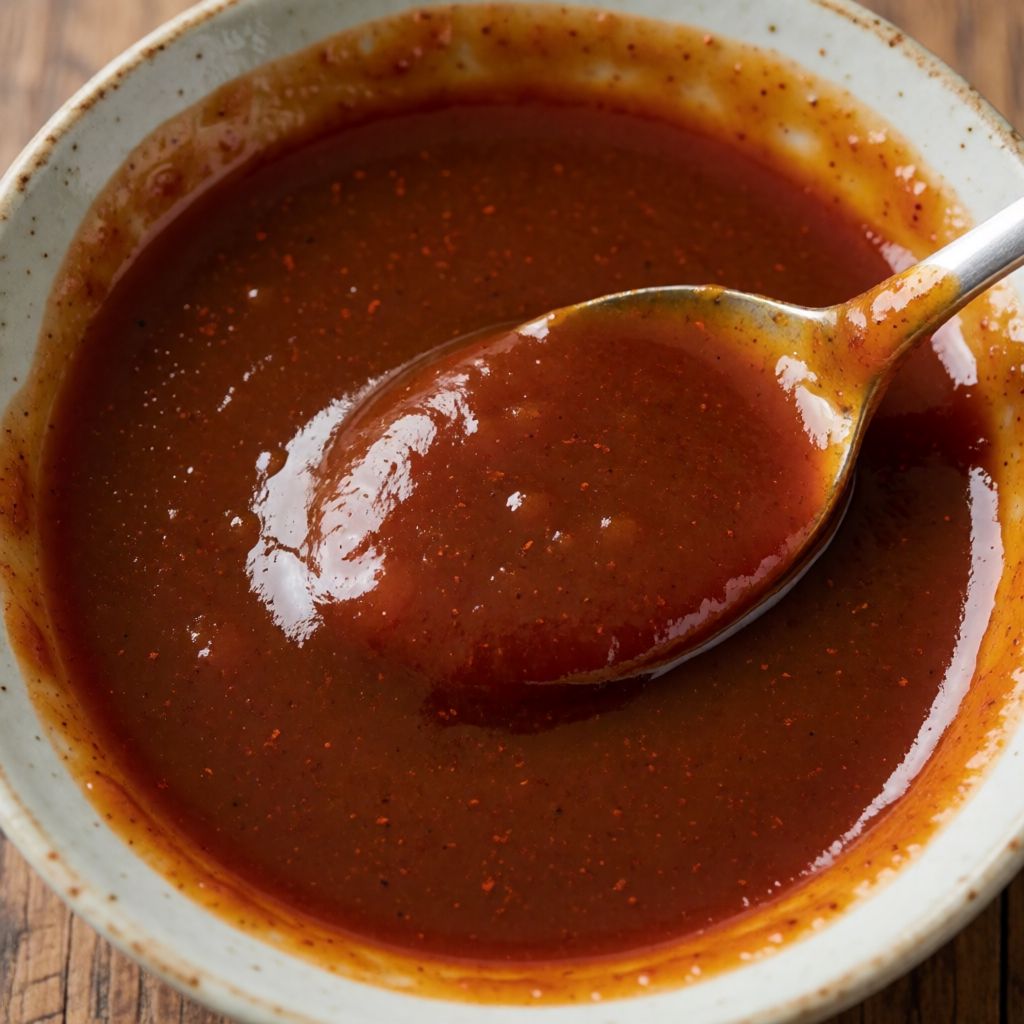
 AI photo
BBQ Sauce
A rich homemade barbecue sauce with a sweet, smoky and tangy flavour.
Labels are worked out automatically from the ingredients and can be wrong. Check the packaging if it matters to you.
Ingredients
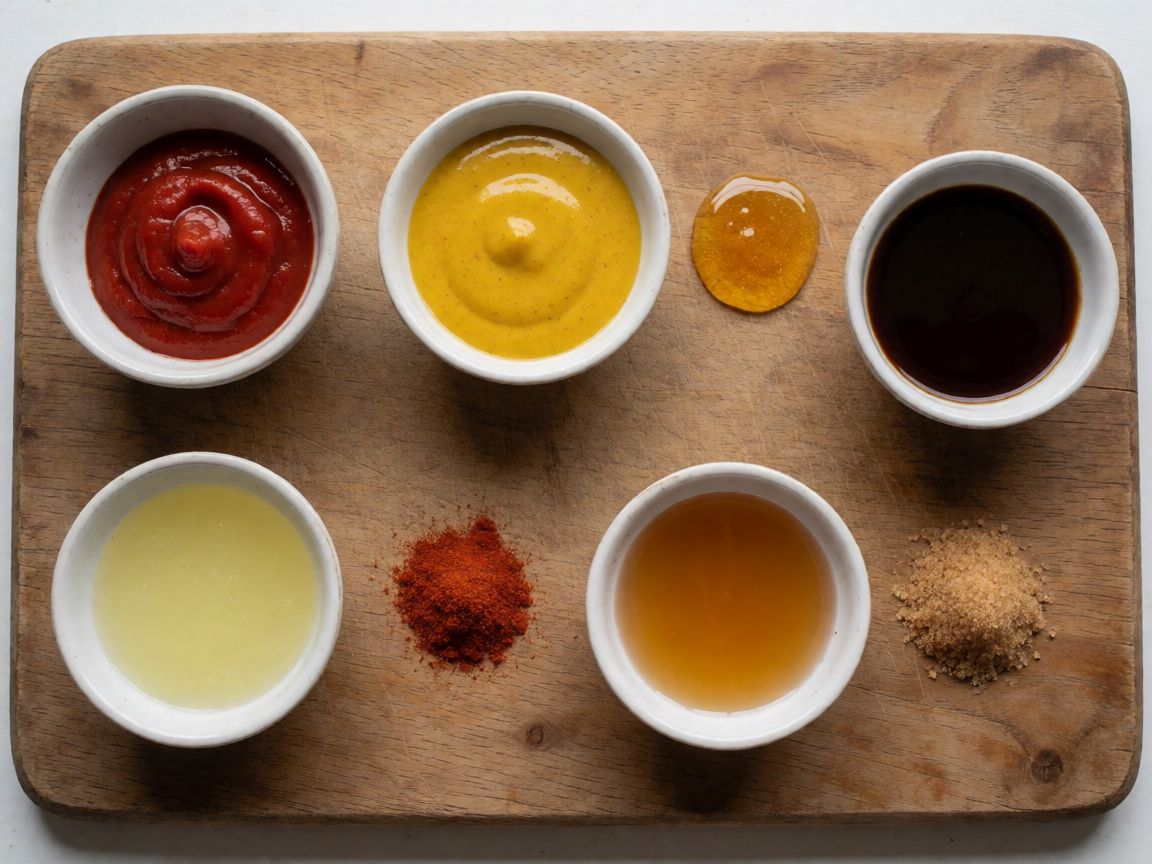
- 250 g Tomato paste
- 25 g Honey mustard
- 65 g Honey
- 40 g Worcestershire sauce
- 80 g Lemon juice
- 10 g Paprika
- 30 g Apple cider vinegar
- 30 g Brown sugar
- 5 g Garlic powder
- 5 g Black pepper
- 10 g Salt
- 5 g Onion powder optional
- 5 g Hot sauce (Tabasco) optional












Steps
Weigh all the ingredients separately, then add them one by one into a saucepan, stirring thoroughly with a whisk until smooth.
Place the saucepan over the lowest heat and whisk actively so the sauce doesn't stick to the bottom.
Simmer gently, adjusting to taste, adding water if needed.
15 minKeep stirring after turning off the heat until the sauce cools evenly.
This isn't a sauce that comes out of smoke and fire — it's named for where it lands, not how it's made. You can build it on a single ring of a UK hob in twenty minutes, no kazan, no outdoor anything. It's for ribs, pulled pork, drumsticks, or honestly brushed over the last ten minutes of your Sunday roast chicken instead of gravy. Six people, one roasting tray's worth of meat, one small saucepan.
What decides whether it works is balance, not cooking time: sweet against sour against salty against the dark bitterness of char it's meant to sit on top of. Tomato paste is the frame — thick, concentrated, almost raw-tasting on its own. Everything else exists to round off that rawness: sugar and honey to soften the acid, vinegar and lemon to keep it from going flat and sticky-sweet, mustard and Worcestershire to put some backbone under the sweetness so it doesn't taste like ketchup with ambitions.
Some say a BBQ sauce needs to simmer for ages to 'develop flavour' — no, because there's nothing in this pan that needs long cooking to transform. What it needs is enough gentle heat for the raw tomato-paste taste to cook off and for the sugars to melt into the liquid rather than sit as grit. You'll know it's there when it drags behind the whisk instead of splashing, and when the smell stops being 'tin of tomato paste' and starts being rounded, a bit smoky, a bit sharp. Fifteen minutes is the floor, not the target — if it's already behaving like that at twelve, stop.
Go through what's actually in the pan and why.
Tomato paste is the body — it's tomatoes with the water driven off, so it brings concentration and a bit of natural sweetness without watering the sauce down. Don't swap in tomato purée or passata thinking it's the same thing; you'll end up simmering for an hour trying to get back the thickness you started with. If paste is all you've got in a weaker concentration, use more of it and simmer a touch longer — the goal, body, stays the same even if the route changes.
Two sugars are doing two different jobs. Honey brings a floral top note and a slight tang of its own; brown sugar brings a faint molasses depth that white sugar simply doesn't have. If you've only got white sugar, use it, but you've lost a layer the recipe was counting on — not fatal, just flatter.
Two acids, same logic. Cider vinegar is sharp and a little fruity; lemon juice is brighter and lighter, it lifts rather than bites. Together they stop the sauce tasting one-dimensionally sour. If you've only got vinegar, fine — use slightly less than the combined weight, since vinegar alone reads stronger than the lemon-vinegar mix.
Worcestershire sauce is the one ingredient here doing a job nothing else in a British kitchen quite replaces: fermented depth, a savoury undertone that reads as 'meaty' without any meat in the pan. The honest substitution criterion is anything fermented, salty and a little fishy or tamarind-sour — a dark soy with a splash of vinegar gets you closer than skipping it altogether.
Mustard and the dry spices — garlic powder, onion powder, paprika, black pepper — are there in powder form on purpose, not out of laziness. Fresh garlic or onion would bring raw heat and texture that never fully dissolves in twenty minutes of gentle heat; the powders disperse evenly and cook out any harshness almost immediately. Paprika's job is colour and a round, mild warmth, not fire — if you want heat, that's what the optional Tabasco is for, added at the end where you can actually taste what it's doing.
One more mechanical point worth saying out loud: keep whisking after the heat goes off. A hot, sugar-thick sauce left standing cools unevenly — a skin forms on top, sugar starts to set at the edges first, and you get a sauce that's grainy in parts instead of uniform. Stirring through the cooling is what keeps it one texture end to end. It's a small patience, a few extra minutes of your arm moving for nothing visible happening — but patience here is the ingredient that keeps the jar smooth instead of patchy. Store the cooled sauce in a jar in the fridge; between the vinegar and the sugar it isn't delicate, but use your nose and eyes as the final judge, not a date on a label.