
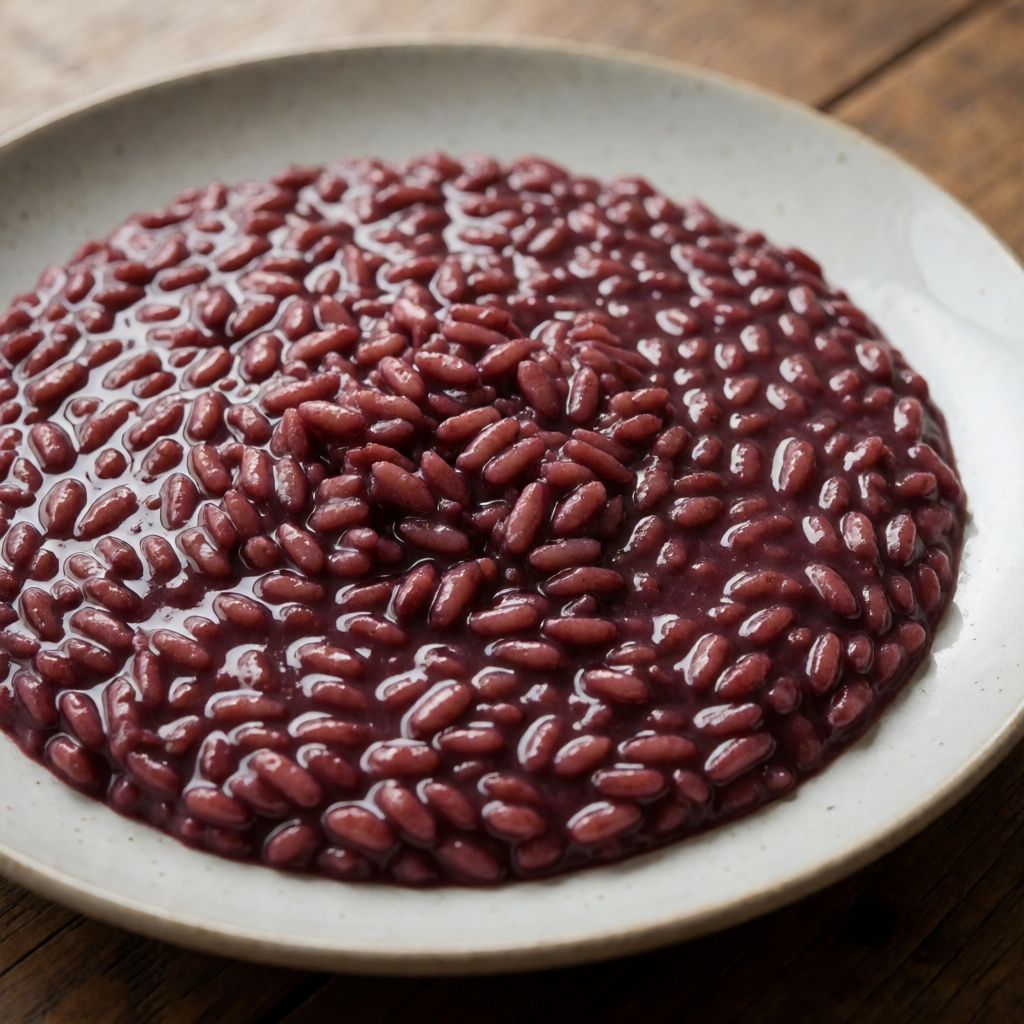
 AI photo
Barolo Risotto
A rich, wine-stained risotto made with Barolo, a bold Italian red.
Labels are worked out automatically from the ingredients and can be wrong. Check the packaging if it matters to you.
Ingredients
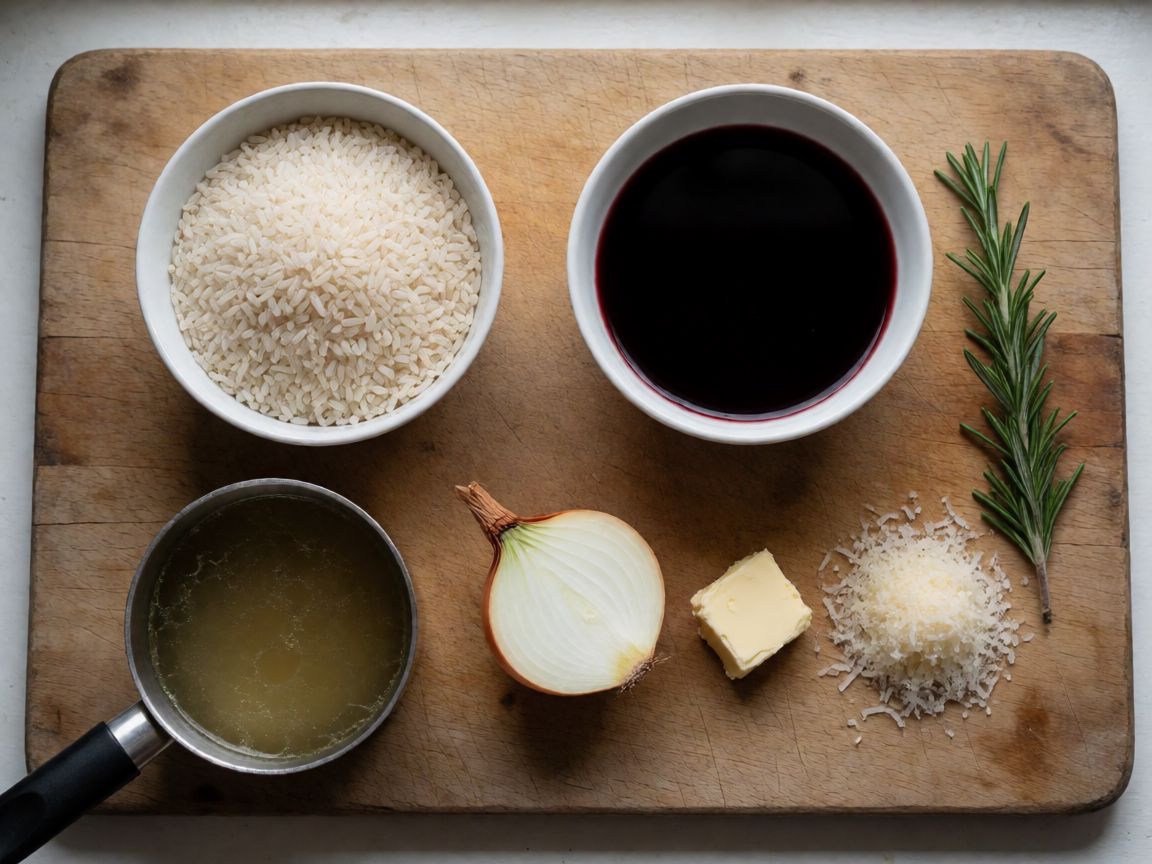
- 320 g Rice
- 500 ml Barolo
- 500 ml Vegetable stock
- 40 g Butter
- 1 pcs Onion half an onion
- Parmesan to taste
- Salt to taste
- Black pepper to taste
- 1 pcs Rosemary a sprig, for garnish









Steps
Put the vegetable stock on to simmer in a tall, roomy pot.
Melt the butter in a frying pan.
Finely dice the onion and add it to the pan with the butter.
Add the rice and toast it for a few minutes.
Pour in the Barolo, stir and raise the heat.
Once the wine comes to the boil, lower the heat and wait until it is fully absorbed.
Gradually ladle in the vegetable stock in small amounts, adding more as the rice starts to dry out.
20 minStir in the salt, black pepper and Parmesan.
Add a little more butter and mix well.
Plate up and garnish with a sprig of rosemary, if liked.
Risotto al Barolo is Piedmont doing what Piedmont does: it has a mountain of good wine and not much money for meat, so the wine goes in the pot instead of the glass. This is risotto turned the colour of a bruise — deep purple-red, faintly bitter, built around a wine with real tannin and backbone rather than a generic red.
What decides whether it works isn't the wine's price, it's the rice's starch and your patience with the ladle. You need a short-grain rice that releases starch slowly and holds its shape while it does — that's the whole mechanism of a creamy risotto, not a splash of cream at the end. Add stock too fast and the grains boil rather than swell; add it too slowly and they catch and turn gluey on the pan bottom.
The wine stage is the part people rush. You tip in the Barolo, bring it up to a boil, then you wait — properly wait — until it's gone, absorbed into the rice, not just reduced in the pan. Skip that and you get risotto that tastes of raw alcohol sitting on top of the rice instead of wine cooked into it.
Some say any dry red will do here. No — Barolo brings tannin and a bitter, almost tarry depth that plain fruity red doesn't have, and that bitterness is what keeps the dish from turning into sweet rice pudding with a blush.
Rice: you want a variety bred for risotto — Arborio, Carnaroli, Vialone Nano — because it's starchy on the outside and firm at the core. That outer starch is what thickens the liquid around it into sauce as you stir; a long-grain rice washes that starch off at the first rinse and gives you fried rice in wine, not risotto. Toasting it in the butter before any liquid goes in matters too: that minute or two seals the grain's surface just enough that it won't collapse into mush later, and it's where the rice first starts smelling faintly of toasted nuts rather than raw starch.
Barolo: it's a Nebbiolo wine from Piedmont, tannic, high acid, built to age — the "king of wines" label is marketing, but the tannin and acid are real and they're doing work here, cutting the richness of butter and cheese. If a bottle of Barolo is beyond what you'd spend on a midweek dinner, the honest substitute is any dry, full-bodied red with real backbone — a Nebbiolo cousin, a Barbera, a decent Chianti — not because tradition demands Barolo specifically, but because a thin, sweet red leaves the dish tasting like rice cooked in diluted juice.
Stock: keep it simmering in its own pot the whole time, not cold at the side. Ladling in cold liquid stops the cooking dead each time and you end up extending the process and still landing on unevenly cooked grains — some kernels blown out, others still chalky in the middle. A light vegetable stock is right here because the wine is already loud; a heavy meat stock would be fighting it rather than carrying it.
Onion: just half, finely diced, cooked gently in the butter before the rice goes in — its job is sweetness and body in the base, not to be noticed as onion once you're eating. Butter rather than oil is traditional partly for flavour, partly for history — Piedmont is dairy and rice country, butter was the local fat, olive oil belongs further south. Any neutral butter works; don't reach for a strongly flavoured European butter that fights the wine.
Parmesan and the final knob of butter: added off the heat, right at the end, and this is where the texture actually gets made. Cheese and cold(ish) butter stirred in vigorously is what makes risotto look like it's got cream in it when it hasn't — it's emulsion, not dairy fat from a bottle. If you add the Parmesan too early, over heat, it can split and go grainy instead of silky, so hold it back. The rosemary on top is decoration, nothing more — leave it off without guilt if you haven't got a sprig going spare.
A note on your hob: you're not in a Piedmontese kitchen with a kazan-wide pan and endless gas. A domestic ring runs hotter at the edges than the middle, so stir properly, not just swirl the ladle — otherwise the rice at the rim scorches while the centre's still swimming. And budget real time for the stock-adding stage; twenty minutes is the lower bound in the recipe, not a target to beat. Risotto punishes impatience specifically — rush the ladling and you get rice that's cooked on the outside and bullet-hard in the middle, no amount of Parmesan fixes that afterwards.