
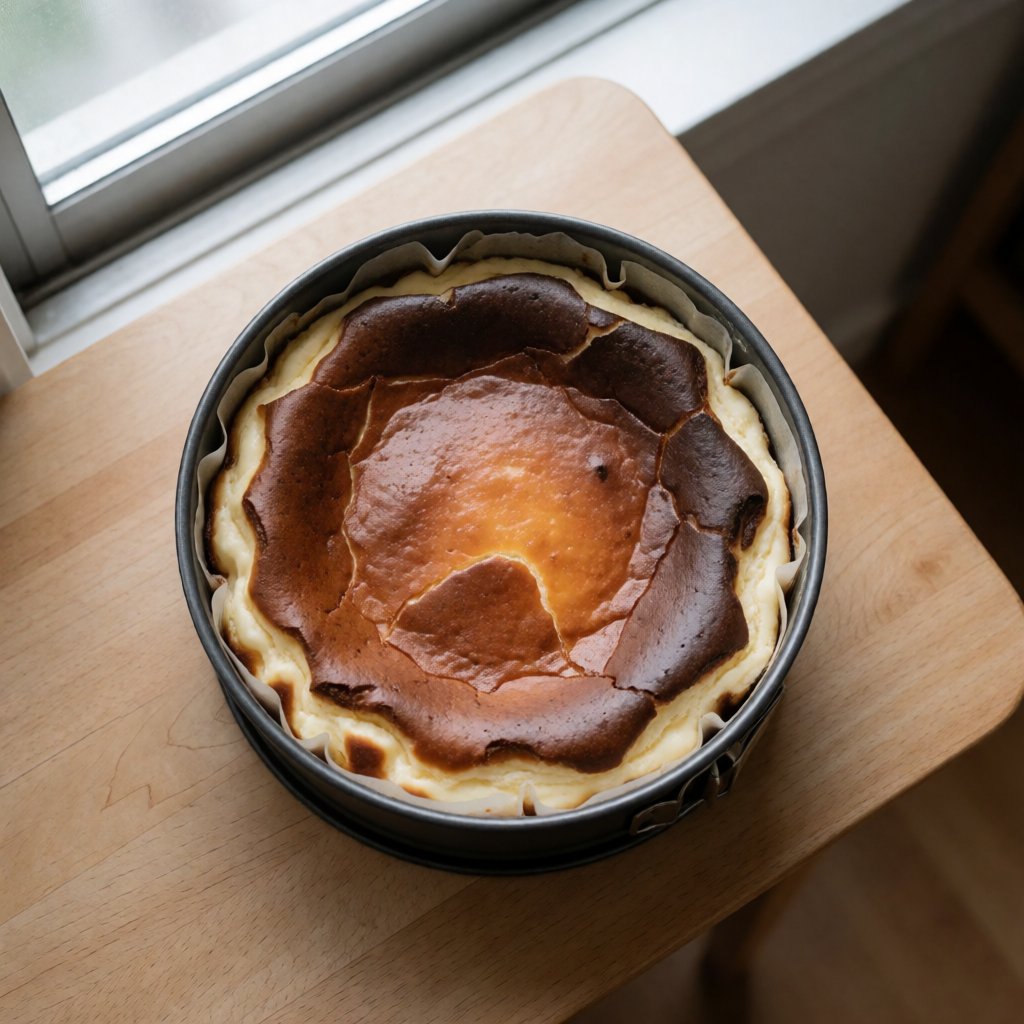
 AI photo
Basque Cheesecake
A creamy Basque-style cheesecake with a deliberately burnt top, soft and wobbly in the centre.
Labels are worked out automatically from the ingredients and can be wrong. Check the packaging if it matters to you.
Ingredients
- 300 g cream cheese
- 80 g caster sugar
- 2 pcs eggs
- 120 ml double cream
- 1 tbsp plain flour
- 1 tsp vanilla extract to taste






Steps
Beat the cream cheese with the caster sugar, then add the eggs one at a time, followed by the double cream, plain flour and vanilla extract.
Pour the mixture into a tin lined with baking parchment.
Place the tin in the oven at 200°C for 30–35 minutes, until the top is dark and the centre still wobbles slightly.
35 minRemove the tin from the oven.
Let it cool in the tin.
What was changed
vanilla extract was swapped in, as vanillin is not something British shoppers would find on the shelf.
This is the San Sebastián cheesecake - no biscuit base, no pale ivory slice sitting primly in the fridge. The top goes almost black, the inside stays loose, closer to a baked custard than the cheesecake most people in Britain grew up with. That contrast - burnt, bitter sugar against soft sweet cream - is the whole dish, not a mistake you're trying to hide.
What decides whether it works is the oven, and your nerve to trust a wobble over a clock. At 200°C the surface sugars caramelise and scorch fast while the inside is still mostly liquid, held together by egg and a single spoon of flour. Pull it when the centre moves like not-quite-set jelly - not jam, not liquid - because that quiver is the sign the custard will finish firming in the tin as it cools. Thirty-five minutes is where you start checking, not where you stop.
Some say a cheesecake needs a water bath, to stop it cracking and scorching. Not this one - no, because the crack and the scorch are the point. This thing is baked hot and uncovered precisely so the top burns before the centre sets; a water bath would shield it from the exact thing you're trying to get.
And don't line the tin neatly. Scrunch the parchment, let it stand proud above the rim with creases in it. The mixture puffs up hugely in the oven, climbs those creases, then collapses as it cools - a flat, pressed lining would tear or glue itself to the batter on the way down. The rough, crumpled sides aren't a flaw. They're how you know it's the right recipe.
Cream cheese is the backbone here, so use a proper full-fat block type, not the whipped "light" tub meant for spreading on toast. Light versions carry extra water and stabilisers so they stay soft in the fridge; bake that water out and you get a grainy, weeping curd instead of a dense set. The criterion for a substitute is a soft fresh cheese, high fat, low moisture, no taste of its own - mascarpone works but is richer and sweeter, so pull back the sugar a touch; ricotta needs draining through a sieve first or it waters the whole mixture down.
Caster sugar dissolves into the cheese fast, no gritty residue, which matters in a batter that isn't whisked for long. It does two jobs: sweetens the inside, and becomes what burns on top. Granulated sugar will do if blitzed a few seconds first - left coarse, it caramelises unevenly, some patches bitter and black, others still pale.
The two eggs are what actually sets this custard - cheese and cream alone, however cold, would never hold a shape. Add them one at a time, beating each in before the next. Eggs tipped into a half-mixed batter take longer to combine, and that unevenness shows up later as pale flecks on the baked surface.
Double cream carries the fat that keeps the inside soft rather than rubbery - at close to 48% butterfat it loosens the cheese without thinning the whole thing out. Single cream is too watery for this job; if that's all you've got, use less of it and make up the body with a little extra cream cheese, or just accept a looser, almost pourable centre - not a failure, a different dish.
The flour is barely there, one spoon, enough to trap the moisture that would otherwise weep out as the custard cools and firms. Drop it entirely and you get a softer, nearly liquid middle - some bakers do this on purpose. Swap in half the amount of cornflour if that's what's in the cupboard; it thickens harder, gram for gram.
Vanilla is only flavour - add it or skip it, a cheesecake this dark and sweet barely needs the argument made for it. The real patience is afterwards: let it sit in the tin, don't cut it while it's warm. The custard keeps firming as the heat drops out of it, and a knife through a warm centre gives you soup on a plate instead of a slice. For two people this quantity is generous - more realistically four modest wedges with Sunday tea than two heroic ones, but nobody in a British kitchen has ever complained about extra cheesecake in the fridge.
·