
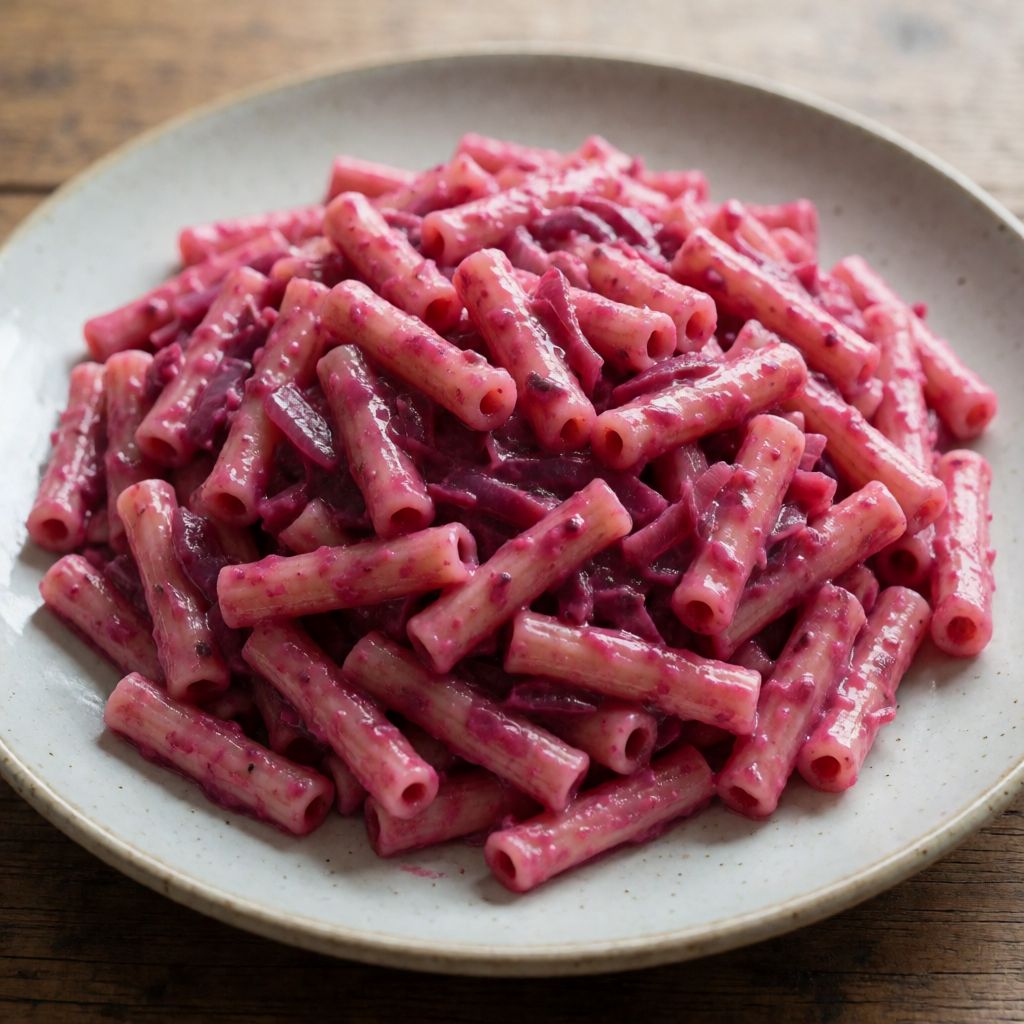
 AI photo
Pasta with Beetroot
A vibrant pink pasta made with beetroot, shallot and white wine, finished with cream, lemon and parmesan.
Labels are worked out automatically from the ingredients and can be wrong. Check the packaging if it matters to you.
Ingredients
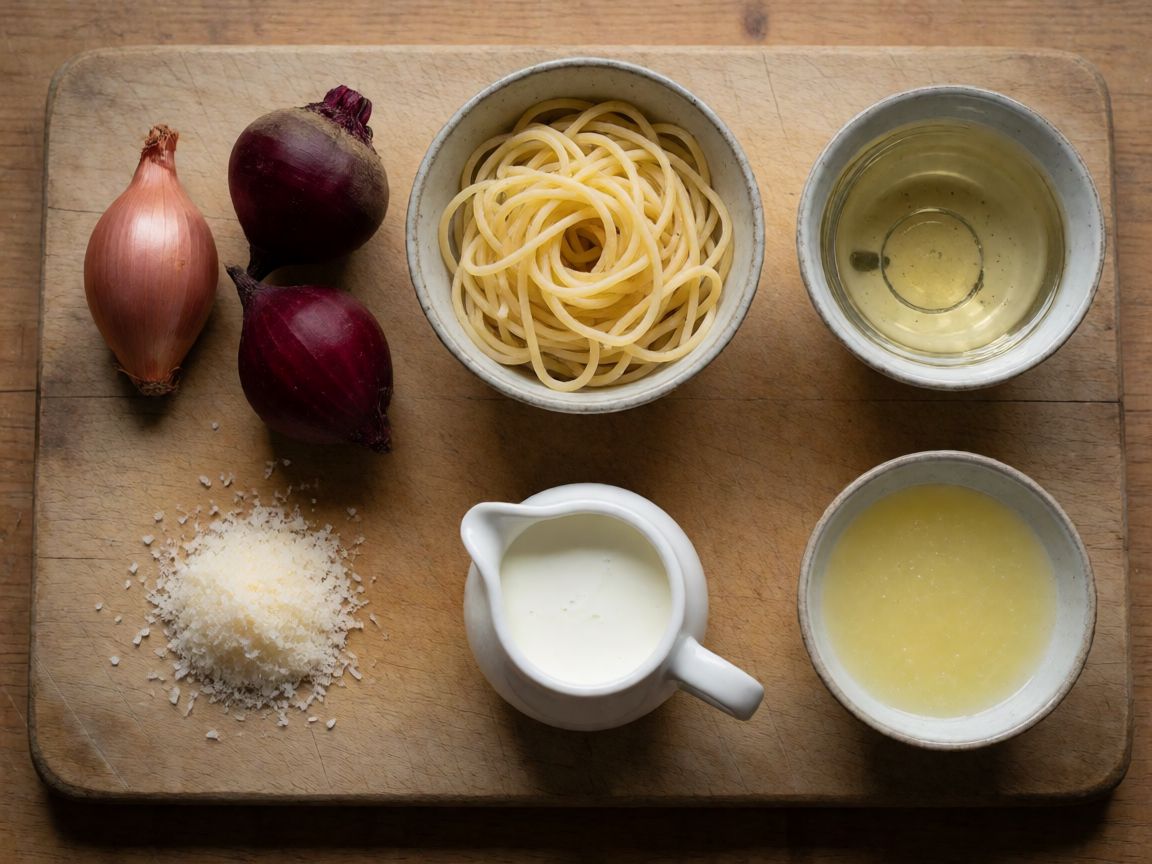
- 1 pcs Shallot
- Olive oil to taste
- 2 pcs Beetroot or 3
- 360 g Pasta
- 250 ml White wine
- Salt to taste
- Black pepper to taste
- 60 g Cream
- 1/2 pcs Lemon juice juice of half a lemon
- Parmesan to taste









Steps
Boil the pasta in salted water until al dente.
Slice the already-cooked beetroot.
Heat the oil in a frying pan, add the chopped shallot and sauté until golden.
Pour in the white wine and let it evaporate.
Add the sliced beetroot, season with salt and pepper and cook for 2-3 minutes.
3 minTransfer to a blender, add the cream, blitz until smooth and adjust the seasoning.
Return the beetroot sauce to the pan and add the lemon juice.
Toss the drained pasta in the beetroot sauce.
Serve, garnished with basil and parmesan.
This is pasta coated in a beetroot cream, not tomato — a French bistro move (shallot, wine reduction, cream) bolted onto a vegetable that belongs to borscht and Sunday-roast trimmings. The colour does the talking before the fork does: a deep magenta that goes dull and brown if you push it too far, stays jewel-bright if you don't.
What decides whether it works is balance, not cooking skill. Beetroot is sweet, almost sugary when it's already soft — the wine and lemon are there to cut that sweetness, not decorate it. Too little acid and the dish tastes like baby food with pasta in it. Too much and you've made a vinaigrette. The cream's job is to carry fat across the tongue so the sweetness and the acid don't fight each other, they just sit side by side.
Some say beetroot for a sauce like this has to be roasted for an hour to "concentrate the flavour." No — this recipe uses beetroot that's already cooked, straight from the bag, and that's not a shortcut, it's the right tool. The actual cooking that matters here happens in the pan afterwards: the shallot going gold, the wine losing its rawness, the cream turning from liquid to something that clings. Roasting the beet yourself adds an hour and changes nothing the blender can't fix in thirty seconds.
Beetroot: use the plain cooked kind sold vacuum-packed in the chiller cabinet — soft, purple, no liquid sloshing around it. Do not reach for the jarred pickled beetroot sitting next to it on the shelf; that one's swimming in vinegar and sugar syrup and will throw the acid balance of the whole dish out before you've added a drop of lemon. If all you can find is raw beetroot, boil or steam it whole, skin on, until a knife slides in without resistance — that's the only honest doneness test for beetroot, there's no bend-and-snap shortcut like with a carrot.
Shallot: milder and sweeter than onion, breaks down faster, which matters because it only gets a couple of minutes before the wine goes in. Sauté it in oil until it turns from white to pale gold — not brown. Brown here means the sugars have gone past caramel into bitter, and bitter shallot will sit under the beetroot's sweetness like a stain you can't wash out. No shallot, use the mildest onion you've got, finely chopped, and give it a minute longer.
White wine: its job is acid and aroma, and "let it evaporate" means exactly that — keep it moving in the pan until the raw alcohol smell is gone and what's left is a few spoonfuls of something closer to syrup. That's what deglazes the shallot's fond and gives the sauce backbone. No wine in the house, a splash of wine vinegar cut with water does the acid job, though you lose the fruit; cider vinegar works at a pinch too.
Cream: 60g for four people is a binder, not a bath — enough to turn a purée into a sauce, not enough to turn it beige. Double cream holds together under heat far better than single, which is thin and prone to splitting the moment acid and heat meet it together. If you're using single cream, be gentler with the reheating, or finish off the heat entirely and let the pan's warmth do the work.
Lemon juice: goes in after blending, which is deliberate — hit the beetroot with acid too early and alongside too much heat and you risk the cream curdling on top of everything else. Added at the end, off the boil, it just sharpens the finish and stops the dish being one-note sweet.
Pasta and parmesan: 360g for four is the ordinary 90g-a-person measure, nothing unusual. Any shape with enough surface to hold a sauce rather than let it run off works — a flat or short twisted pasta does better here than something too smooth. Parmesan at the end should be grated off a block yourself if you can; the pre-grated bagged stuff has anti-caking starch dusted on it and sits on top of a hot sauce instead of melting into it, which rather defeats the point of putting it there.