
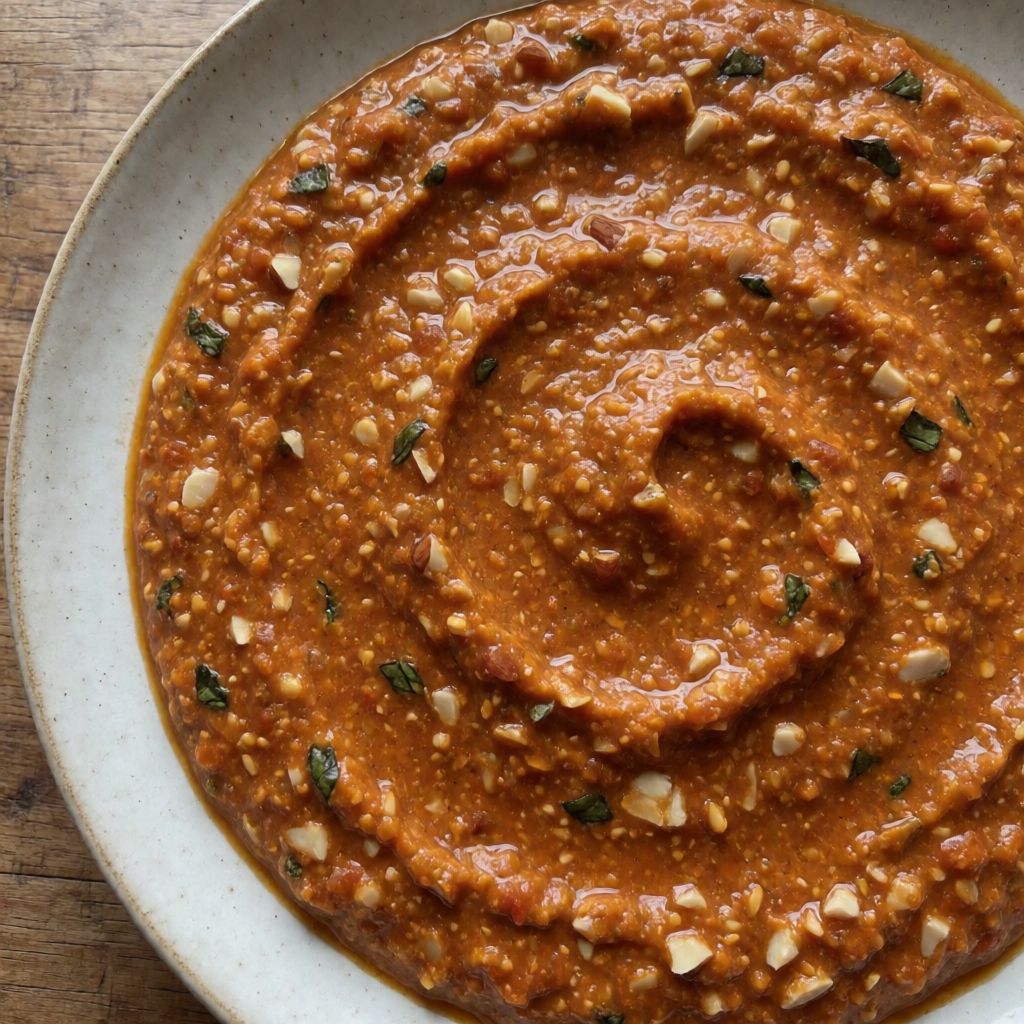
 AI photo
Roasted Pepper and Almond Pesto
A vibrant pesto made from roasted bell peppers, almonds and basil, great on pasta or toasted bread.
Labels are worked out automatically from the ingredients and can be wrong. Check the packaging if it matters to you.
Ingredients
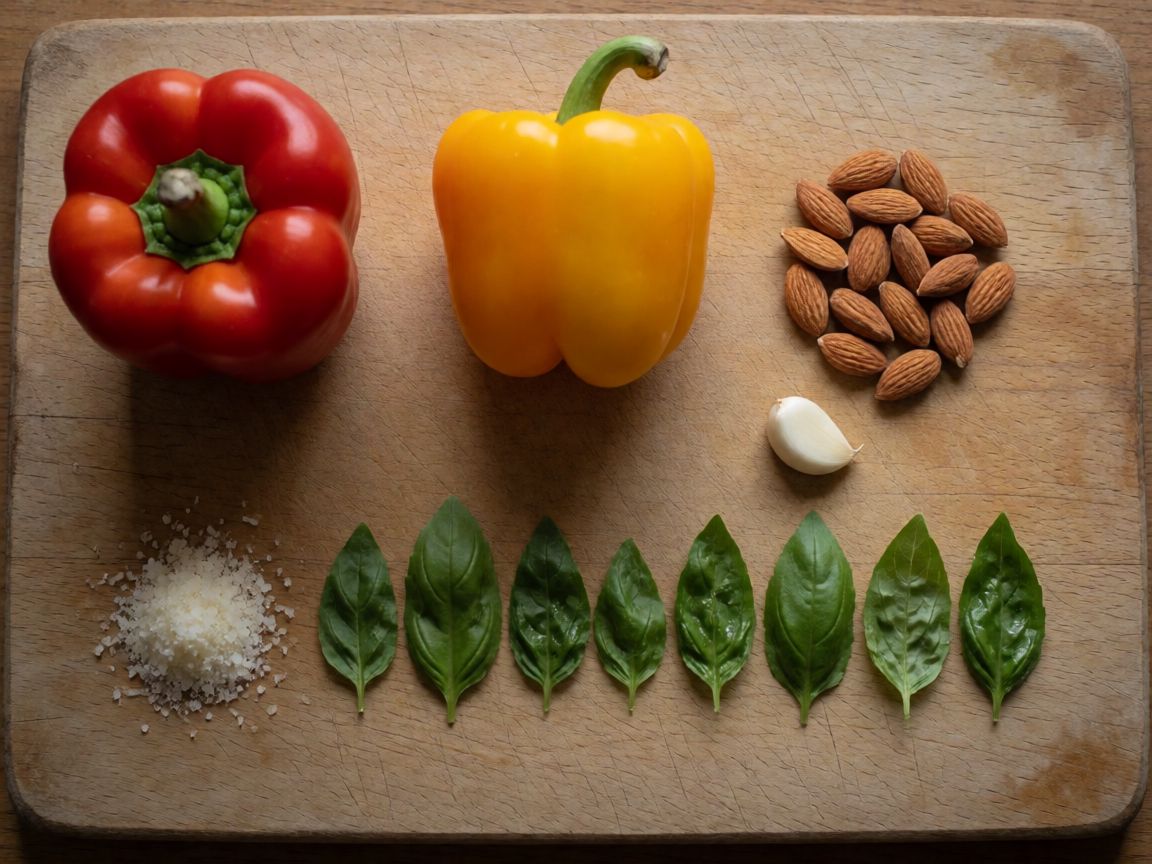
- 1 pcs Bell Pepper
- 1 pcs Yellow Bell Pepper
- 50 g Almonds
- 1 clove Garlic
- 10 pcs Basil washed and dried leaves
- 1 tbsp Parmesan
- 3 tbsp Olive Oil
- Salt to taste







Steps
Wash the peppers thoroughly under running water, pat dry with paper towel, and place in a greased baking dish.
Roast the peppers in the oven at 180°C for 40 minutes.
40 minOnce the peppers have cooled, peel off the skin, remove the seeds and white membranes, then cut into thin strips.
Transfer the peppers to a blender, add the garlic, olive oil, parmesan, basil and almonds.
Season with salt and blend until smooth and creamy.
This is not really pesto in the old sense — "pesto" means pounded, and the original is basil, pine nuts, garlic, cheese and oil, crushed in a mortar until the basil bleeds green into everything else. Here basil is almost a cameo. The real body of the sauce is roasted pepper, sweetened and softened in the oven, with almonds doing the work pine nuts usually do. Call it a roasted-pepper sauce wearing pesto's name, and nothing is lost by being honest about that.
What decides whether it works is the pepper, not the blender. "180°C for 40 minutes" is not a stopwatch instruction, it's shorthand for a visible change: the skin blisters, goes loose and papery, maybe scorches in patches, and the pepper itself slumps a little in the dish. That's the moment to trust, not the timer. Pull it out early because the clock hit 40 but the skin is still tight and shiny, and you'll be fighting it with a knife afterwards — tearing flesh, losing juice, and the sauce never gets the smoky-sweet depth the whole thing is built on.
After roasting, cover the peppers before you try to peel them — a plate over the bowl does the job of a lid most flats don't have for this kind of dish. Ten minutes of trapped steam finishes loosening the skin so it comes away in sheets. Skip that and you'll be scraping with a thumbnail under the tap, washing flavour down the drain along with the skin.
Peppers: colour is mostly cosmetic — red and yellow roast about the same, both sweeten as the heat breaks down their structure. What matters is the pepper itself: it should feel heavy and firm for its size, taut skin, no soft spots. An old, slightly wrinkled pepper roasts leathery instead of silky, because it's already lost the water that would otherwise turn to steam and separate the skin for you.
Almonds: fifty grams is a small handful, enough to thicken without taking over. Blanched (skinless) almonds give a paler, smoother sauce; skin-on almonds add a faint bitterness and visible fleck, which some people like and some don't — that's taste, not a rule. The recipe doesn't ask you to toast them, so I won't invent that step for you, but raw almonds can taste a little flat and waxy next to roasted pepper's sweetness; a dry pan over heat until they smell nutty is a reasonable instinct if you want more from them. As a substitute, look for any nut with a dry, oily crunch and not much flavour of its own — cashew or blanched hazelnut both work. Walnut doesn't; its bitterness fights the pepper instead of supporting it.
The classic Genovese pesto uses pine nuts, which have always been expensive — they come from the stone pine, a slow tree, hand-harvested cone by cone. Swapping in almonds here isn't a shortcut or a compromise, it's the same economic sense that's shaped most regional cooking: use what grows nearby and costs less. In a British supermarket that's almonds, every week, at a sane price. Pine nuts, less so.
Basil has to be fresh — the whole point of the leaf is the oil in it, and that oil only releases when the leaf is bruised or cut while it's still alive with moisture. Dried basil in a blender just turns to dust; it won't do the job. If you have none, parsley gives you green and freshness without basil's aniseed note — a different sauce, but an honest one, not a fake copy.
Parmesan here is a tablespoon, which tells you it's seasoning, not bulk — salt and a savoury backbone, not the main flavour. Any hard, aged cheese with a granular bite and salt of its own will do the same job: pecorino, grana padano, whatever's in the fridge door.
Olive oil never gets heated in this recipe, so its own flavour ends up straight on your tongue, undisguised. Use one you'd be happy dipping bread into — a real extra virgin, not the flavourless bottle kept for frying. And when you blend: some say run it hard and fast for a smooth minute and be done — no, because the blade spins fast enough to heat the basil through friction alone, and that heat dulls both its colour and its flavour, turning bright green toward khaki and bright toward bitter. Pulse it in short bursts, scrape the sides, check the colour. Smooth and creamy is the target the recipe sets, but it should look like it was made quickly and gently, not cooked by the blender.