
 AI photo
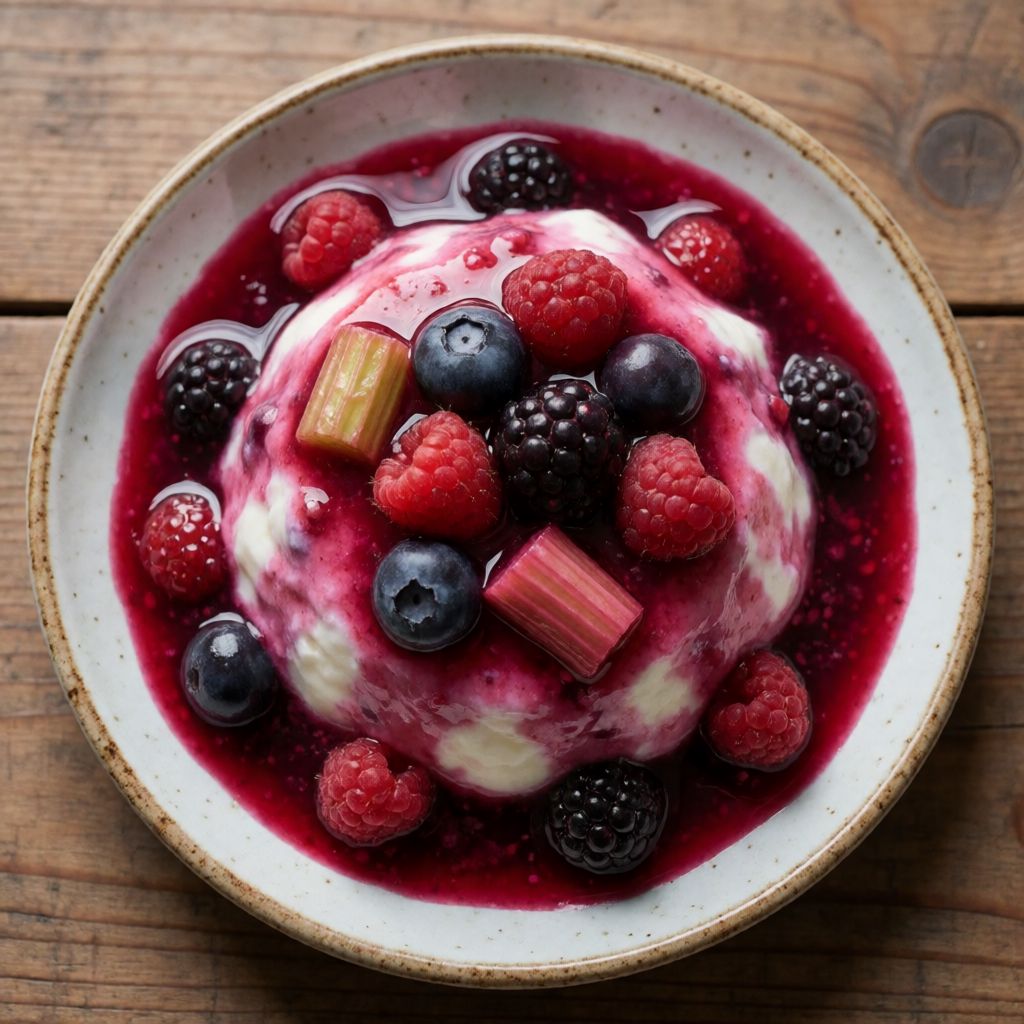
Berry Kissel with Cream
A chilled berry and rhubarb kissel, thickened with potato starch and served with cream.
Labels are worked out automatically from the ingredients and can be wrong. Check the packaging if it matters to you.
Ingredients
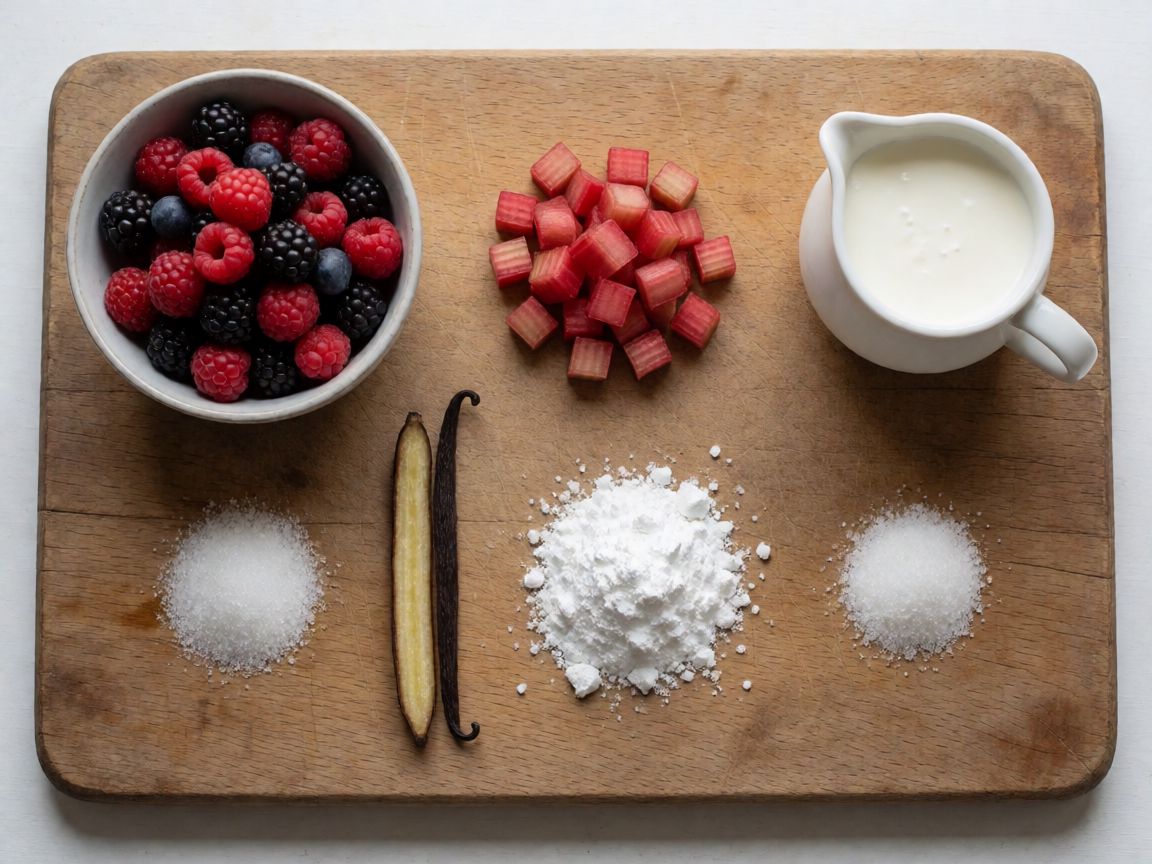
- 600 g mixed berries seasonal mix
- 100 g rhubarb cut into 0.5 cm cubes
- 300 ml water
- 125 g caster sugar
- 0.5 pcs vanilla pod
- 1.5 tbsp potato starch
- 100 ml water cold
- 1 tbsp caster sugar for sprinkling on top
- 200 ml double cream for whipping, or to serve cold







Steps
Put the berries, rhubarb, water, sugar, vanilla seeds and vanilla pod into a saucepan and stir.
Leave for 30 minutes so the ingredients release their flavour.
30 minBring to the boil over medium heat and simmer very gently for 3-4 minutes. Skim off any foam as needed.
4 minRemove the pan from the heat. Stir the potato starch into the cold water, then carefully pour the mixture into the hot kissel in a thin stream, stirring as you go.
Pour the kissel into a bowl, sprinkle with sugar and chill in the fridge for at least 3 hours.
180 minServe with cold double cream or whipped double cream.
What you're making is a Russian kissel — a fruit stew thickened just enough with starch to hold a spoon shape, then chilled and finished with cream. It sits somewhere between a compote and a jelly: looser than a jelly, thicker than a compote. It came about because fruit was cheap and eggs weren't, so instead of a custard or a mousse you reach for a spoonful of starch, the poor relation's thickener that costs almost nothing and asks almost nothing of you.
Two decisions decide whether it works, and neither is about minutes. First: you let the berries, rhubarb and sugar sit together for half an hour before any heat touches them. This isn't resting for its own sake — sugar pulls water out of the fruit by osmosis, and that water carries flavour with it into the syrup before the fruit ever boils. Skip this and you boil flavourless fruit in plain water, then try to fix it with sugar afterwards, which never tastes the same.
Second: the starch slurry goes in off the heat, in a thin stream, stirring. Starch thickens because its granules swell with hot liquid — that happens once, fast, and it's finished. If you dump cold slurry into a pan still roaring away, part of it clumps into little bullets that never dissolve, and part of it keeps cooking past the point of maximum thickness and starts to thin again, especially with rhubarb's acid working against it. Off the heat, thin stream, steady stir — that's the whole trick, not a ritual.
Berries, 600g, any mix that's in season or in your freezer — frozen is fine, it's often riper than what you'd buy unripe in a UK supermarket in March, and it's already partly broken down, which only helps the maceration step. Don't rinse and dry fussily; a little extra water from unthawed berries won't hurt a dish that's mostly liquid anyway.
Rhubarb does a specific job here: sourness. Berries alone can taste flat and sweet; rhubarb's acid gives the kissel a backbone, the way a squeeze of lemon lifts a stew. It also cooks faster into raggedness than most berries, which is why it's cut small — 0.5cm cubes soften in the same few minutes the berries need, instead of turning to string. If you've no rhubarb, a tablespoon of lemon juice gets you most of the way, though you lose the little bit of texture rhubarb leaves behind.
Sugar, 125g plus a tablespoon for the top, is doing two unrelated jobs and it's worth knowing which. The bulk of it, added before heat, drags juice out of the fruit by osmosis — more sugar, more juice released, more flavour in your syrup. The spoonful on top at the end is purely to stop a skin forming as it cools; it has nothing to do with sweetness. Taste your fruit before committing to 125g — late-season berries can be sharp, early ones already sweet, and the number on the recipe assumes an average you may not have.
Vanilla, half a pod, scraped and the pod itself left in to simmer. The seeds give flavour fast; the empty pod, simmered along with everything else, keeps giving for the whole cook — it's not a wasted half. If you've only got extract, add it at the very end, off the heat, because its aroma is alcohol-carried and boils away if you put it in too early. Vanilla sugar, if that's what's in your cupboard, works too — just account for the extra sugar it brings.
Potato starch, a tablespoon and a half, mixed into cold water before it goes anywhere near heat — this is non-negotiable, because starch poured dry into a hot pan clumps instantly and you'll be sieving lumps out of your dessert. Potato starch sets clear and glossy, which is why it's traditional here rather than cornflour, which sets more opaquely and a touch gummier, or plain flour, which needs far more of it and tastes faintly of itself even cooked. If potato starch isn't in your cupboard, cornflour will thicken the same way in roughly the same quantity — you'll just get a slightly cloudier kissel, not a worse-tasting one.
Double cream, 200ml, is there because it's the only cream in a UK fridge with enough fat to whip into something that holds its shape, or to pour thick and cold without it running straight into the fruit. Single cream won't whip at all — it hasn't got the fat for it — so if whipped is what you want, don't substitute down. If you're pouring rather than whipping, you've more freedom: any cream, or even full-fat crème fraîche for a sharper edge against the sweet fruit, will do the job a kazan full of tradition never actually required.