
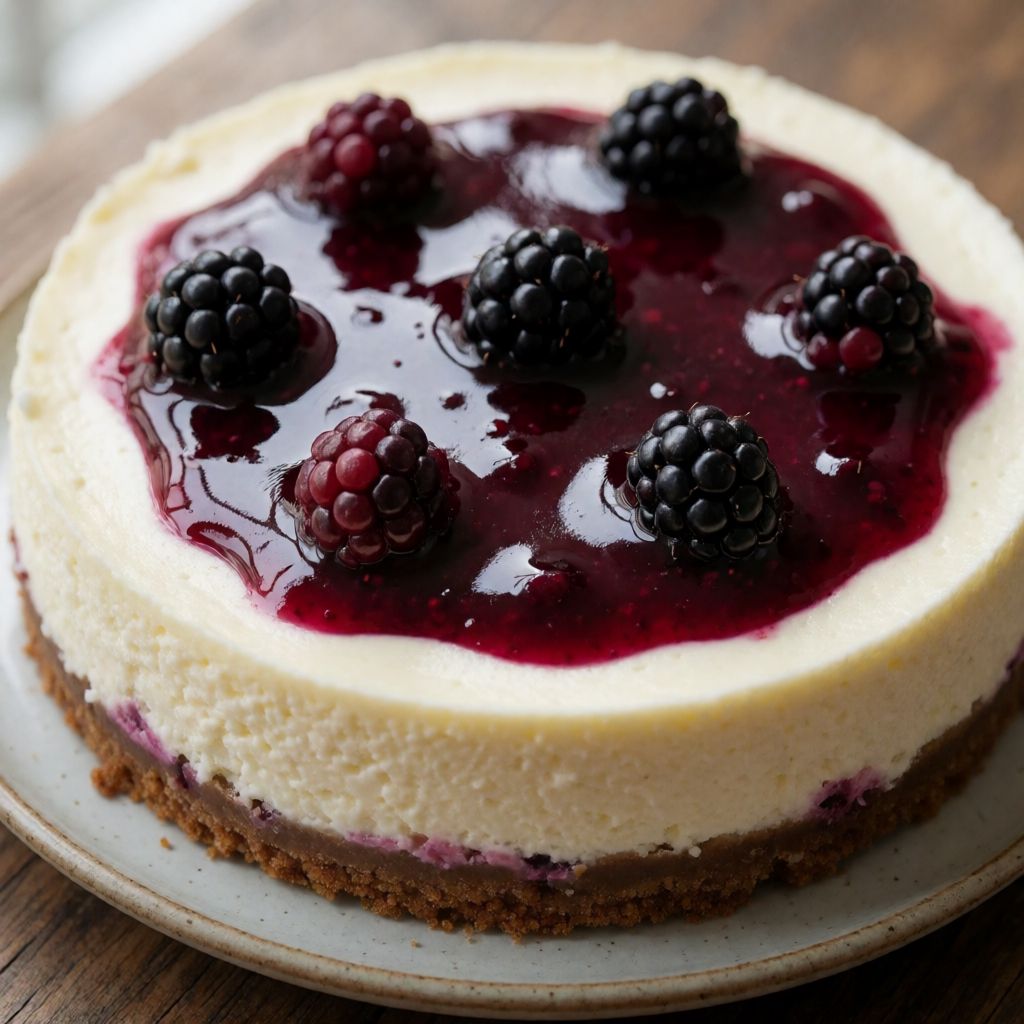
 AI photo
Blackberry Cheesecake
A no-bake cheesecake on a digestive biscuit base, topped with a glossy blackberry sauce.
Labels are worked out automatically from the ingredients and can be wrong. Check the packaging if it matters to you.
Ingredients
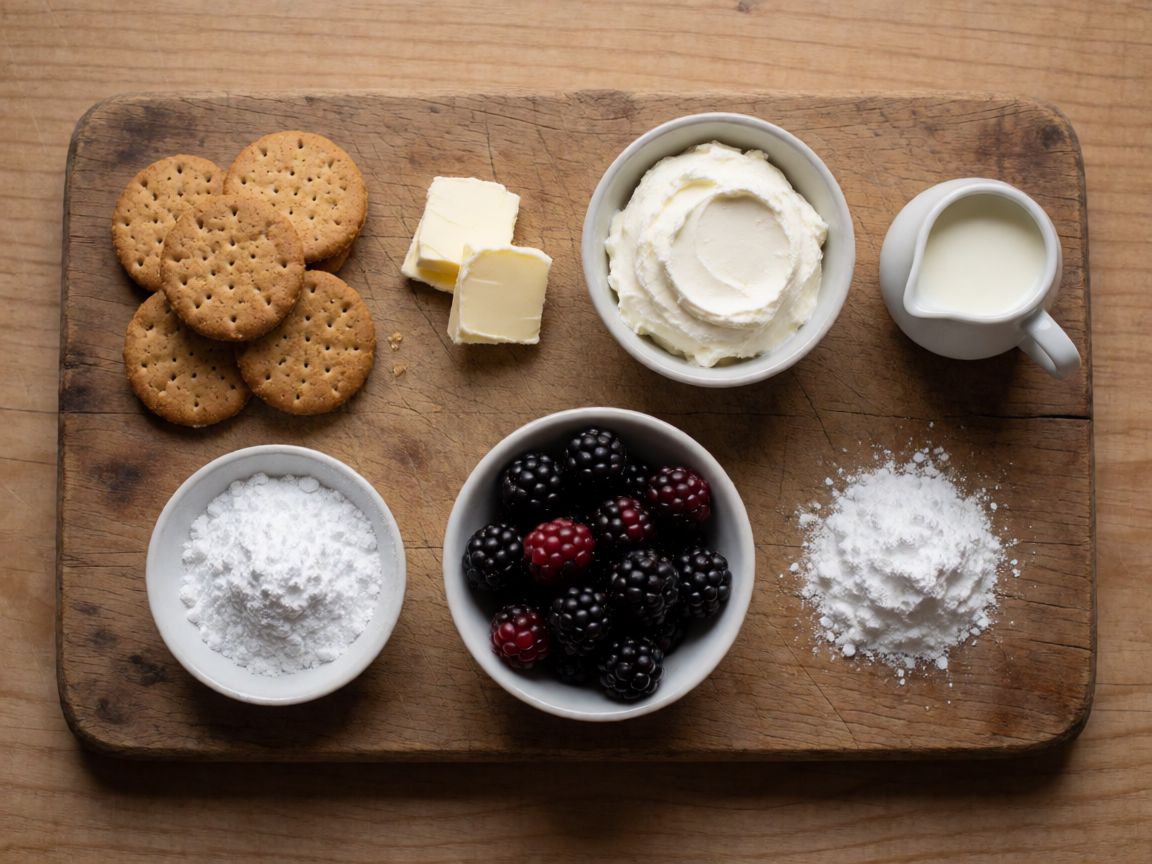
- 180 g Digestive biscuits
- 100 g Butter melted
- 500 g Cream cheese
- 200 ml Double cream
- 150 g Icing sugar
- 500 g Blackberries
- 100 g Icing sugar
- 18 g Cornflour
- 200 ml Water
- 1 bunch Mint to taste









Steps
Blitz the biscuits in a blender to fine crumbs. Melt the butter, let it cool, combine with the biscuit crumbs and mix.
Press the mixture into the base of a tin, pack it down firmly and chill in the fridge.
18 minWhip the double cream with the icing sugar using a mixer until thick and fluffy.
Beat the cream cheese smooth, fold in the whipped cream and mix gently.
Spoon the mixture over the biscuit base, smooth the surface and chill in the fridge.
Put the blackberries and icing sugar in a saucepan and cook over medium heat, stirring occasionally.
12 minBlend to a purée and pass through a sieve.
Mix the water with the cornflour and stir well until dissolved.
Pour the purée into the saucepan, add the cornflour mixture and cook over low heat until thickened.
Transfer the topping to a bowl and let it cool completely.
Pour the cooled topping over the cheesecake and chill in the fridge.
240 minBefore serving, decorate with blackberries and mint leaves.
This is a no-bake cheesecake, and that one word — no-bake — decides almost everything about how it behaves. There's no egg, no oven, no custard setting through heat. The whole structure stands on two things holding each other up: a biscuit base glued with fat, and a filling that's firm only because whipped cream and cold temperature are doing the job gelatine or eggs do elsewhere. Take either prop away and you get rubble on a plate, not a slice.
Some say a cheesecake needs baking to "set properly" — no, because this family of cheesecake was never meant to set by heat. It sets by fat going solid in the cold. Butter in the biscuit base and cream in the filling are both liquid-ish at room temperature and firm once chilled. That's the entire engineering. Your fridge is doing the work an oven does in a baked version, just slower and gentler.
What decides whether it works is patience at two separate moments, not one. First, the base needs real chilling time to go from "biscuit paste" to "something you can cut without it crumbling into sand" — that's the fat crystallising, and it won't hurt to give it longer than written if your fridge isn't especially cold. Second, the blackberry topping has to be fully cool before it goes anywhere near the filling, because pouring warm fruit syrup onto whipped cream and cream cheese just melts your careful mousse back into soup. Rushing either step is the single most common way this dish fails.
Digestive biscuits exist for exactly this job — they're dry, slightly sandy, and take butter without turning to paste before you've even pressed them into the tin. Any plain, not-too-sweet biscuit with a similar crumb works the same way: ginger nuts, shortbread offcuts, even plain crackers in a pinch, though you'll want to adjust sugar if you swap in something sweeter. What you're really looking for is a biscuit that crumbles into grit rather than clumps when blitzed — that's what lets the melted butter coat every piece instead of binding a few into lumps.
Butter here isn't flavour, it's mortar. Melted and cooled slightly before mixing, so it coats without cooking the crumbs, then pressed down firmly — and "firmly" matters, because a loosely packed base is really just biscuit gravel waiting to collapse under the first slice. Chilling solidifies that butter again, locking the crumbs in place. Skip the chill or rush it, and the base is still technically "set" but structurally still sand.
Cream cheese gives body and that faint tang that stops the whole thing tasting like sweetened butter. Full-fat is worth insisting on — low-fat versions carry more water, and water is the enemy of anything that's meant to firm up by chilling rather than cooking. Double cream, whipped with icing sugar until it holds its shape, is what actually aerates the filling; icing sugar dissolves into it cleanly where granulated would leave grit. Fold, don't beat, once the cream cheese goes in — overworking it knocks the air back out, and that air is the only thing stopping your filling from being dense cheesecake-flavoured fudge.
Blackberries get cooked briefly, not to "cook the fruit" exactly, but to break them down enough to purée and release their juice for sieving. The sieve isn't fussiness — it's removing the seeds that would otherwise turn a glossy topping gritty under your teeth. Cornflour mixed into cold water first, then stirred into the hot purée, is the standard way to thicken a fruit sauce without lumps: cornflour dropped straight into hot liquid clumps instantly, dissolved in cold water first it disperses evenly and only thickens once it hits heat. Low heat at that stage matters too — boil it hard and the starch can break back down, leaving you with a topping that's thin again after all that work.
Blackberries are also simply in season in late summer in Britain, which is the actual reason they turn up in a recipe like this rather than some more exotic berry — cheap, available, and good enough raw that any you keep back for decoration need no further cooking at all.
If blackberries aren't to hand, any soft berry that collapses easily under heat — blackcurrants, raspberries, a mix — will behave the same way through the same steps; just taste before committing to the sugar amount, since tartness varies a lot more between berries than texture does.