
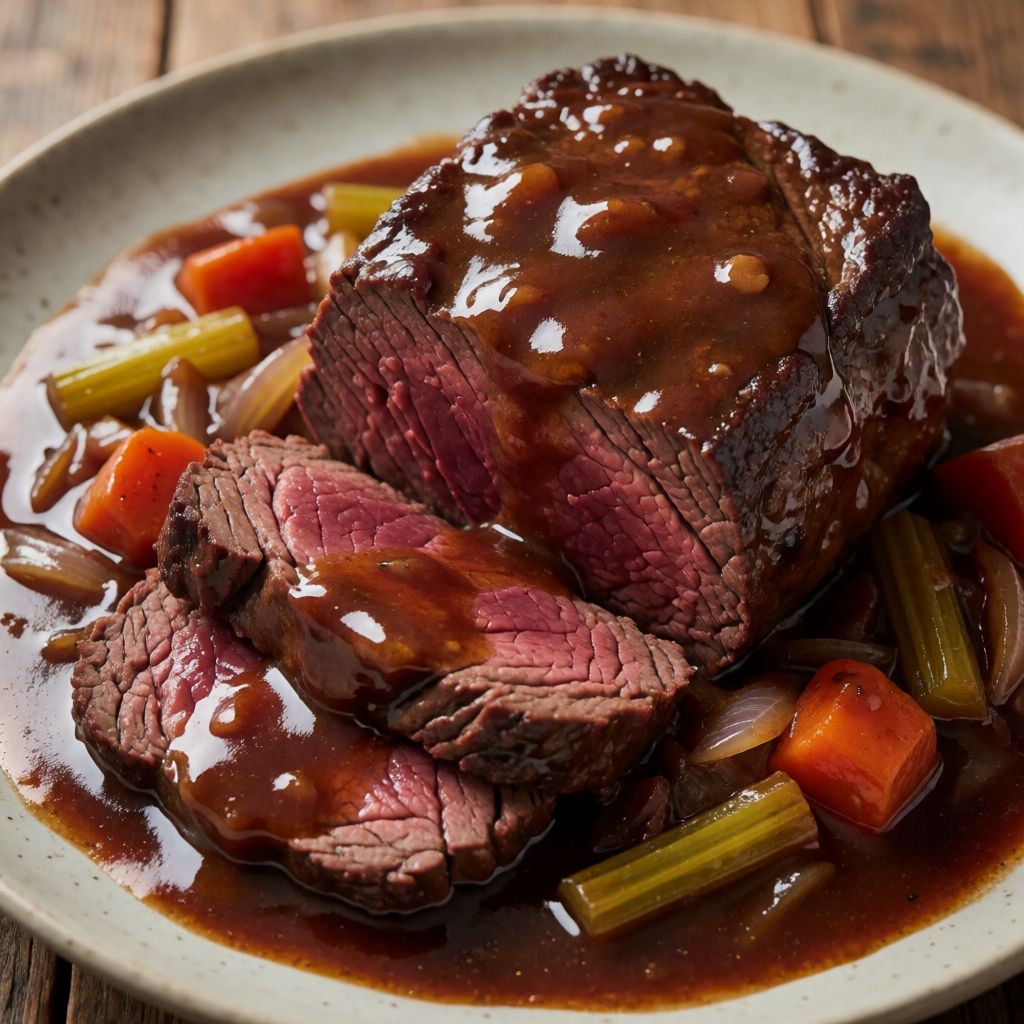
 AI photo
Beef Braised in Barolo Wine
A rich beef pot roast slowly braised in Barolo wine with aromatic vegetables and spices.
Labels are worked out automatically from the ingredients and can be wrong. Check the packaging if it matters to you.
Ingredients
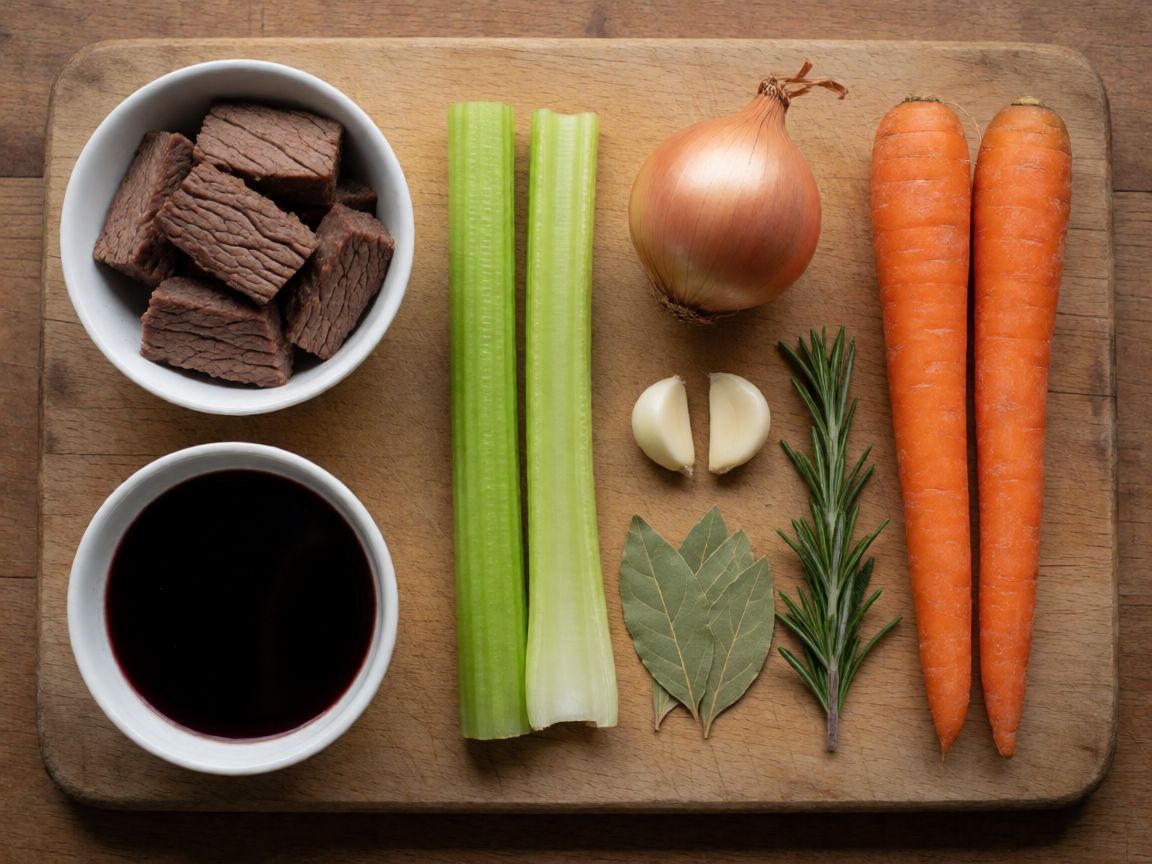
- 1 kg Beef
- 750 ml Barolo wine
- 50 g Olive oil
- 2 pcs Celery stalks
- 1 pcs Onion
- 2 pcs Carrot
- 2 clove Garlic
- 2-3 pcs Bay leaves
- 1 pcs Rosemary
- 3-4 pcs Cloves
- 1 pcs Cinnamon stick
- Salt to taste
- Black pepper to taste
- Butter to taste









Steps
Place the cloves, rosemary and cinnamon stick in a piece of cloth, forming a small spice bag.
Cut the carrot, celery and onion into large chunks, and peel the garlic.
Place the beef with the vegetables, bay leaves and spice bag in a container, then pour over the Barolo wine.
Cover the container with cling film and marinate in the fridge.
600 minDrain the marinade, keeping it aside, and transfer the beef to a frying pan with butter.
Sear the beef until golden brown all over.
Transfer the meat with the vegetables to a pot, warm through, then pour in the reserved marinade.
Cover the pot with a lid and braise gently over low heat.
60 minTurn the meat over, topping up with liquid if needed, and braise for a further 60 minutes.
60 minRemove the beef from the pot and place it on a plate.
Remove the spice bag and blend the vegetables into a smooth sauce.
Slice the beef and serve with the vegetable sauce.
This is a piece of tough beef given a second life by wine, time, and patience — the kind of dish where the meat itself is almost a pretext, and the real work happens in the sauce. You take a cut built for slow cooking, drown it in a whole bottle of Barolo for half a day, then braise it low and slow until the connective tissue that made it tough in the first place has turned into the thing that makes it rich. What decides whether this works isn't the wine, though people think it is — it's whether you had the nerve to let both the marinating and the braising run their full course without rushing either.
Some say Barolo is wasted in cooking, that you should drink the good stuff and braise with whatever's cheap and red. No — because Barolo isn't flavouring the beef, it's structurally changing it. Its tannin and acidity break down muscle fibre over those ten hours in the fridge, and its backbone of flavour — tar, rose, a kind of austere fruit — is what survives two hours of simmering and concentrates into the sauce. A thin, sweet plonk reduces to something thin and sweet. Use a wine you'd actually drink a glass of, even if it's not Barolo itself.
Start with the beef itself: you want a cut with marbling and connective tissue, not a lean, tender one. Chuck, shin, or brisket — anything sold for "stewing" or "braising" rather than "frying" — because the whole mechanism of this dish depends on collagen breaking down over hours of low heat. Put a fillet steak in here and you'd get grey, dry rope; the toughness is not a flaw you're working around, it's the raw material the method needs.
The wine is doing three jobs, not one: tenderising via acid and tannin during the marinade, flavouring the meat by slow penetration, and later becoming the sauce itself once reduced. If you can't get Barolo — it's Nebbiolo, from Piedmont, historically the wine of a region that also happens to produce good braising beef, which is no coincidence; people cook with what their valley grows — use another full-bodied, tannic red with real acidity. Something that could stand up to being reduced for two hours without collapsing into sweetness.
The vegetable trio — carrot, celery, onion — is the Italian soffritto, cut large here because they're not meant to fry down to a paste; they're meant to simmer in the marinade and braise, surrendering their sugars and body to the liquid, then get blended at the end into the sauce. This is also economics as much as flavour: offcuts and aromatics that bulk out an expensive bottle of wine into a sauce for four, stretching one cut of meat properly.
The spice bag — cloves, cinnamon, rosemary tied in cloth — is there so you get the warmth and fragrance without biting into a whole clove at the table, which nobody enjoys. Tying them up is not fussiness; it's so you can fish the whole lot out cleanly before blending, rather than picking cinnamon shards out of your sauce by hand.
On your hob, forget "low heat" as an instruction with no meaning — what you're after is the surface of the braise barely trembling, the occasional slow bubble breaking the top rather than a rolling simmer. A domestic hob runs hotter at its lowest setting than people expect, so use a heavy pot, and if you don't have a proper lidded casserole, foil pressed tight under a loose-fitting lid will do almost the same job of trapping steam so the liquid doesn't reduce to nothing before the meat is done.
Doneness here isn't a clock reading, it's a fork test: the beef should yield and start to come apart under light pressure, not spring back. If after your two hours it still resists, it needs longer, not a higher flame to hurry it — more heat just toughens the outside before the inside gives up. The butter at the searing stage, and again stirred into the finished sauce, rounds out the wine's sharper edges and gives the sauce the shine and cling you're after; olive oil alone will cook it but won't finish it the same way.