
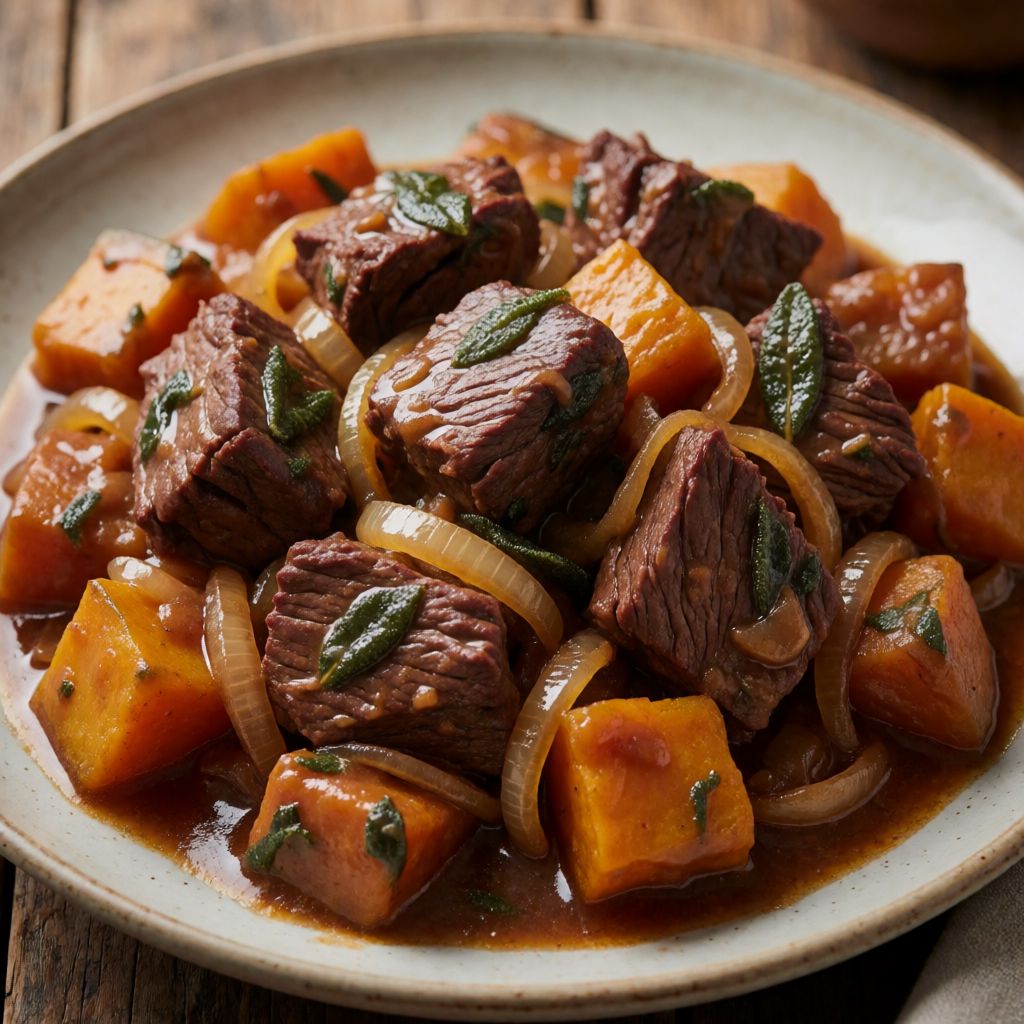
 AI photo
Braised Beef with Pumpkin
A warming braised beef with pumpkin, slow-cooked in red wine and vegetable stock until tender.
Ingredients
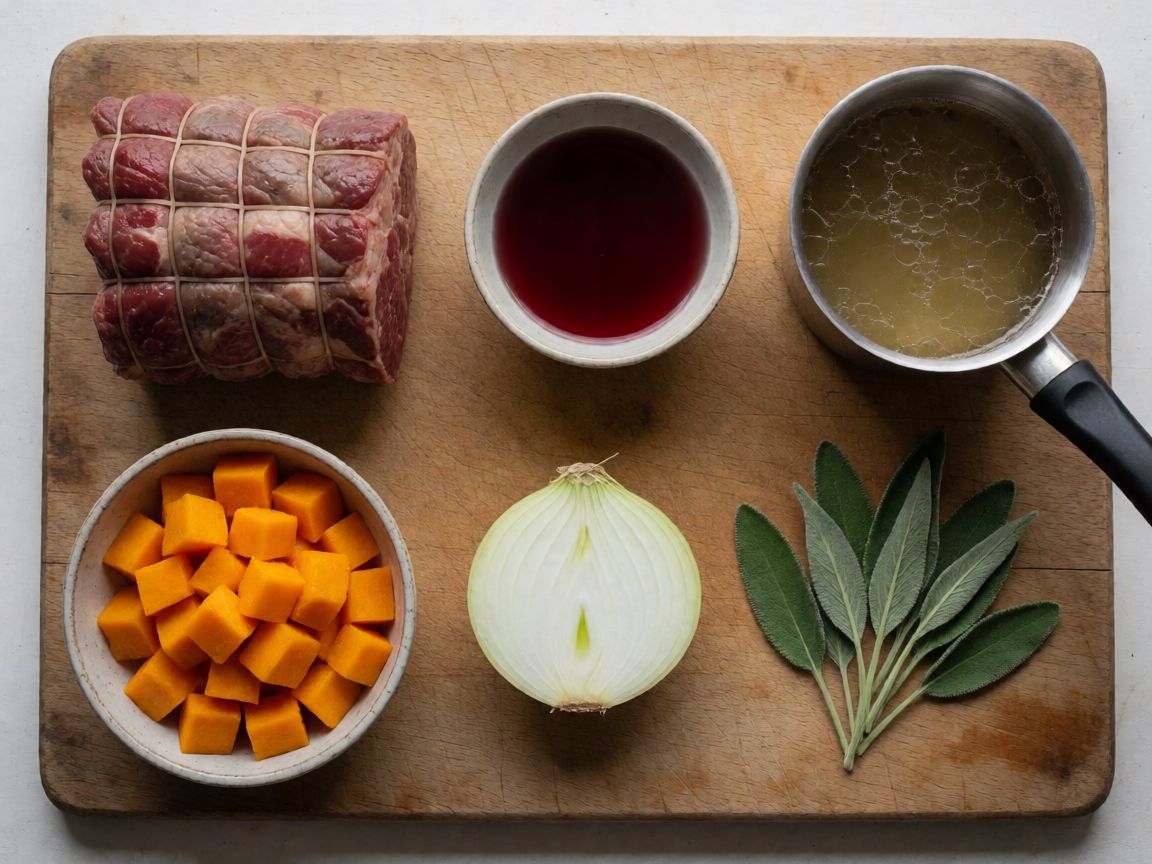
- 1.5 kg Beef a stewing joint such as chuck or brisket, tied with string
- 500 g Pumpkin diced
- 0.5 pcs Onion thinly sliced
- 6-7 pcs Sage leaves
- 150 ml Red wine
- 500 ml Vegetable stock hot
- Olive oil to taste, for frying
- Salt to taste
- Black pepper to taste








Steps
Thinly slice the onion and fry it in a little oil in a pan until softened.
Add the beef, tied with string, and brown it on all sides over medium-high heat.
Pour in the red wine and let it evaporate completely.
Arrange the diced pumpkin, sage, salt and pepper around the meat.
Pour the hot vegetable stock over the meat and bring to the boil.
Cover and simmer gently until the meat is tender.
120 minRemove the meat, slice it, blend the liquid into a sauce and serve the meat with the sauce.
This is a pot roast, dressed down to its bones: a tough, cheap cut goes in whole, tied so it keeps its shape, and two hours of gentle heat turn connective tissue that would snap your teeth into something that gives under a fork. The pumpkin is not a side dish here — it melts into the braising liquid and becomes the sauce, no flour, no cornflour, nothing added. What decides whether this works is not the clock, it's whether you let the meat actually brown before the liquid goes in, and whether you keep the simmer at a bare shiver afterwards, not a boil.
Tie the joint with string and you give it a reason to hold together instead of falling into shreds halfway through cooking — chuck and brisket are seamed with fat and sinew, and without the string those seams pull the joint apart long before it's tender, leaving you with ragged pieces that cook unevenly. The string comes off at the end, once the meat can hold its own shape.
Browning is the part people rush, and it's the part that makes the sauce. 'Medium-high heat' only means something once you watch for the result: a deep, even brown crust on every face of the meat, not grey meat sitting in its own juice. If the pan isn't hot enough, or the meat is wet, it steams instead of searing — that's why you don't salt it yet; salt pulls moisture to the surface and that moisture is exactly what stops a crust forming. Salt goes in later, with the pumpkin, once the sear is already done and can't be undone.
Beef: you want a cut with collagen running through it — chuck, brisket, shin, the ones a roasting joint would never use. That collagen is the whole trick of braising: at a hard boil it tightens and the meat toughens, but held at a gentle simmer for long enough, it slowly dissolves into gelatine, which is what gives you that soft-giving texture and also thickens the sauce from the inside. A prime, lean joint — the kind you'd put in the oven for a Sunday roast — has none of this to work with, and would just dry out over two hours. So this dish exists because butchers always had cuts nobody wanted, and slow heat was the only way to make them worth eating. That's the whole economics of braising, nothing more mystical than that.
Pumpkin: diced and left whole around the meat rather than stirred through, so it poaches gently in the stock instead of turning to mush on contact with a hot pan. By the end it's soft enough to break down completely once you blend the liquid — that's your sauce, no thickener needed, just pumpkin starch doing the work. Any dense, sweetish squash does the same job — butternut, a wedge of swede if that's what's in the fridge — look for something that holds its dice shape for the first hour but collapses willingly by the second.
Sage: whole leaves, not chopped, because you want their oil released slowly into the stock rather than all at once — chopped sage can turn bitter and musty over two hours of simmering. If you don't have fresh sage, a few bay leaves do a similar, quieter job of giving the braise some backbone without fighting the pumpkin.
Red wine: pick something you'd actually drink a glass of, because whatever's rough in the bottle stays rough once reduced — reduction concentrates flaws as readily as flavour. No wine in the house, or avoiding alcohol? A splash of balsamic vinegar loosened with a little extra stock gives you the same acidity and depth without the ferment.
Stock: hot, always — pour cold stock onto a hot pan with browned meat and you knock the temperature down hard, and the pan has to work to climb back up, which in a thin domestic pan (no kazan, no cast-iron mass to hold heat) can mean twenty minutes lost before anything's actually simmering again. Vegetable stock keeps this lighter than beef stock would; either works, but match the saltiness in your head before you add salt separately.
Oil: anything with no smell of its own — a light olive oil, sunflower, rapeseed — because you don't want the fat competing with the sage and the wine for your attention. Extra virgin with a strong fruity note is wasted here; save it for drizzling over something raw later.
Lid: if your pan doesn't have one, a plate set over the top does the same job of trapping steam so the stock doesn't reduce away before the meat's done — just leave a small gap so it's a simmer you're holding, not a pressure cooker. And give the whole thing the two hours it asks for, minimum — this is one of those dishes where checking early does nothing but let heat escape; the beef tells you it's ready by bending apart under a fork, not by a number on a clock.