
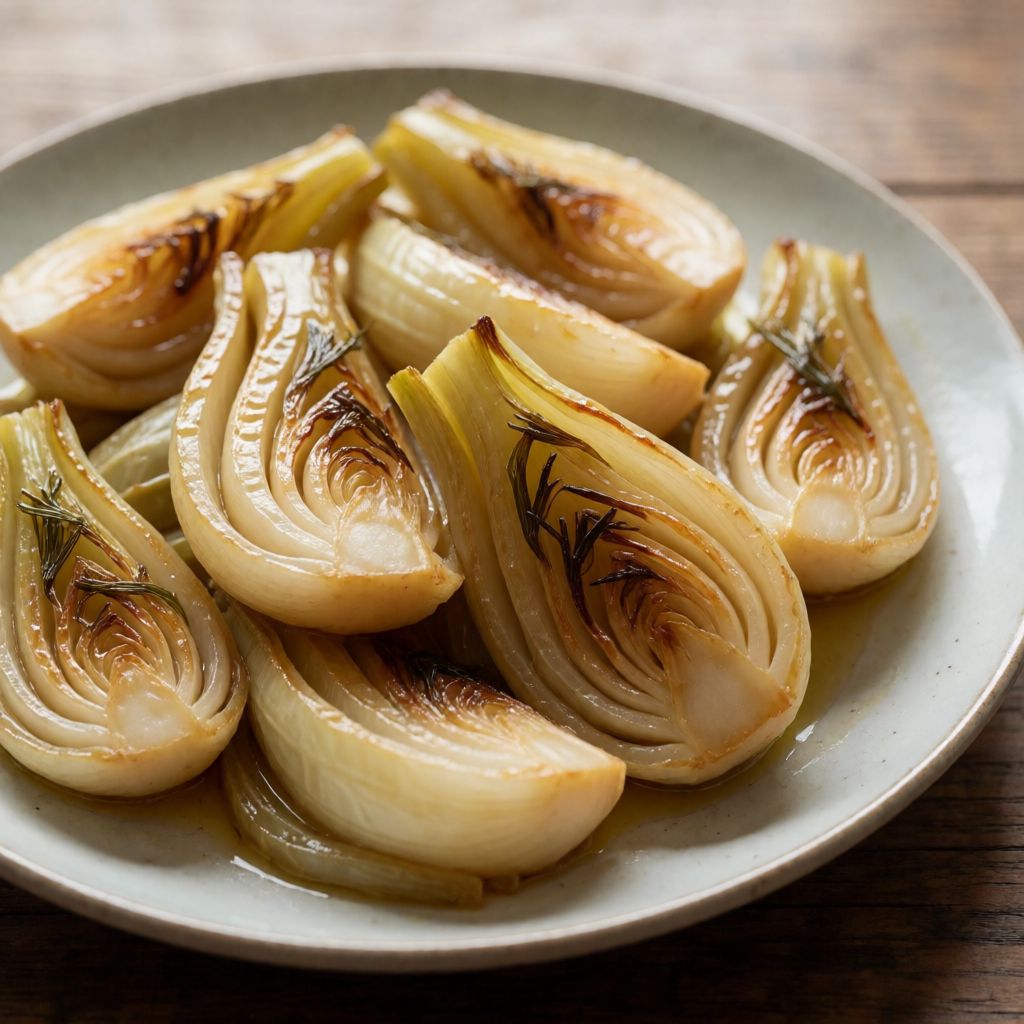
 AI photo
Braised Fennel
A simple side dish of fennel braised in olive oil with garlic, finished with parmesan and parsley.
Labels are worked out automatically from the ingredients and can be wrong. Check the packaging if it matters to you.
Ingredients






Steps
Thoroughly clean the fennel and cut it into small pieces.
Pour olive oil into a pan, add a clove of garlic and set it on low heat. Let the garlic flavour the oil.
Add the fennel, season with salt and pepper.
Pour in half a ladle of hot water, cover with a lid and braise.
20 minCheck the fennel is tender, then if you like, sprinkle with grated parmesan and parsley.
Fennel raw is crisp, almost sharp — the anise bite sits right under your tongue, and the outer layers can be fibrous enough to feel like eating a brush. What braising does here is simple: moist, low heat breaks down that fibre into something soft, and the sharp anise rounds off into a sweetness closer to cooked onion than to liquorice. That's the whole mechanism. Everything else in the recipe exists to protect that transformation.
What decides whether it works is heat and water, not time. If the pan runs too hot, or there's no lid to hold the steam in, the little water you add disappears before the fibre has softened — and what you get is fennel charred at the edges, with the bitterness concentrated instead of dissolved. Covered, on a gentle simmer, that same water turns to steam, circulates under the lid, and cooks the fennel from all sides at once — more like steaming with a splash of oil for flavour than frying.
The garlic step up front looks decorative, but it isn't. Garlic dropped into cold-ish oil and warmed slowly releases its aroma into the fat without turning bitter. Some cooks think garlic has to sizzle to "release the flavour" — no, because that sizzle is usually the sound of it burning, and burnt garlic is acrid, it won't wash out of the dish. Low and slow, the garlic goes from white to pale straw, nothing more. That's patience doing actual work, not just good manners.
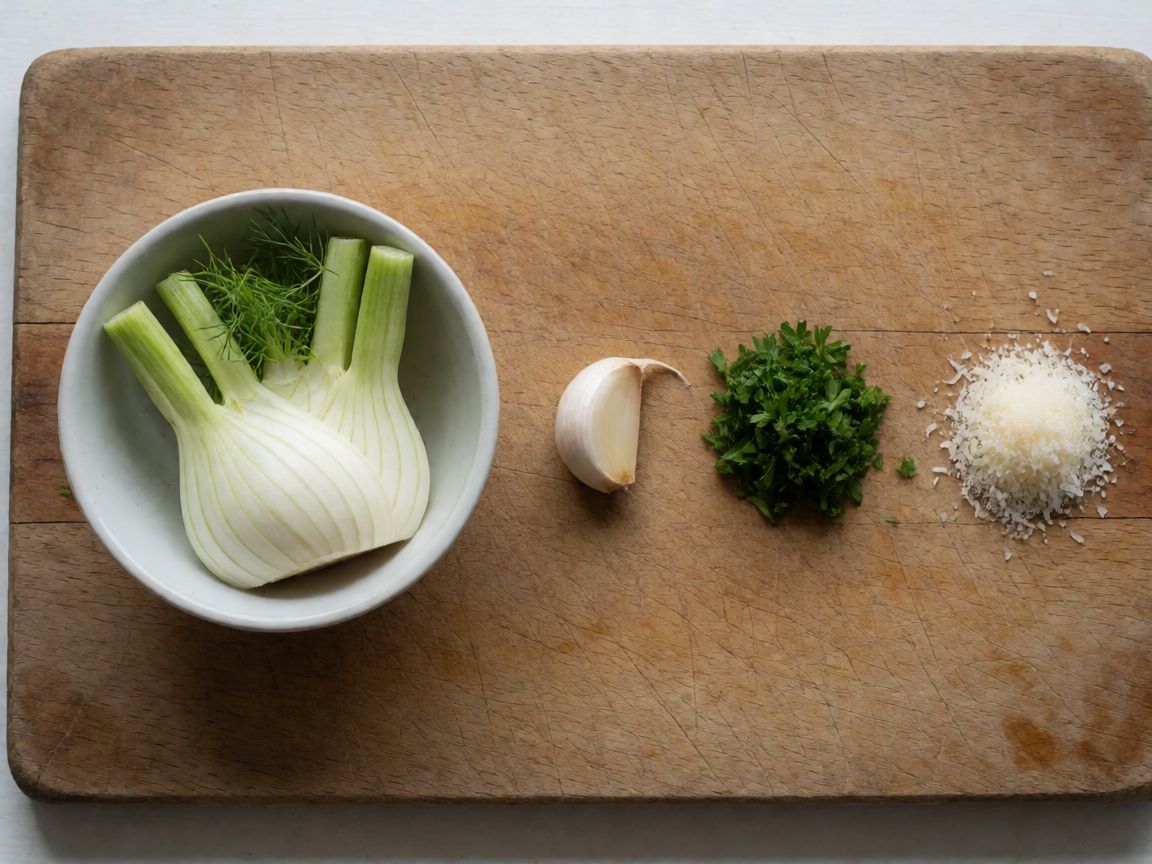
Fennel: buy by weight, not by bulb count, but expect roughly two to three bulbs to make a kilo, depending on size — that feeds four as a side, not as the main event. Look for bulbs that feel heavy and tight, pale green to white, with no browning at the cut end — browning there means it's been sitting and drying out, and dry fennel braises unevenly because the outer leaves have already lost moisture the inner ones still have. Trim the tough outer layer if it feels stringy; that's the part that resists the knife-tip test longest and throws off your sense of doneness.
Garlic: one clove is there to flavour the fat, not to be eaten as garlic — crush it lightly or leave it whole so it releases oil into the pan rather than disintegrating into bits that burn. If you don't want garlic at all, you can infuse the oil with something else that also likes gentle heat — a sliver of chilli, a bay leaf — the principle is the same: low heat extracting aroma into fat, nothing browning.
Olive oil: here it's not just a cooking medium, it's part of the flavour, so you want one that smells faintly of itself — not the cheapest refined kind, which brings nothing. If you don't have olive oil, use any mild vegetable oil that won't fight the fennel's own sweetness; what you lose is a bit of roundness, not the mechanism. This is also where cost shows up honestly: olive oil earned its place in this kind of cooking because it was the cheap, local fat where fennel grew wild — on a British hob, where it's an import, you're paying for a flavour choice, not a necessity.
Water: half a ladle, hot, not cold — cold water would drop the pan's temperature and stall the whole braise right when you need steam building, not a reset. Its only job is to turn into vapour and keep the fennel cooking in moisture instead of in dry fat, which is what stops it catching at the edges.
Lid: you likely don't have one that fits a wide pan exactly, and that's fine — a plate set over the top, or a sheet of foil pressed down at the rim, holds the steam in well enough. The one thing to avoid is leaving the pan open — that's the single commonest reason this dish turns out dry and bitter instead of soft and sweet.
Parmesan and parsley go on at the very end, off the heat or close to it, because cheese stirred into something still actively simmering just melts into grease rather than sitting on top with texture. Parsley, fresh, raw, chopped at the last moment, is there to give one bright, uncooked note against all that soft braised sweetness — dried parsley can't do that job, it has no brightness left to give. If you've no parmesan, any hard, salty, aged cheese that melts into threads rather than turning grainy will do the same work — pecorino, a strong cheddar even, though that changes the character more than the mechanism.