
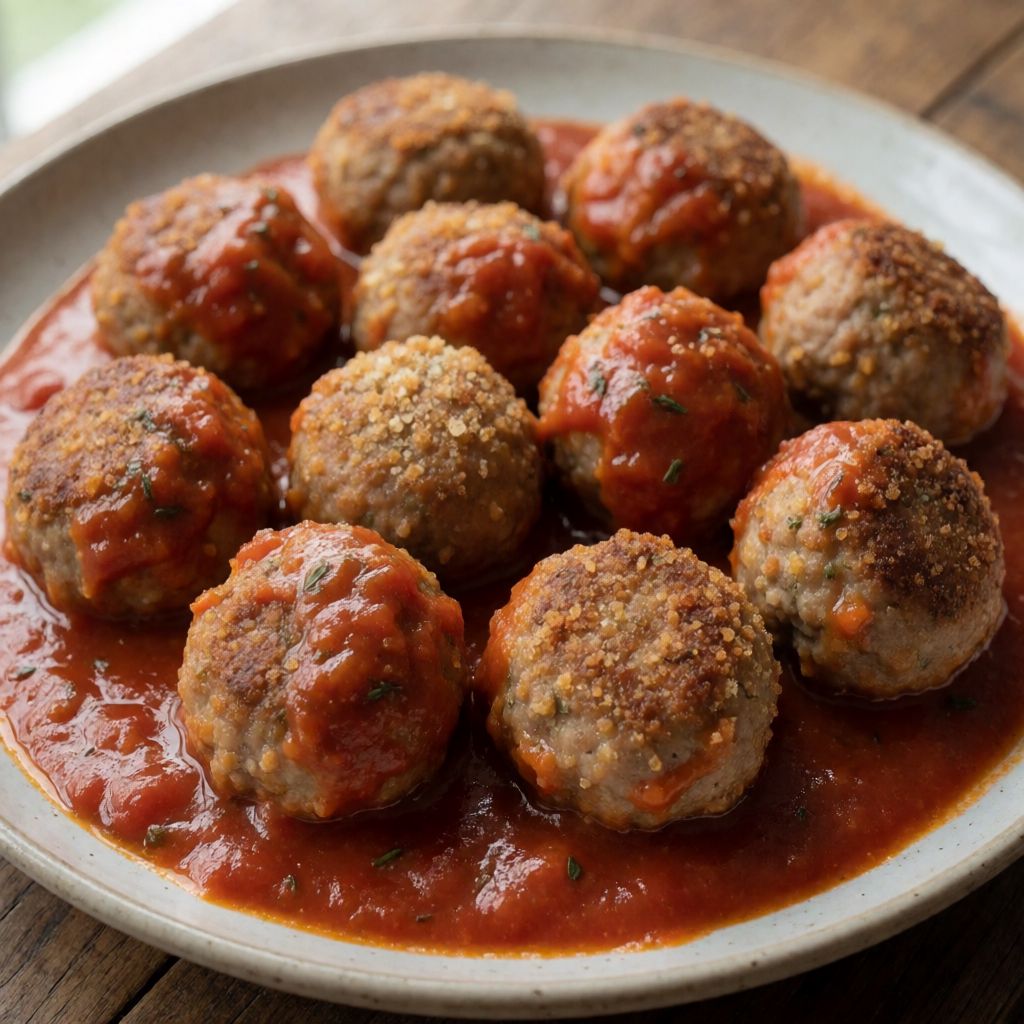
 AI photo
Bread Meatballs in Tomato Sauce
A simple meatball dish made from soaked bread instead of meat, simmered in a light tomato sauce.
Labels are worked out automatically from the ingredients and can be wrong. Check the packaging if it matters to you.
Ingredients
- 150 g Stale bread, crusts removed
- Milk to taste
- 1 pcs Egg
- 20 g Breadcrumbs dried
- 30 g Parmesan
- 500 g Tomato passata
- 1/2 pcs Shallot chopped
- Basil to taste
- Olive oil to taste
- Salt to taste
- Black pepper to taste











Steps
Soak the stale bread in milk for a few minutes until softened
Squeeze out the bread, removing excess milk
Add the egg, Parmesan, breadcrumbs, salt and black pepper to taste
Mix all the ingredients together until smooth
Cover the bowl with cling film and chill in the fridge for 30 minutes
30 minTake the mixture out of the fridge and shape into small meatballs
Heat olive oil in a shallow pan and fry the chopped shallot
Pour in the tomato passata, add salt and black pepper to taste, cover and simmer
10 minPut the meatballs into the pan with the sauce and cook on low heat, turning halfway through
10 minGarnish with basil leaves and serve
This is a poverty dish wearing a nice dinner jacket — meatballs with no meat in them. Stale bread, soaked and squeezed, stands in for mince, and the whole thing works because bread does what meat can't: it goes soft and binds without turning rubbery. If you fried fresh bread like this it would just dissolve into crumbs in the sauce; stale bread has already lost enough moisture that the starch can take on milk and egg and hold a shape without falling apart.
What decides whether this works is how dry you get the bread before you touch it again. Squeeze it properly — not a gentle press, an actual wring, like you're getting water out of a flannel — because excess milk left in the mix means the meatball won't hold its shape in the pan, it'll slump and spread into the sauce like a dumpling that gave up. The egg and Parmesan are doing the binding and seasoning work meat usually does; the breadcrumbs mop up any last wetness so the mix is firm enough to roll.
The fridge rest isn't optional, and it isn't there to "let the flavours develop" — that's the kind of phrase people reach for when they don't know the real reason. Chilling firms the fat-free mixture enough that it holds a ball shape when your hands are warm and the mix is soft; skip it and you'll be rolling wet dough, wondering why everything sticks to your palms.
The sauce is simple because it has one job: coat, not drown. Passata simmered gently with shallot until it's thickened enough that a spoon dragged through leaves a trail — that's your cue, not a clock.
Bread is the whole dish, so don't treat it as filler. You want it properly stale — a few days old, going firm, not green with mould — because stale bread has given up moisture to the air already, leaving dry starch structure that can soak up milk like a sponge and hold together afterwards. Fresh bread is still full of its own water; add milk to that and you get sludge, not a workable paste. If you've no stale loaf, toast slices lightly in a low oven until dried through — you're imitating staleness, not baking it.
Milk is "to taste" because bread varies — a dense sourdough drinks more than a soft white sandwich loaf. Pour a little, wait, press the bread; it should go from hard to yielding, the way a carrot bends before it snaps. Stop before it turns to porridge. Any milk works here, even half-fat — this isn't the step where richness matters, it's the step where moisture does.
The egg is the glue. Without it the squeezed bread and cheese would crumble apart in the pan the moment they hit hot oil — egg proteins set with heat and lock the shape in place. One egg for this amount of bread is enough; more and the mix turns eggy and wet again, undoing the squeezing you just did.
Parmesan gives salt and a savoury backbone standing in for the depth meat would normally bring — use a hard, aged cheese with real character, Grana Padano if that's what's in the fridge, anything described as "mild cheddar" won't do the job because it has nothing to say for itself. Breadcrumbs — dried, not fresh — are there purely to adjust texture at the end: a tablespoon or two to firm up a mix that's still tacky. Think of them as the last word in a conversation, not a main ingredient.
For the sauce, passata means tomatoes already strained of skin and seed — if you only have tinned whole tomatoes, blitz and sieve them first, or the sauce will fight your meatballs for texture. Shallot rather than onion because it's milder and cooks down faster without needing the long, sweet frying an onion wants — in a shallow domestic pan without a lid that actually seals, you're better off with something that softens quickly than something that needs twenty minutes of patience to stop tasting raw.
Olive oil here just needs to carry heat and a faint fruitiness — nothing fancy required, save the good extra virgin for drizzling at the end if you want it, not for frying. Basil goes on at the very finish, off the heat, because its aroma is fragile — cooked basil smells of hot water, not basil, so treat it as garnish, not an ingredient you simmer.
Myth worth killing here: some say meatballs without meat are a "cheat" or a wartime trick to stretch a budget — they're not wrong about the history, but there's no shame in it. Bread meatballs were a way to eat well on nothing, and the fact that they're genuinely good on their own terms is the better story, not an excuse.