
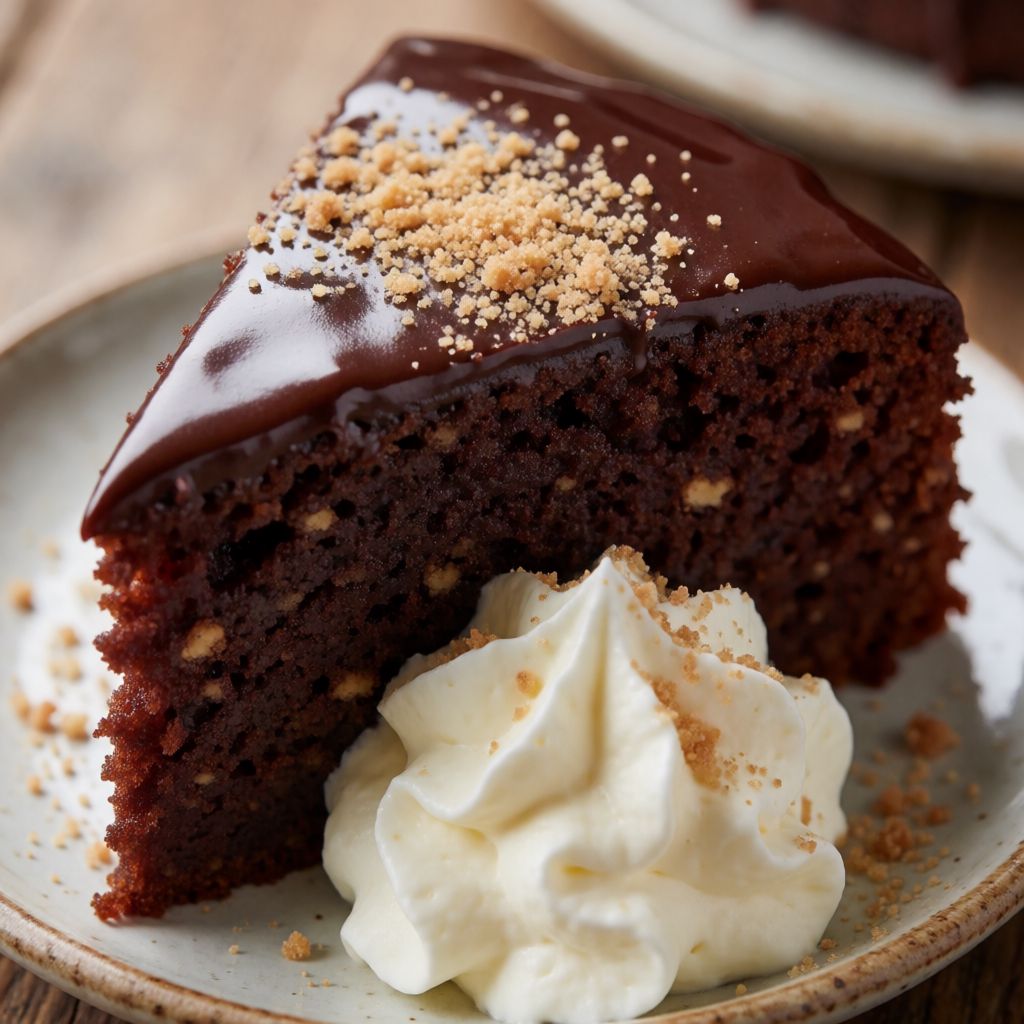
 AI photo
Breadcrumb Cake
A simple cake made from breadcrumbs, dark chocolate and amaretti biscuits.
Labels are worked out automatically from the ingredients and can be wrong. Check the packaging if it matters to you.
Ingredients
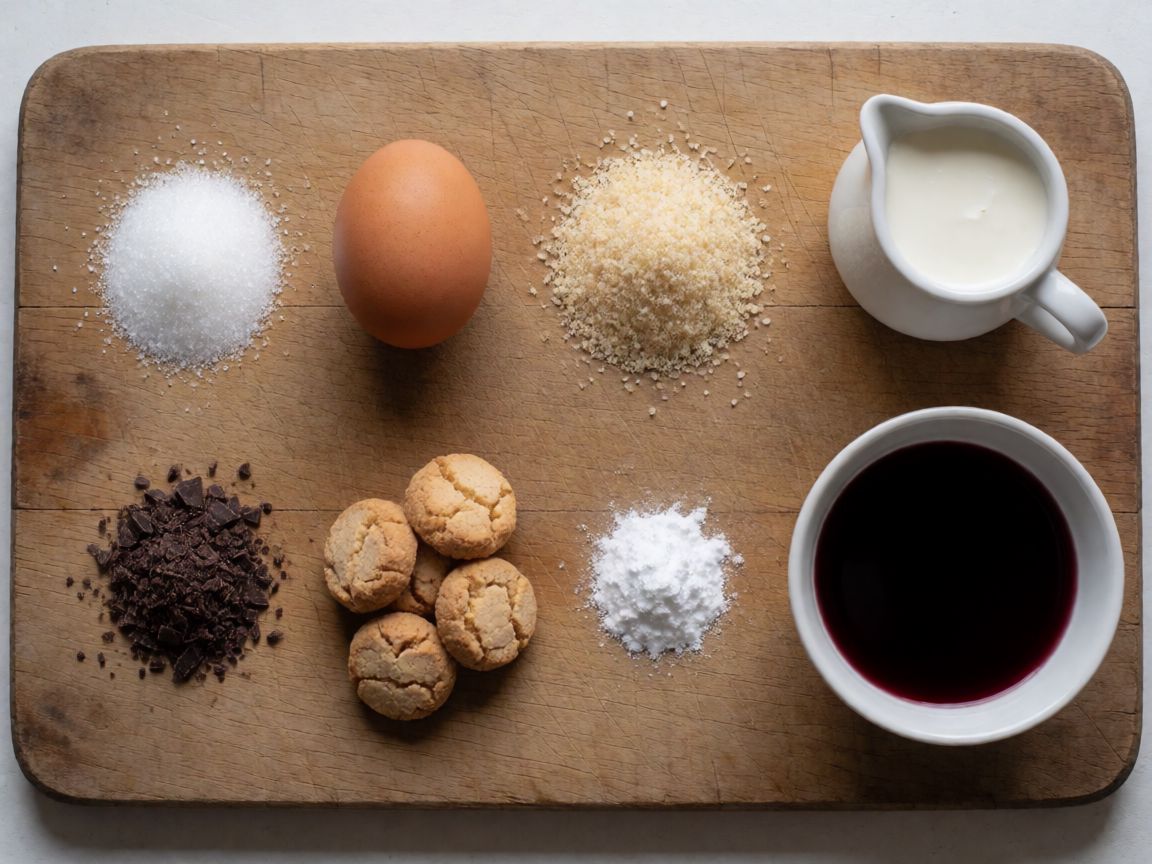
- 100 g Sugar
- 1 pcs Egg
- 200 g Breadcrumbs dried
- 200 g Dark chocolate chopped
- 200 g Amaretti biscuits crushed
- 200 g Double cream
- 1 package Baking powder
- 1 pcs Marsala wine
- 1 tbsp Plain flour for dusting









Steps
If you have some stale bread, blitz it in a blender until it turns into crumbs; otherwise use ready-made breadcrumbs.
In a bowl, whisk the egg with the sugar.
Add the breadcrumbs, crushed amaretti biscuits, double cream, Marsala wine and baking powder, then finally the dark chocolate cut into pieces.
Mix everything thoroughly with a spatula until smooth.
Line a 22 cm tin with baking parchment, or grease it with butter and dust with the plain flour.
Preheat the oven to 180°C and, once it reaches temperature, bake for 30–45 minutes.
38 minCheck it's done using a wooden skewer.
Forget the name for a second — this isn't bread, and it isn't a sponge either. It's a torta povera, the Italian habit of turning what's left over from yesterday's loaf into tonight's pudding. No flour in it at all. The structure comes from dried crumbs and crushed almond biscuits soaking up egg, cream and Marsala until they behave like a cake, dense and a bit damp in the middle, more like a baked pudding than anything with air in it.
What decides whether it works is the balance between dry and wet. Breadcrumbs and amaretti are both thirsty — they've already given up their moisture in the drying and the baking that made them. Egg, cream and wine have to put enough of it back that the mixture holds together without turning into paste. Too dry a crumb, or crumbs ground too coarse, and the cake stays crumbly and never sets into slices; too wet, and it never firms up in the middle no matter how long you leave it in. The chopped chocolate isn't there to flavour the whole batter evenly — it's left in pieces on purpose, so it melts into soft pockets rather than disappearing, and you get a bite that's cake one moment and warm chocolate the next.
Sugar and egg get whisked together first, before anything dry joins them, for a reason that has nothing to do with looking pretty: it dissolves the sugar into the egg properly, so you don't end up with a grainy, slightly crunchy cake from sugar crystals that never had the chance to melt. Skip this and the sweetness sits unevenly instead of running through the crumb.
The breadcrumbs are the whole point of the dish, not a filler. If you're making your own from stale bread, take the crust off and blitz the inside fine and even — coarse, uneven crumbs soak up liquid at different speeds and you get patches that stay dry next to patches that go soggy. Shop breadcrumbs work, but they're often drier and more neutral than real stale bread, which still carries a bit of its own flavour; panko is too light and flaky for this and will leave the cake loose. This dish exists because bread used to be too valuable to throw away — not a quirky texture choice, an economy one.
Amaretti do two jobs: they bring the bitter-almond edge that keeps all that sugar and chocolate from turning cloying, and their own sugar and starch help bind the crumb, almost like a second, sweeter breadcrumb. If you can't get them, any dry, crisp almond biscuit with a slightly bitter finish will do — ratafia, or plain digestives with a few drops of almond extract, though you lose some of that sharpness.
Double cream is doing the job butter or oil would do in a normal cake — carrying fat into a mixture that has none otherwise, so the dry crumbs don't bake into something closer to a dense brick. Marsala sits alongside it for flavour and for a little extra moisture, and it's there because this is an Italian pantry cake: any fortified wine with a nutty sweetness — sweet sherry, Vin Santo — will stand in for it, though each brings its own shade of flavour, so don't expect an identical result. Dark chocolate wants to be on the bitter side, at least 60–70% cocoa; milk chocolate adds yet more sugar to a mixture that already has plenty, and you lose the contrast that makes each bite interesting.
Baking powder earns its place more than usual here, because there's no gluten network from flour to trap the gas it produces — crumbs and crushed biscuits can't do that job on their own, so without it the cake would simply sit flat and dense all the way through, rather than lifting a little while staying moist. The flour for dusting the tin has nothing to do with the cake itself — it's just there with the butter to stop the greased sides holding the cake hostage; parchment does the same job with less fuss, and in a flat kitchen without a springform tin, it's the safer bet.
On quantities: the card says two, but 200g each of crumbs, biscuits, chocolate and cream makes a proper 22cm cake, dense enough that a thin slice goes a long way — cut like that, it will quite happily see off six to eight people with tea rather than two on their own. And give it time once it's out of the oven before you cut it — the crumb needs to settle and the chocolate pockets need to firm up a little, or you'll just get a warm, structureless slide onto the plate. Patience here isn't optional; it's the last ingredient.