
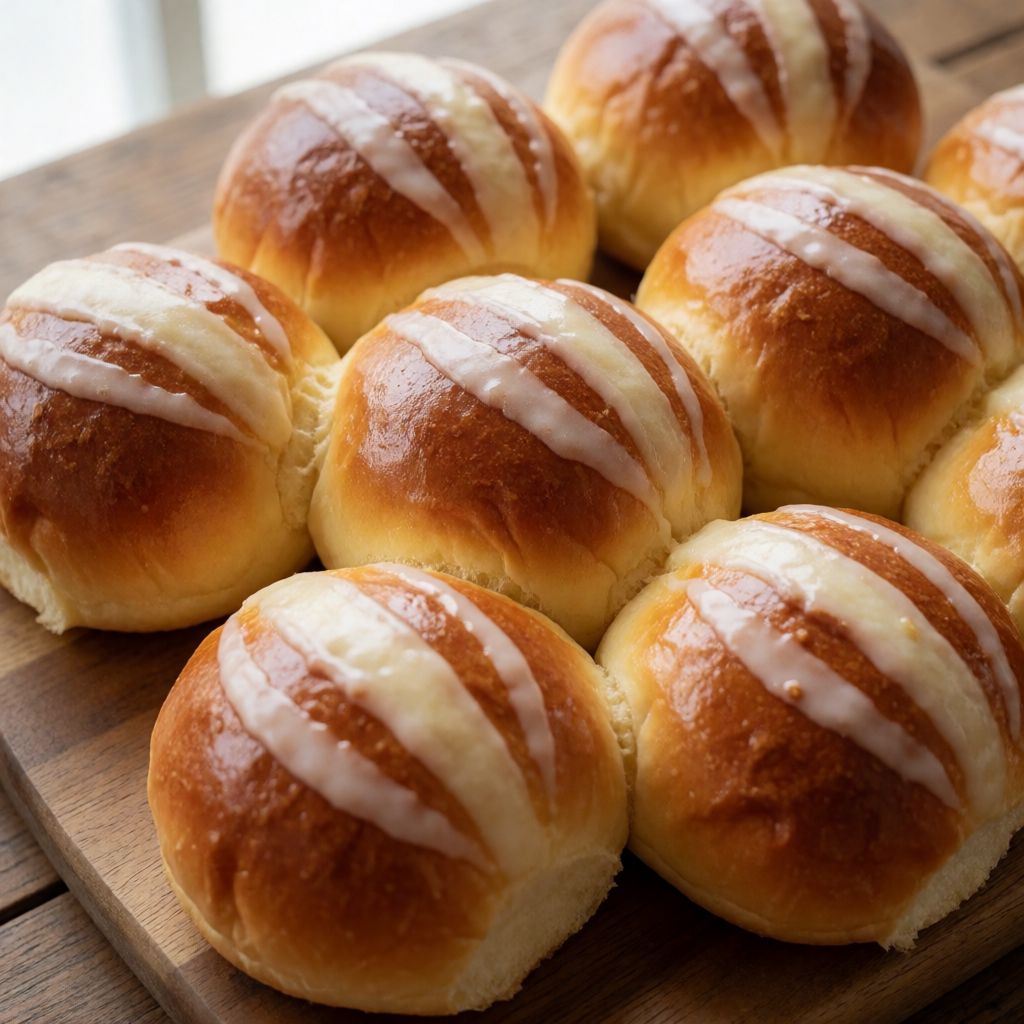
 AI photo
Brioche Buns with "Tupo" Topping
Soft lemon-scented brioche buns topped with a little dough "cap", perfect filled with ice cream or served alongside a fresh granita.
Labels are worked out automatically from the ingredients and can be wrong. Check the packaging if it matters to you.
Ingredients
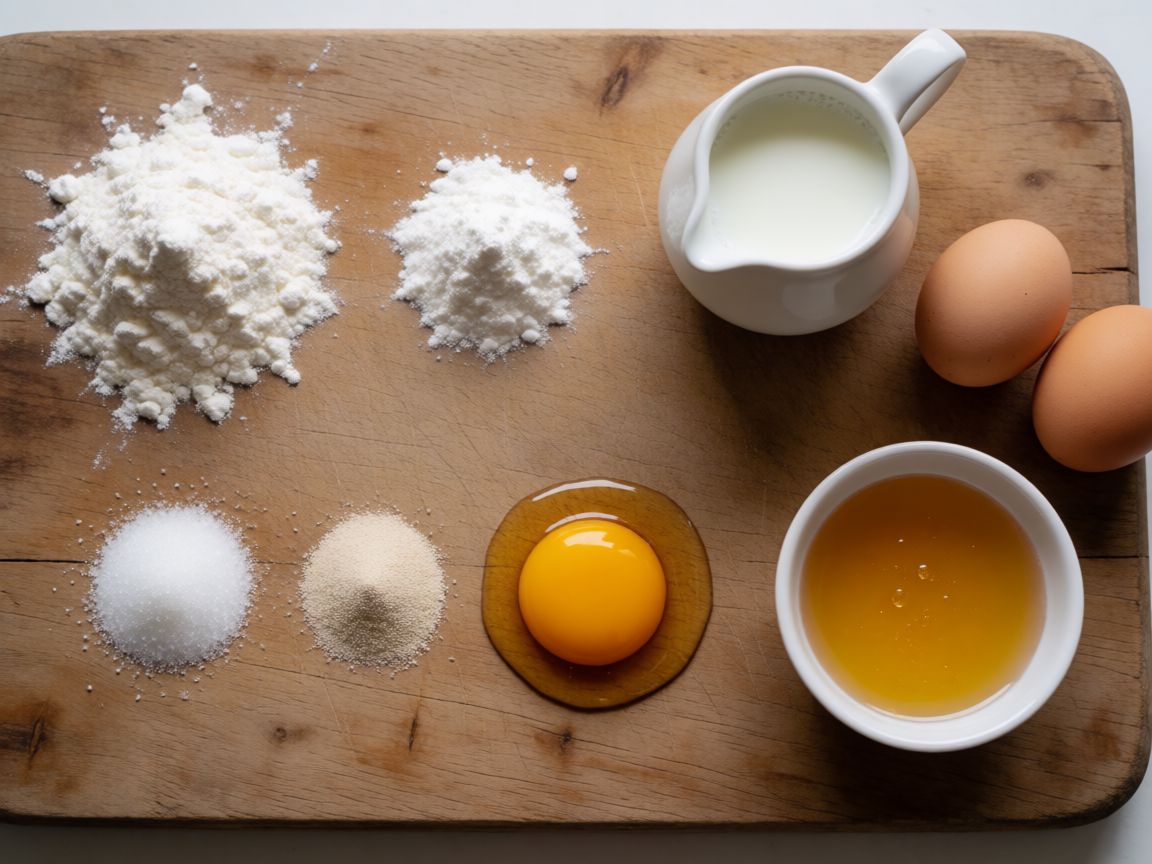
- 250 g Plain flour
- 250 g Strong white flour
- 175 ml Milk
- 2 pcs Eggs
- 1 pcs Egg yolk
- 1 tsp Honey
- 90 g Caster sugar
- 15 g Yeast
- 1 pcs Lemon zest
- 75 g Butter
- 1 pinch Salt









Steps
Put the strong white flour and plain flour into the bowl of your mixer. Add the yeast, 175 ml of milk, the eggs, honey, sugar and lemon zest. Knead for 4 minutes until combined.
4 minAdd the butter, cut into small cubes, and the salt. Knead for a further 4 minutes until the dough is smooth and even.
4 minTip the dough onto a lightly floured surface and shape it by hand into a tight ball. Cover with a clean dry tea towel or cling film and leave to rise for 30 minutes.
30 minDivide the dough into balls of 100–120 g each, keeping back a small piece of dough. Shape them into balls and place on a baking tray lined with baking paper.
From the reserved dough, shape small 20 g balls — these are the "tupo" caps. Brush the top of each bun with water and press a cap onto each one.
Cover with cling film and leave to rise for a further 2 hours.
120 minBrush the brioches with beaten egg yolk and bake at 180°C for about 20 minutes.
20 minServe warm, filled with ice cream, or alongside a fresh granita.
This is brioche doing a magic trick: the dough is split into two pieces, a bun and a little cap, and the cap is stuck on top so the bun looks like a mushroom with a hat — that's the "tupo" shape, and Sicilians use the same word for a dome-topped bun they fill with gelato. Nothing about the taste changes because of the cap. What changes is the silhouette, and the silhouette is the point: you're building a bun that reads as a vessel before you've cut it open.
What decides whether this works is the same thing that decides any brioche: how much air is trapped in the gluten net before it goes in the oven, and whether the butter stayed solid enough, long enough, to let that net form at all. Brioche dough is enriched — eggs, sugar, butter, milk, no plain water in sight — and every one of those is working against the yeast, not with it. Sugar and fat both compete with gluten for water and slow fermentation right down. That's why this isn't a quick white-bread dough with a bit of butter rubbed in; it needs two separate rises adding up to two and a half hours, not because someone likes tradition, but because enriched dough genuinely takes that long to build structure at normal kitchen warmth.
Strong white flour supplies the gluten-forming proteins that give the dough its stretch and chew; plain flour, with less protein, softens that structure so the crumb stays tender rather than turning elastic and bread-like. Half and half is a compromise — all strong flour and you'll get a bun with too much bite for something meant to cradle ice cream; all plain flour and the dough won't hold its shape through two rises and a bake. If you only have one or the other, lean toward strong flour and expect a slightly chewier bun, or toward plain and expect a softer, flatter one that spreads a bit more on the tray.
The eggs and yolk aren't there for show. Egg yolks carry fat and lecithin, which is what gives brioche its particular softness and that pale gold crumb — this is a dough built on eggs and butter instead of oil and water, and that's the entire reason it's called brioche rather than bread. The extra yolk brushed on at the end before baking is for colour and shine on the crust, nothing structural; if you're out of a spare yolk, a whole beaten egg with a splash of milk will still gloss it up, just slightly less deep in colour.
Butter needs to go in cold, cut into small cubes, precisely so it can be worked into the dough gradually rather than melting into a puddle the moment it meets warm hands or a spinning hook. Room-temperature butter that's gone soft and greasy will slick the dough instead of integrating into it, and you'll end up kneading far longer than the recipe asks to get back to where you should have started. There's no honest substitute for butter here — oil won't set up the same way and the dough loses the structure that makes it rise into that domed shape rather than slump.
Yeast at 15 g fresh (or roughly a third of that if you're using fast-action dried) is doing slow, patient work against sugar, fat and eggs all pulling moisture away from it. This is why the first rise is a full half hour and the second a full two hours — not arbitrary numbers, but roughly what it takes an enriched dough to double in an ordinary kitchen that isn't proving-drawer warm. Don't chase the clock; chase the dough doubling in size and feeling soft and pillowy when you press a finger into it, springing back slowly rather than snapping back instantly or staying dented.
Honey and lemon zest are the quiet flavour decisions. Honey feeds the yeast slightly differently than sugar alone and adds a faint warmth you won't taste as "honey" so much as roundness; caster sugar does the main sweetening and, being fine-grained, dissolves into the dough without leaving grit. Lemon zest cuts through all that butter and egg richness so the bun doesn't taste flat — use a zester or the fine side of a box grater, taking only the yellow, because the white pith underneath is bitter and will undo the point of adding it.
Baking at 180°C for about 20 minutes is really baking until the caps and buns have gone a deep, even gold and sound hollow-ish when you tap the base — ovens vary enough, especially fan versus conventional, that the number is a floor, not a verdict. Pull them too early and the enriched crumb inside, full of butter and egg, will still be gluey rather than set; the colour change from pale to gold-brown tells you the sugars on the surface have properly caramelised, and that's your real cue. Let them cool to warm, not hot, before filling with ice cream — straight from the oven they'll melt your scoop into soup rather than sitting proudly on top.